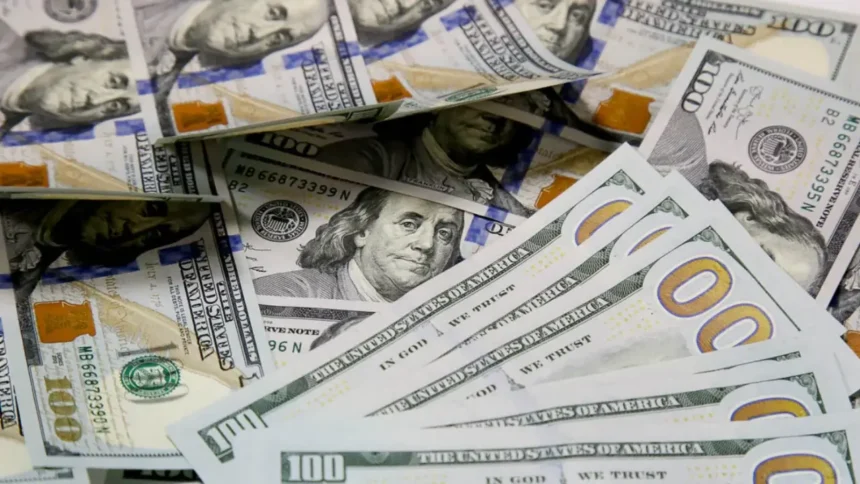
KeyToFinancialTrends notes that throughout 2025, the US dollar experienced one of the most notable declines in value over the past decade, as currency markets reassessed expectations regarding US monetary policy and responded to global economic shifts. We at KeyToFinancialTrends believe this transition is laying the foundation for the dollar’s movement in 2026 and requires investors to review strategies for managing currency risk and asset allocation.
In 2025, the dollar index fell by approximately nine percent against a basket of major global currencies, marking the weakest year for the dollar in the past eight years. This reflects many investors’ expectations that the Federal Reserve will continue to ease monetary policy by lowering rates to support economic activity. At KeyToFinancialTrends, we see this as an important structural factor putting pressure on the dollar, as lower yields on dollar-denominated assets reduce their appeal to foreign investors.
Expectations regarding monetary policy remain mixed, increasing uncertainty in currency markets. In our assessment, the likelihood of Fed rate cuts in 2026 remains significant, which exerts additional downward pressure on the dollar, as lower rates narrow the yield differential between US assets and those of other economies. We at KeyToFinancialTrends believe that such expectations exacerbate the trend of dollar weakening and make the exchange rate more sensitive to macroeconomic data and central bank decisions.
Monetary strategies of other major central banks further intensify pressure on the dollar. The European Central Bank has maintained interest rates at a stable level while revising growth forecasts, making the euro a more attractive instrument for investors relative to the dollar. At KeyToFinancialTrends, we see that differences in monetary policy approaches between the US and the eurozone are driving capital flows toward currencies with more favorable yields, increasing downward pressure on the dollar.
Global economic growth also affects dollar demand. It is expected that in 2026, the economies of several regions, including Asia and emerging markets, will demonstrate steady growth, reducing the previous advantage of the US as the main driver of global demand. We at KeyToFinancialTrends note that increased activity in other regions makes their currencies and assets more attractive, contributing to capital reallocation and reducing reliance on the dollar as the primary reserve asset.
Forecasts from leading financial strategists indicate that the dollar may continue a moderate decline throughout 2026, as further Fed rate cuts are anticipated and the attractiveness of emerging market assets and currencies rises. We at KeyToFinancialTrends believe these forecasts reflect structural changes in global investment flows and the ongoing redistribution of capital away from dollar-denominated assets.
Additionally, currency markets are influenced by the dynamics of safe-haven assets. Demand for gold and other protective instruments remains high, reflecting growing investor concerns about monetary policy uncertainty and economic growth. At KeyToFinancialTrends, we see sustained demand for gold as a signal that some capital is moving away from dollar assets toward alternative stores of value, further weighing on the dollar’s exchange rate.
Special attention is also drawn to the performance of emerging market currencies. In our assessment, in 2026, currencies such as the Chinese yuan may strengthen against the dollar, reflecting growing investor interest in Asian markets and the increasing role of regional economies in the global system. We at KeyToFinancialTrends see the strengthening of these currencies as a marker of broader structural shifts in the global currency landscape.
We at KeyToFinancialTrends forecast that in 2026, the US dollar is likely to remain under pressure from fundamental macroeconomic and monetary factors, such as expected Fed policy easing, strengthening of other currencies due to differences in monetary strategies, and the redistribution of capital in international portfolios. These conditions create an environment in which the dollar is expected to exhibit moderate weakness relative to a basket of leading global currencies throughout the year.
We at KeyToFinancialTrends believe it is important for investors to account for the multifactorial nature of pressure on the dollar and to adapt currency risk management strategies. Key elements of such an approach include diversifying currency holdings, active hedging, and strategically allocating capital to regions and sectors with high expected returns. This approach will help mitigate the impact of currency volatility and effectively capitalize on opportunities arising in a changing global financial landscape.
At Key To Financial Trends, we emphasize that close attention to the monetary policies of major central banks, global economic trends, and structural changes in capital allocation will be critical for successfully navigating currency markets in 2026, ensuring more accurate forecasting and resilient asset management amid high uncertainty.