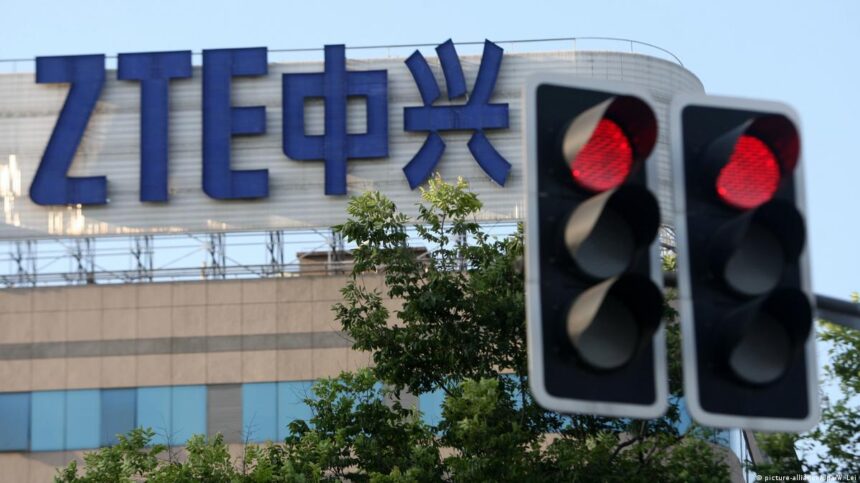
KeyToFinancialTrends notes that ZTE, the largest Chinese telecommunications equipment manufacturer, has found itself at the center of a scandal that could lead to fines exceeding $1 billion to settle allegations of bribing foreign officials. Sources claim that the U.S. Department of Justice is set to conclude its long-running investigations into potential violations of the Foreign Corrupt Practices Act (FCPA). As a result, the company faces the risk of a new fine, which would serve as another test of its financial stability and international reputation.
ZTE, which previously paid nearly $2 billion in fines for violating U.S. export sanctions, is once again embroiled in legal disputes. According to experts, the investigation concerns potential bribes paid to secure lucrative contracts in South American countries, including Venezuela. If these allegations are confirmed, the company could face a fine of up to $2 billion or more, based partly on the presumed profits from such corrupt deals.
At KeyToFinancialTrends, we emphasize that these investigations could significantly complicate ZTE's future growth. The issue is not only about large fines, but also how such accusations could impact its standing in international markets. Already, ZTE's shares, listed on the Hong Kong Stock Exchange, have seen a sharp drop of more than 12%, reflecting growing investor concern over the company's stability. Furthermore, these sanctions could threaten ZTE's access to key technologies and components, which would impact its ability to compete globally.
ZTE has previous experience with U.S. sanctions. In 2018, it faced restrictions on the supply of critical U.S. technologies, such as Qualcomm chips and Intel software, after admitting to illegally exporting goods to Iran. Sanctions were lifted only after the company agreed to pay $1 billion and meet other conditions. However, the ongoing corruption investigation could lead to similar measures, further weakening ZTE's position in the market. At KeyToFinancialTrends, we believe that the reinstatement of sanctions by the U.S. Department of Commerce poses a real threat to the company.
The uncertainty surrounding ZTE's case also makes it difficult to forecast the future of China's high-tech industry as a whole. We see that sanctions against one of the largest players could have a significant impact on the entire sector. This, in turn, increases risks for other Chinese companies operating in international markets and complicates investment in this sector. KeyToFinancialTrends highlights that tightening enforcement of the FCPA and other anti-corruption regulations could increase pressure on Chinese tech companies, likely leading to a further reduction in their presence in developed markets.
However, if ZTE manages to successfully resolve these allegations and restore its reputation, it may continue to operate in international markets. To do so, the company will need not only to pay a significant fine but also to implement comprehensive internal compliance reforms and fully adhere to international standards. At KeyToFinancialTrends, we predict that in order to regain trust from international partners, ZTE will need to conduct a series of reforms aimed at improving corporate governance and strengthening its anti-corruption measures.
Investors, for their part, should be prepared for a prolonged process in resolving this case. It remains unclear when a final agreement will be reached with U.S. authorities, but the risks to the company's shares remain high. In the short term, fluctuations in the stock market are possible, which investors should consider when making decisions.
Key To Financial Trends advises caution when investing in ZTE stock amidst ongoing investigations and legal uncertainty. Until the investigation is completed, risks may remain high, especially considering potential sanctions and significant fines. However, in the long term, if the company can resolve all issues and implement necessary reforms, its market position may recover. Investors should closely monitor the situation and account for potential risks associated with sanctions, enabling more informed decisions in the market.