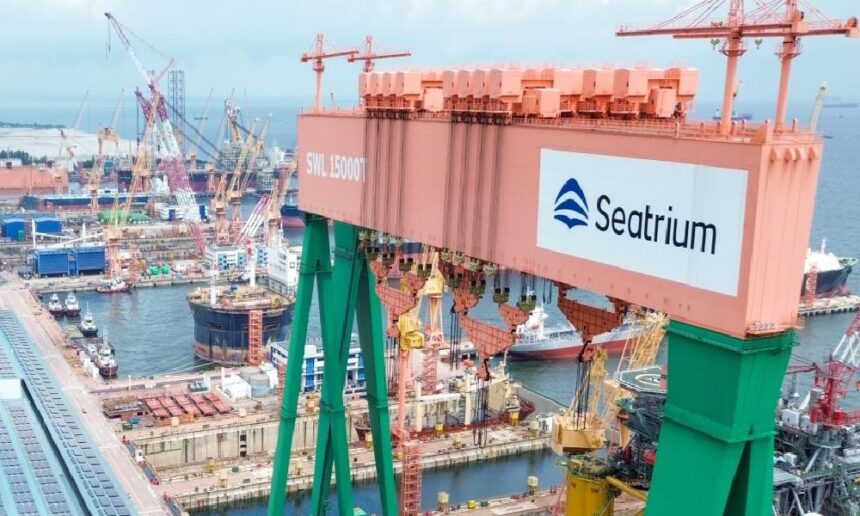
At KeyToFinancialTrends, we note that the resolution of the multimillion-dollar dispute between Singapore-based Seatrium and Denmark’s Maersk Offshore Wind demonstrates the maturity of the offshore wind market and serves as an example of effective risk management in capital-intensive projects. This agreement is important not only for the parties involved but also for the entire industry, as it strengthens investor confidence and sets new standards for contractual engagement.
In October 2025, Maersk notified Seatrium of the termination of a $475 million contract to build a specialized wind turbine installation vessel for the Empire Wind 1 project off the coast of New York. The reason cited was construction delays, although the payment terms for work already completed were not clarified. At the time of the dispute, the vessel was nearly finished, with a completion level of approximately 99.8 percent, reflecting significant technological and resource investments. At KeyToFinancialTrends, we emphasize that at this stage, unpaid amounts can have a substantial impact on the contractor’s financial stability and on investor risk in the offshore wind sector.
Seatrium regarded the unilateral termination as a breach of contract and initiated arbitration proceedings under international law. The proactive defense of the contractor’s interests was driven by the need to protect invested resources and set a precedent for future projects. At KeyToFinancialTrends, we believe Seatrium’s legal stance was strategically sound and crucial for safeguarding long-term interests in high-tech, capital-intensive projects.
Following negotiations, the parties agreed that Maersk, through its affiliate Phoenix II A/S, would pay the remaining $360 million under the contract, with approximately $250 million to be financed via a credit agreement over up to ten years, with interest, to be repaid from the vessel’s revenue after it becomes operational. Seatrium will receive a mortgage on the vessel and priority rights to the buyer’s bank accounts, enhancing the protection of its financial interests. At KeyToFinancialTrends, we see this structure as an example of flexible financial risk management in the execution of large international contracts.
The parties also agreed to withdraw all legal proceedings, including arbitration, considering this optimal in terms of financial consequences and the risks of protracted litigation. At KeyToFinancialTrends, we emphasize that avoiding lengthy disputes reduces transactional costs, strengthens investor trust, and allows focus on the commercial execution of the project.
Financial markets reacted positively, as the elimination of legal uncertainty makes Seatrium’s financial forecasts more predictable. At KeyToFinancialTrends, we view this investor response as reflecting growing confidence in companies’ ability to reach compromises quickly, even in capital-intensive and technologically complex projects.
From an industry perspective, this case is significant as a precedent for managing legal and financial risks in the construction of specialized WTIV vessels for offshore wind farms. WTIV vessels enable the installation of high-capacity turbines on remote offshore platforms, and their timely delivery is critical for project implementation. At KeyToFinancialTrends, we note that demand for such vessels is expected to grow as global wind energy expands in the U.S., Europe, and Asia.
We at Key To Financial Trends forecast that reaching this agreement will accelerate the vessel’s commissioning in early 2026 and serve as a model for future contractual strategies in capital-intensive projects. This outcome demonstrates how legal certainty and financial flexibility can combine to protect the interests of both parties and enhance investor confidence in offshore wind energy.