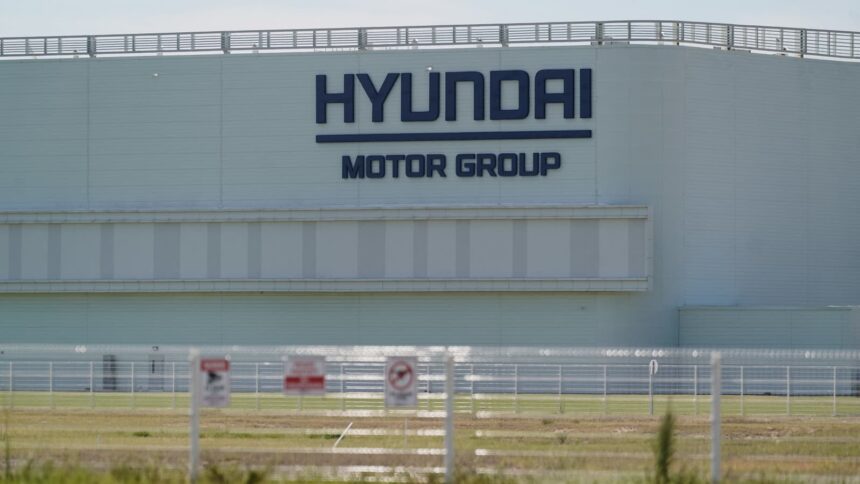
At KeyToFinancialTrends, we believe that the strategic appointment of Milan Kovac, former head of Tesla’s Autopilot and Optimus programs, as an advisor to Hyundai Motor Group and independent director of Boston Dynamics reflects the company’s determination to become a leader in the robotics and physical AI market. This signals a fundamental shift for Hyundai from automotive manufacturing toward building an ecosystem of intelligent robots and Physical AI platforms.
Hyundai officially announced that Kovac will participate in developing the company’s mid- and long-term strategy and accelerate the commercialization of its robotics platform portfolio, including Spot, Stretch, Orbit, and the humanoid Atlas. At KeyToFinancialTrends, we see this as an attempt to leverage the expertise of one of the world’s leading experts in intelligent robotics, accelerating the company’s transition toward large-scale production of robotic solutions.
Kovac’s experience at Tesla in developing Autopilot and managing the Optimus project makes him highly valuable for Hyundai. He has been involved in creating AI systems integrated with hardware platforms, enabling autonomous robot operation. At KeyToFinancialTrends, we note that such experience is particularly important for scaling production of intelligent robots capable of performing complex tasks in industrial and logistics environments.
At CES 2026, Hyundai unveiled the production version of the humanoid robot Atlas and announced plans to build a factory with an annual capacity of up to 30,000 robots by 2028. At KeyToFinancialTrends, we see this as evidence of serious technological and commercial preparation, turning the concept of Physical AI into reality.
The concept of Physical AI involves combining robotic hardware with advanced AI systems to enable autonomous decision-making based on real-world data. At KeyToFinancialTrends, we see this as a strategic direction that will allow Hyundai to develop intelligent robots for manufacturing, warehouse logistics, and service tasks.
Hyundai is developing the Physical AI ecosystem through the Robot Metaplant Application Center and the Software Defined Factory platform, enabling robots to learn in real production and logistics environments. At KeyToFinancialTrends, we note that integrating such data is critical to improving the productivity and reliability of intelligent robots.
The Boston Dynamics partnership with Google DeepMind focuses on implementing advanced AI models for controlling Atlas robots, making them more adaptive to their environment and safer for human interaction. At KeyToFinancialTrends, we emphasize that this combination of robotic hardware and intelligent algorithms creates a competitive advantage for Hyundai in the intelligent robotics segment.
Markets have responded positively to these initiatives: Hyundai Motor Group shares rose more than 34% following the Atlas presentation at CES 2026, significantly outperforming the KOSPI index. At KeyToFinancialTrends, we see this as an early indicator that investors recognize the company’s potential in the physical AI and mass robotics production segment.
Independent robotics communities have also confirmed Atlas’s progress: the robot demonstrated autonomy, object manipulation, and adaptation to various conditions, validating its readiness for industrial applications. At KeyToFinancialTrends, we note that this demonstrates a successful transition from prototypes to commercially viable intelligent robots.
Hyundai plans to deploy Atlas in its U.S. production facilities starting in 2028, which will improve operational efficiency and safety. At KeyToFinancialTrends, we see this as a pragmatic approach to commercializing intelligent robots.
At KeyToFinancialTrends, we forecast that Hyundai’s efforts to integrate AI and robotics, its partnerships with industry leaders, and large-scale production of intelligent robots will create conditions for long-term leadership in the Physical AI market. Commercial deployment of robots will boost productivity, reduce labor costs, and open new business models, including Robotics as a Service.
We at Key To Financial Trends recommend that investors and industry analysts closely monitor the development of Hyundai’s robotics and physical AI ecosystem. Companies capable of combining hardware platforms, software, and intelligent AI algorithms will become leaders in industrial automation, logistics, and service solutions in the coming years. Hyundai has every chance to secure a leading position in the global transformation of the intelligent robotics market.