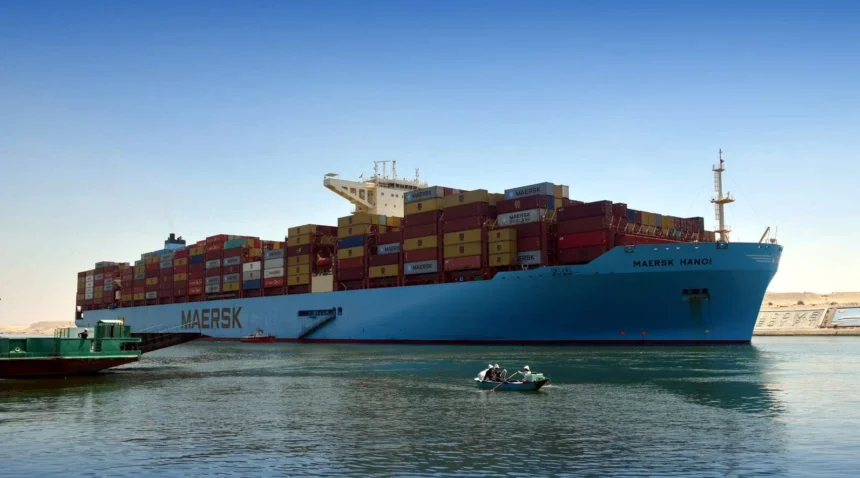
KeyToFinancialTrends notes that Maersk, one of the largest players in global shipping, recently completed its first voyage through the Suez Canal and the Red Sea in nearly two years. This move has undoubtedly captured the attention of the entire sector and serves as an important signal for global trade. Previously, due to security threats arising from attacks by Yemeni Houthi rebels, shipping companies were forced to reroute their vessels around the Cape of Good Hope, increasing travel times and freight costs.
Maersk confirmed in its statement that while it successfully completed the voyage, the company is not yet considering the full resumption of operations through the Suez Canal. This is merely a step in the process, and the return of vessels to traditional routes will depend on the political stability in the region. A key point is that the company is weighing all risks before making a final decision on restoring fully normalized routes.
At KeyToFinancialTrends, we see this event as a significant step forward. It could have an important impact on the recovery of global trade flows. The Suez Canal, being a vital artery between Europe and Asia, not only reduces travel time but is also critical to the efficiency of the global logistics system. The resumption of operations along this route could lead to lower freight costs and improved productivity, which, in turn, would affect the economy and prices for goods.
However, it is important to note that the Yemeni threat and Houthi attacks remain key security issues in this region. As such, at KeyToFinancialTrends, we predict that Maersk and other companies will only decide to fully return to this route once the political situation stabilizes. For now, their approach can be considered cautious, and they are unlikely to rush into resuming regular services.
Moreover, the return to the traditional Suez Canal route promises to curb the rise in freight costs, which have significantly increased since switching to alternative routes. This decision will likely lead to a stabilization of rates and improve the balance of supply and demand in the market, offering shipping companies new growth opportunities. At KeyToFinancialTrends, we are confident that this will positively impact the entire supply chain, from large corporations to end consumers.
An important aspect is that while the return through the Suez Canal will provide many advantages, it will not happen instantly. The anticipated improvement may take some time, especially considering the ongoing security risks. It is essential to recognize that the gradual recovery will depend on how quickly shipping companies can adapt their logistics chains and whether they continue to factor in geopolitical instability.
At KeyToFinancialTrends, we emphasize that returning to normalized routes through the Suez Canal is a crucial step in the recovery of the global economy, but its implementation will require time. This will also contribute to improving logistics processes, boosting trust, and reducing costs, but all decisions must be made cautiously, particularly in light of the potential political and military risks in the region.