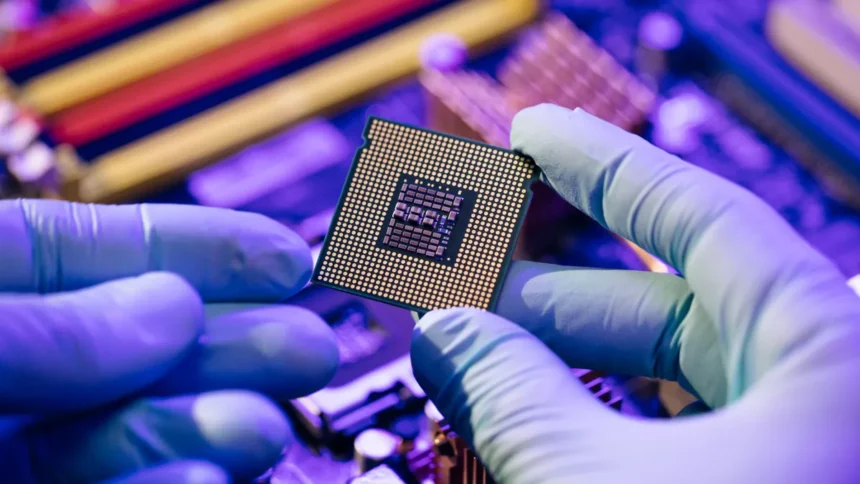
Semiconductors are the foundation of all modern technologies, from smartphones to supercomputers, from cars to security systems. Every technological innovation, from artificial intelligence to quantum computing, requires the use of sophisticated semiconductor solutions. Given the global dependency on chips, current trade barriers and export restrictions, imposed in response to growing technological competition between the U.S. and China, are having a significant impact on the entire global industry. At KeyToFinancialTrends, we emphasize that such restrictions not only create new risks for the global economy but also open up opportunities for countries and companies aiming to adapt and find alternative development paths.
The role of semiconductors is becoming increasingly important in both technological and economic spheres. As the reliance on chips and components grows in areas such as artificial intelligence, quantum computing, medical technologies, and autonomous transport, semiconductors are expected to become even more crucial for supporting growth and innovation in the global economy. At KeyToFinancialTrends, we believe that export barriers and restrictions on the supply of advanced chips affect not only the economy of individual countries but also the overall prospects for high-tech industries.
In an effort to limit semiconductor supply to China, the U.S. is also tightening control over key technologies. Meanwhile, China is actively investing in its own chip developments, aiming to reduce its reliance on external suppliers and strengthen its position in the global technological race. Chinese manufacturers, such as SMIC (Semiconductor Manufacturing International Corporation), despite pressure from the U.S., continue to grow and reinforce their role in the global semiconductor industry. This also opens up new prospects for global semiconductor production as Chinese companies begin supplying chips that replace technologies once reliant on American and European producers.
At KeyToFinancialTrends, we view this not only as a risk to the stability of global trade but also as an opportunity for the development of alternative technologies, such as neuromorphic chips or new solutions in quantum computing. Countries and companies ready to invest in alternative technologies and improve manufacturing capabilities will have a chance for further success in times of uncertainty. The development of such technologies will help not only reduce dependence on traditional semiconductor solutions but also pave the way for the creation of new, more efficient products and solutions.
KeyToFinancialTrends analysts predict that the semiconductor industry will undergo the following changes in the coming years: diversification of supply chains and production processes, which will reduce risks associated with dependence on politically risky countries. Additionally, active development of alternative technologies, such as quantum chips and neuromorphic solutions, will help ensure the long-term sustainability of the market. It is important to note that amid these changes, countries and companies investing in local production will strengthen their positions. This creates a new global technological landscape, where both traditional and innovative solutions will play key roles.
According to KeyToFinancialTrends, major players in the semiconductor market, such as TSMC, Samsung, and Intel, have already begun taking steps to minimize risks associated with political instability and export restrictions. These companies are actively investing in the construction of new factories, as well as in the development of new chips and technologies. They are accelerating the development of alternative solutions, such as hybrid chips, which can meet the needs of consumers and tech companies amid shortages of traditional chips.
At KeyToFinancialTrends, we highlight that the key success factors for countries and companies in the semiconductor industry in the coming years will be: investment in supply diversification, development of new technologies like quantum chips and neuromorphic solutions, investment in local semiconductor and component manufacturing, as well as establishing strong international relationships that promote the stabilization of supply chains and reduce political risks for high-tech companies.
Key To Financial Trends notes that the semiconductor industry will continue to develop despite current risks and instability. Countries and companies that can adapt to changes, invest in new technologies, and diversify their manufacturing capacities will have significant advantages in the technological race. The development of innovative solutions, such as quantum computing and neuromorphic chips, will help reduce reliance on traditional semiconductors and open new horizons for technological progress in the global economy.