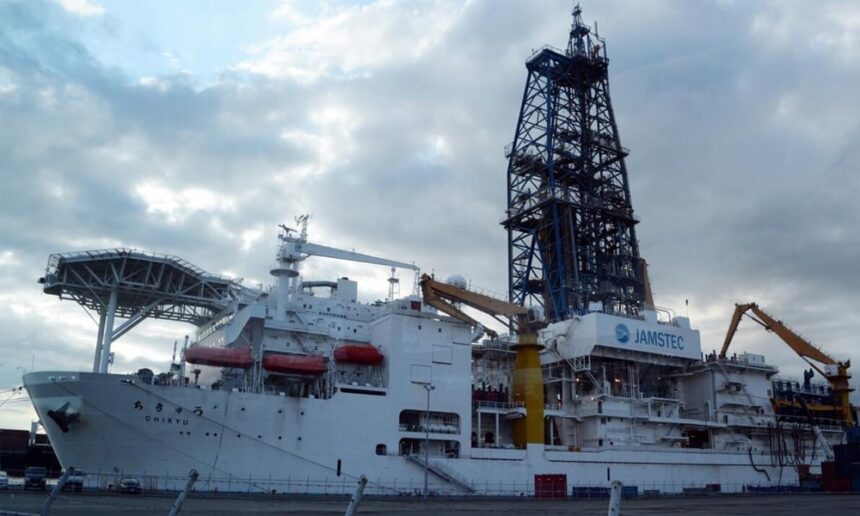
KeyToFinancialTrends notes that in January 2026, Japan began a unique deep-sea operation to extract rare earth mud from a depth of around 6,000 meters near Minamitori Island in the Pacific Ocean. The vessel Chikyu set out for a month-long trial mission, during which continuous extraction from the seabed will be carried out for the first time, alongside an assessment of subsequent processing. This project opens new prospects for establishing a rare earth mining industry within Japan’s exclusive economic zone.
At KeyToFinancialTrends, we believe that the expedition’s launch coincided with growing pressure from China on global critical mineral supply chains. China’s long-standing dominance in rare earth processing creates strategic vulnerability for technologically advanced countries, including Japan.
In recent weeks, China has tightened export regulations for rare earths and magnets following a ban on dual-use goods. The restrictions have affected Japan’s industrial sector and created uncertainty for high-tech component manufacturers.
We at KeyToFinancialTrends emphasize that China maintains a dominant position in the global rare earth market and can use it as an economic lever. For Japan, this signals the need to diversify raw material sources and develop domestic processing technologies.
At the same time, international players are stepping up measures to reduce dependence on China. Australia is creating a strategic reserve of rare earths and other critical minerals worth over one billion dollars. The United States and G7 countries are calling for accelerated diversification of supply and strengthening the resilience of technology supply chains.
KeyToFinancialTrends notes that Japan’s and its partners’ actions reflect a global trend of reassessing the strategic importance of rare earth elements. Creating independent sources and developing processing capabilities are becoming key factors in technological and economic security.
The technological complexity of extracting deep-sea mud remains high. The Minamitori project involves not only lifting the mud but also establishing processing infrastructure on the island by 2027. We at KeyToFinancialTrends believe that successful implementation will allow Japan to significantly reduce its dependence on imported heavy rare earths, which are used in magnets for hybrid and electric vehicle motors.
Global data show that rare earth deposits are extremely unevenly distributed, with China traditionally controlling key volumes of mining and processing. At the same time, Minamitori’s reserves are considered among the largest outside the mainland, making Japan’s project strategically important for the regional and global economy.
Key To Financial Trends forecasts that in 2026, issues of rare earth supply security will remain at the center of international attention. Increased Chinese export restrictions may stimulate the development of alternative sources, expanded processing, and strategic reserves in other countries. For corporations and governments, long-term investment in domestic mining, processing, and international cooperation is crucial for resilient technology supply chains.