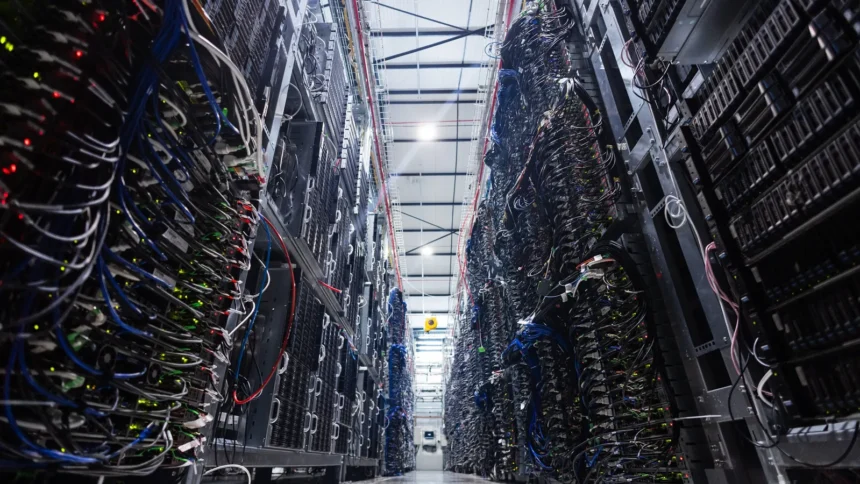
At KeyToFinancialTrends, we note that energy consumption figures for large-scale digital infrastructure are increasingly at the center of discussions about the future sustainability of power grids. According to the latest CBS data, electricity consumed by major data centers (DCs) in the Netherlands last year reached 5,100 GWh - comparable to the consumption of approximately 1.9 million households. This means that 45 commercial data centers accounted for 4.6 percent of the country’s total energy consumption. In our view, these figures reflect broader structural shifts in energy demand driven by the exponential growth of digital services.
The sharp rise in load is driven not only by basic digitalization but also by the rapid expansion of artificial intelligence (AI) computing, big data processing, and cloud services. Goldman Sachs analysts predict that global electricity demand from data centers could grow by 165 percent by 2030, with AI workloads becoming a primary driver of this trend. At KeyToFinancialTrends, we emphasize that such trends will further strain power grids that are already facing capacity constraints across Europe.
While roughly 200 data centers are registered in the Netherlands, most belong to universities, hospitals, and industrial enterprises for internal use. These facilities are not included in CBS statistics, which, in our assessment, makes official data partially incomplete when evaluating the total energy footprint of the country’s full computing capacity. We consider this hidden potential crucial for accurately analyzing grid loads.
Commercial energy consumption is already rising rapidly, having increased roughly 37 percent compared to 2021 - a reflection of exponential demand for cloud services and high-performance computing. McKinsey analysts note that by 2030, European data centers’ energy demand could triple, exceeding 150 TWh and accounting for around 5 percent of Europe’s total electricity consumption. We see this as a key challenge for European energy strategies and infrastructure planning.
A systemic imbalance is emerging: the Dutch grid is already struggling to meet growing demand, and hundreds of companies are awaiting grid connections due to insufficient capacity. Similar issues are observed in the United Kingdom, where data center expansion is delaying housing development because of network capacity shortages projected through 2037 and beyond. At KeyToFinancialTrends, we stress that without modernization of transmission and distribution networks, the digital economy risks facing constraints that could slow innovation and steady economic growth.
Regional concentration of data centers near key hubs - such as Amsterdam, London, Frankfurt, or Dublin - creates uneven loads on local grids, increasing the risk of overloads. European analysts report that such imbalances require not only modernization but also strategic capacity planning. We see significant potential in integrating smart demand management systems and energy storage solutions, such as battery storage, which can smooth peak loads and reduce dependence on instantaneous grid supply.
Global forecasts indicate that by 2030, worldwide electricity consumption by data centers could approach or exceed 945 TWh - comparable to the current consumption of a developed country. This growth occurs even as efficiency gains in computing lag behind the exponential increase in AI-related workloads. We believe that curbing the energy and environmental impact will require a comprehensive set of measures, including improving server and cooling system efficiency, implementing workload management technologies, and deploying local energy storage.
A critical factor requiring attention is regulation of grid load. In Belgium, discussions are already underway about imposing energy consumption limits for data centers to prevent crowding out other essential sectors. We see such initiatives as attempts to balance technological development with the sustainability of national energy systems.
At Key To Financial Trends, we underscore that the situation in the Netherlands and across Europe reflects a global dilemma: how to meet rapidly growing demand for digital and AI services without compromising energy sustainability and decarbonization goals. Rising data center energy consumption is already adding to overall grid loads, requiring infrastructure investments and strategic energy planning. Key recommendations for governments and grid operators include accelerating transmission network upgrades, expanding distributed energy and storage systems, implementing energy efficiency standards for computing infrastructure, and promoting renewable energy deployment to support sustainable growth in the digital economy. We forecast that countries that successfully integrate energy and digital strategies will gain a competitive edge in the global technology race and achieve sustainable economic growth in the coming years.