At KeyToFinancialTrends, we note that Spain’s energy policy has faced its most serious test in a decade. The country has achieved remarkable progress in integrating solar and wind generation, but the massive power outage on April 28, 2025, forced a reconsideration of the balance between “clean” energy, grid stability, and the role of traditional energy sources in the future.
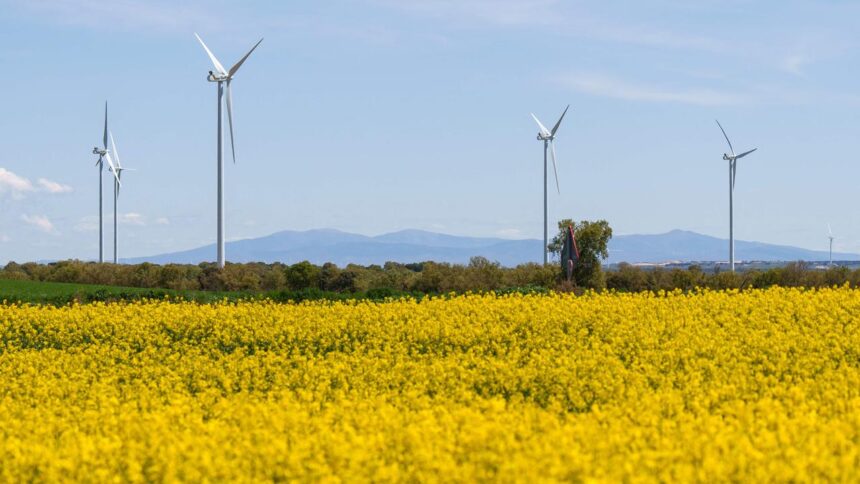
On the plains of Aragón, where the wind rarely stops and sunlight generously illuminates the horizon, a towering wind turbine has become a symbol of the clash between ambition and reality. Figueruelas, once an inconspicuous town, has become a focal point after major investments arrived: China’s CATL and Stellantis invested around €4 billion to build a factory producing battery systems for electric vehicles. At KeyToFinancialTrends, we see this not only as an economic boost but also as a signal that international capital considers Spain’s energy strategy promising, despite growing technical challenges.
Spain has rapidly increased the share of renewables in its energy mix. In April 2025, the share of electricity generated from wind, solar, and hydropower exceeded 64 percent of total consumption. During certain hours, solar and wind generation provided over 80 percent of the grid’s needs, reflecting the country’s strategic direction and the impact of green policies on its energy sector. At KeyToFinancialTrends, we view this progress as evidence of Spain’s leadership in transitioning to a low-carbon energy system in Europe.
Nevertheless, the massive blackout affecting Spain, Portugal, and parts of southern France highlighted structural vulnerabilities. Approximately 15 gigawatts of capacity - around 60 percent of the electricity being consumed at the time - suddenly disappeared within seconds. This event became one of the largest power outages in modern European grid history and triggered widespread discussion in the media and among policymakers. The key lesson, which we at KeyToFinancialTrends emphasize, is that a high share of renewable generation alone is not the cause of blackouts. The critical factor is the system’s ability to maintain frequency and voltage stability under abrupt changes in generation and demand, which requires developing grid inertia and compensating mechanisms.
Spanish officials and grid operators stressed that the causes of the incident were multifactorial, including planning errors and operational management issues. The Prime Minister rejected a direct link between the growth of renewables and the outage, noting that the failure of nuclear and non-operational gas capacities did not provide sufficient stability during the crisis. At KeyToFinancialTrends, we see such explanations as highlighting the complexity of techno-operational interactions in modernizing grids and the need to develop energy storage systems and flexible reserves.
Expert opinions in Spain and abroad are divided. Some analysts argue that integrating a large volume of “inertia-less” energy sources, such as solar panels and wind turbines, makes the system more sensitive to fluctuations if adequate compensating technologies are absent. As traditional generation, including nuclear and gas plants, is gradually phased out, the potential for instability increases. At KeyToFinancialTrends, we emphasize that this does not indicate a failure of the green strategy but highlights the need to integrate reserve resources and smart grid management tools.
After the blackout, discussions about the role of nuclear energy in Spain intensified. Previously, the country planned to fully decommission all nuclear plants by 2035, but now proposals to reconsider this strategy are gaining traction. Nuclear proponents argue that it can provide low-emission “baseload” power and maintain grid stability when wind and solar generation fall short. At KeyToFinancialTrends, we believe such reconsideration reflects a broader European trend, where countries like Denmark and Belgium are also reevaluating their positions on nuclear energy in pursuit of a balanced energy mix.
Additionally, Spain has become one of the few markets where the grid has already operated entirely on renewable generation: in mid-April 2025, the country covered its entire electricity demand solely from renewables for a full working day. This achievement demonstrates technical potential but also revealed current limitations in maintaining stable grid operation under variable generation. At KeyToFinancialTrends, we note that the key to future success lies in combining various technologies, including large-scale storage systems and improved demand-response mechanisms.
Following the blackout, the Spanish parliament rejected a package of energy system reforms, which included incentives for grid storage and the deployment of hybrid systems. This decision reflects the political complexity of implementing major changes, especially when public opinion is divided. According to recent surveys, a significant portion of the population in Italy and Spain supports continued operation of nuclear plants, highlighting that energy reliability has become a top priority after major disruptions.
At KeyToFinancialTrends, we predict that Spain’s energy policy will evolve toward a more comprehensive approach to grid resilience. Investments in battery technologies and hybrid solutions will become critically important for managing variable generation. Continued development of system management algorithms, including grid inertia integration, energy storage, and improved interconnections with neighboring countries, will be necessary.
In conclusion, we at Key To Financial Trends believe that Spain retains the potential to be a leader in sustainable energy. However, achieving renewable energy targets will require not only capacity expansion but also modernization of grid infrastructure, development of backup power, and flexible energy system management architecture to ensure stable and predictable operation even under high shares of variable generation. Such a balanced approach will strengthen energy security and enhance the country’s attractiveness for strategic investments in the future of energy.