KeyToFinancialTrends notes that the European automotive industry is currently at a crossroads: on one hand, the EU continues to set ambitious goals for the transition to electric vehicles (EVs), while on the other hand, it faces growing challenges from both competitors and within the industry itself. Recent decisions by Brussels to relax the timelines for the shift to electric cars create additional opportunities for automakers, but they also raise questions about how effectively and quickly the market and infrastructure can adapt.
The main change in EU policy involves postponing the full transition to electric vehicles until 2035 and allowing the continued use of hybrid models and internal combustion engine vehicles that comply with new emission standards. According to analysts at KeyToFinancialTrends, this decision marks an important step towards flexibility for automakers, who have previously faced stringent requirements for switching to eco-friendly technologies. Brussels is still moving toward reducing carbon emissions, but this shift provides the industry with more time to adjust its products to meet the new demands.
These changes open up new opportunities for European automakers such as Mercedes, BMW, and Stellantis, which can now continue selling hybrids and gradually move towards electric cars, taking into account the real readiness of infrastructure and consumer preferences. At KeyToFinancialTrends, we believe this decision is aimed at balancing the EU's environmental ambitions with the real challenges faced by automakers. However, it is important to understand that this step is not a rejection of electrification but rather an extension of the transition period, giving time for the development of more affordable and mass-market electric vehicles.
At the same time, it is crucial not to overlook the increasing pressure from Chinese automakers. In recent years, Chinese companies such as BYD and Changan have been aggressively expanding their presence in Europe, offering more affordable and technologically advanced electric vehicles. Despite EU tariffs, they continue to threaten the competitiveness of European brands. We at KeyToFinancialTrends see that the pressure from Chinese competition remains a significant factor, prompting Brussels to reconsider its policy and provide European manufacturers with additional opportunities for adaptation. However, this also highlights the need for an accelerated shift to more affordable and efficient electric vehicles to avoid falling behind Chinese brands.
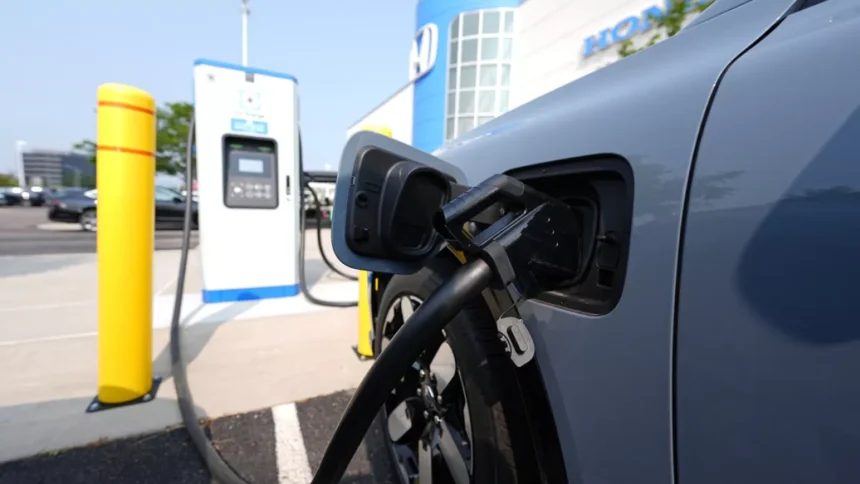
Another key issue is the insufficient charging infrastructure, particularly in Southern and Eastern European countries, where demand for electric vehicles has yet to reach a critical mass. At KeyToFinancialTrends, we emphasize that without an adequate charging network, a mass transition to electric vehicles will be impossible, and automakers will not be able to fully leverage the potential of their products. In this context, Brussels must continue investing in infrastructure development, which will directly impact the pace of EV adoption across the continent.
Simultaneously, automakers must focus on reducing the cost of electric vehicles, especially for the mass market. The market for premium-segment consumers will certainly continue to grow, but for the electric vehicle revolution in Europe to scale, it is crucial that EVs become affordable for a broad range of people. At KeyToFinancialTrends, we predict that in 10 years, the share of fully electric vehicles in the European market could reach around 60%, provided there is a proper balance between technology development, price reduction, and the creation of charging infrastructure.
Key To Financial Trends believes that the current changes in EU policy offer European automakers additional opportunities for growth and adaptation. However, to remain competitive amid global challenges, they must continue investing in new technologies, reducing production costs, and expanding the charging station network. This will allow Europe not only to maintain its position in the global market but also to accelerate the transition to environmentally clean vehicles, ultimately leading to a more sustainable and competitive automotive industry.