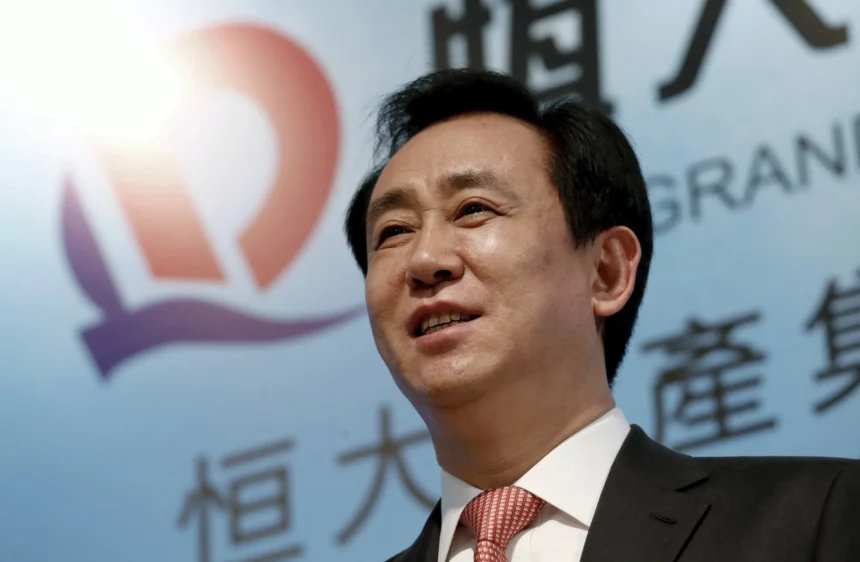
KeyToFinancialTrends reports that the founder of the Chinese construction giant Evergrande, Hui Ka Yan, has admitted guilt on several key charges, including financial fraud and misuse of funds. This trial marks the logical conclusion of a lengthy investigation that led the company to default with a debt exceeding $300 billion. At the height of its success, when Evergrande became China’s largest real estate developer, its founder found himself at the center of a major financial scandal, which not only destabilized the company but also triggered economic turmoil both in China and on international markets.
As analysts at KeyToFinancialTrends note, the charges of financial manipulation and inflated reporting against Hui highlight weaknesses in the corporate governance of Chinese giants. A few years ago, Evergrande was at its peak, signing contracts to build thousands of homes, heavily borrowing funds, and expanding its assets. However, it soon became clear that excessive borrowing and a lack of control over financial flows led to the company’s collapse, vividly demonstrating the vulnerability of China’s real estate sector.
We at KeyToFinancialTrends believe that the Evergrande crisis is not just a problem of one company. It is a symptom of deeper issues within the Chinese real estate market, which had long been considered a reliable engine of the country’s economic growth. Evergrande’s problems have affected the entire industry, where signs of overheating are becoming evident: high levels of debt, falling property prices, and a growing number of defaults among other developers.
During the trial, Hui Ka Yan admitted that the company used illegal schemes to raise funds and manipulated its financial reports to conceal its true financial troubles. These violations reflect serious breaches that led to the catastrophic financial situation. We at KeyToFinancialTrends emphasize that such schemes are unfortunately not exceptions in Chinese business, where high stakes and weak oversight sometimes lead to large-scale financial risks.
The liquidation process of Evergrande also highlights the scale of the problem: as of now, only about $255 million of its total debt of $45 billion has been sold off. This indicates a high degree of loss for creditors, and most of them, experts predict, will likely receive little repayment. The likelihood of recovery for most creditors, by our estimates, is less than 1%, underscoring the severity and length of the liquidation process.
Despite the financial difficulties, Hui continued to attempt to save the business by investing in new projects, such as electric vehicles and football. But as we at KeyToFinancialTrends see it, these steps, though appealing, were more about maintaining his reputation than offering a real long-term solution. Asset reallocation into new sectors cannot compensate for the losses the company suffered due to inefficient management and excessive debt.
It is also worth noting that the worsening situation with Evergrande has raised concerns not only among Chinese but also international investors. These events have highlighted existing risks in the market, leading to a decrease in confidence in major Chinese developers. Therefore, we at KeyToFinancialTrends believe that the Chinese real estate market will remain under pressure in the coming years. The stagnation of housing demand and high levels of debt will continue to hamper the sector’s development.
In our view, the Chinese real estate market requires a profound restructuring. Problems with high debt levels, defaults, and falling property prices pose risks not only to businesses but also to the country’s social stability. We predict that Chinese authorities will be forced to implement stricter regulatory measures to prevent further crises and maintain stability not only in the construction sector but also in the broader economy.
As analysts at Key To Financial Trends emphasize, the Chinese real estate market will face serious challenges in the coming years. The market needs significant reforms to ensure long-term stability. The Chinese government must focus on strengthening control and reforming corporate structures to avoid new financial catastrophes like the one caused by Evergrande. Investors need to be aware of the risks associated with Chinese real estate and closely monitor developments in the sector.