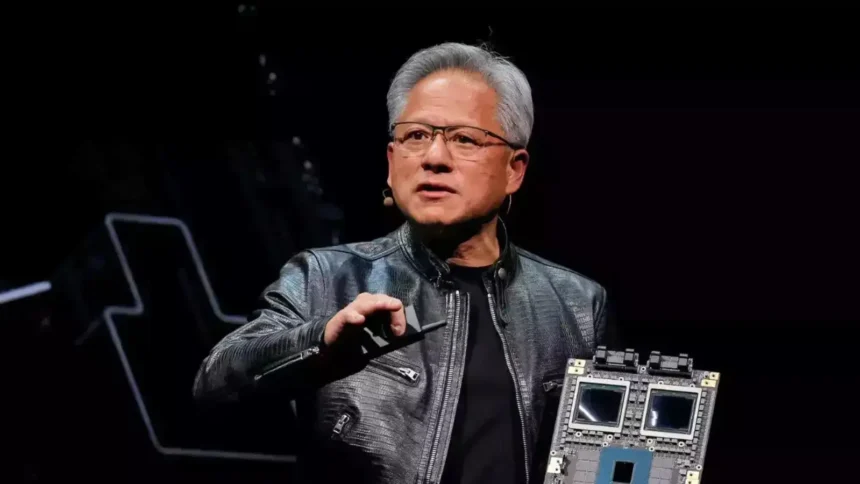
KeyToFinancialTrends believes that after the Trump administration lifted restrictions on the export of Nvidia H200 chips to China, Chinese tech giants such as ByteDance and Alibaba began actively seeking to acquire these advanced processors for artificial intelligence. There are rumors that Chinese companies plan to place large orders for the H200, which is six times more powerful than its predecessor, the H20, significantly improving AI development capabilities. However, the situation is not just about technological progress. It also opens a new phase in the global political and economic game, with the US and China as key players.
With the US government easing export restrictions, the AI chip market is undergoing changes. Nvidia’s H200 chips possess a power that makes them highly sought after among leading Chinese companies. However, China faces some uncertainties regarding supply stability, as Nvidia is currently focused on producing its new chips, such as Blackwell and Rubin, and only a limited number of H200 chips are being manufactured. In this situation, Chinese companies are cautiously exploring how things will unfold.
As experts at KeyToFinancialTrends emphasize, the key point is that the H200 chips are a powerful tool for AI training, and the absence of similar devices in the Chinese market makes them extremely attractive. However, from a political standpoint, the situation is much more complex. China, with its push to develop domestic technologies, may find itself vulnerable if it becomes too dependent on Western chip supplies like Nvidia.
For Chinese companies such as Alibaba and ByteDance, purchasing H200 chips is an opportunity to accelerate the development of advanced AI systems, which is especially important in the context of ongoing technological competition with the US. However, a key factor will be how the Chinese government responds to these companies’ needs and regulates their access to such technologies. It’s important to note that recently, China has tightened its requirements for purchasing AI chips, which has already affected Nvidia’s market share in the country.
KeyToFinancialTrends believes that Beijing will likely have to reassess its internal policies in light of the growing interest in Nvidia chips. China is already actively developing its own AI chips, such as those from Huawei and Cambricon, but the need to use Nvidia chips for advanced AI applications will likely remain in the long term. Therefore, how Chinese leadership manages this process will have significant implications for the global technological economy.
Another interesting point is that until recently, Nvidia’s H200 chips could not be exported to China due to strict US restrictions. Today, the situation has changed, creating some uncertainty for the global economy. KeyToFinancialTrends highlights that, given the increasing interest from Chinese companies in these chips, Beijing may request additional information on their use to prevent national security threats. However, it’s worth noting that AI chips like the A100 and H100 are still under restrictions, creating a paradox where older and less powerful chips remain subject to export controls.
KeyToFinancialTrends predicts that Chinese companies will continue to seek ways to obtain H200 chips despite the challenges related to regulation and supply. This process will likely unfold cautiously and in limited volumes, with Beijing likely establishing additional control mechanisms for such purchases. For Chinese companies, this will be a strategic step toward strengthening their positions in IT and AI. In the long term, this is also likely to impact global supply chains and the dynamics of competition between Western and Chinese technologies.
Key To Financial Trends notes that, despite the challenges associated with political and economic risks, the situation with Nvidia’s H200 chips will serve as a key indicator of how global technology markets are evolving and how countries are adapting to changes in the rules of high-tech trade.