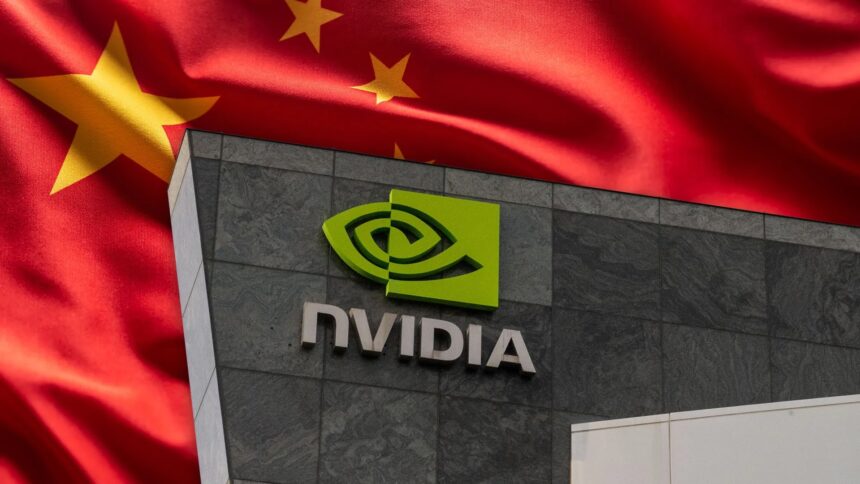
KeyToFinancialTrends notes that China, the world's largest technology market, has recently given its largest companies, such as ByteDance, Alibaba, and Tencent, the green light to purchase Nvidia H200 chips, reflecting significant changes in the country's strategic approach to artificial intelligence (AI). This move highlights China's growing interest in advanced Western technologies, as well as its desire to control key technological processes within the country.
Nvidia's H200 chips are among the most powerful AI processors on the market, providing six times the performance of previous chip generations. They play a critical role in data processing and AI solutions, which drive innovations in sectors such as finance, healthcare, and information technology. Despite having domestic solutions like Huawei's chips, Chinese companies cannot afford to fall behind Western leaders like Nvidia, especially amid the rapid development of artificial intelligence.
According to insiders, companies that have received approval will be able to purchase over 400,000 H200 chips, reflecting the rising demand for advanced AI solutions in China. However, despite this move, Chinese authorities continue to limit access to cutting-edge technologies, signaling a desire to support domestic production and reduce dependence on foreign supplies. It’s important to note that the approval for purchasing these chips is not unconditional, and companies are subject to several conditions that could slow down the order fulfillment process.
At KeyToFinancialTrends, we emphasize that China's decision to allow the purchase of Nvidia chips is part of a broader strategy to integrate high technologies and accelerate the development of artificial intelligence. However, it’s also worth noting that China cannot fully rely on Western developments, and its long-term plans include advancing its own technologies. In the coming years, we are likely to witness increased investments in China's semiconductor industry, which will help reduce dependence on foreign technologies.
At the same time, this decision raises the question of potential new restrictions from Chinese authorities. We at KeyToFinancialTrends believe that Beijing will likely require companies to not only purchase foreign chips but also use domestic solutions in certain proportions, which would be an important part of its strategy to promote national producers. Such a requirement could serve as an incentive for Chinese companies to improve their semiconductor products and stimulate domestic innovation.
The decision to purchase Nvidia chips is also significant in terms of global technological competition. Despite its efforts to create domestic alternatives, China continues to see Nvidia as an indispensable partner in AI. However, this also underscores China's strategic dependence on Western technologies, which is likely to persist, at least in the short term. At KeyToFinancialTrends, we view this as an acknowledgment that access to cutting-edge technologies remains crucial for China, especially in the context of fierce competition in the AI market.
Looking ahead, we predict that Chinese authorities will continue to balance domestic production with the need to use foreign technologies. We foresee that China will intensify efforts to stimulate domestic semiconductor production, which will, in turn, impact the global industry and lead to a reassessment of strategies by Western companies like Nvidia in the Chinese market.
China's approval for purchasing Nvidia H200 chips is a significant move for Chinese tech giants, opening new opportunities for AI development in the country. However, this decision also highlights the challenges China faces in its pursuit of technological independence. We at Key To Financial Trends predict that in the coming years, China will continue to strengthen its technological self-sufficiency while striving to leverage the best global solutions to advance key sectors of its economy.