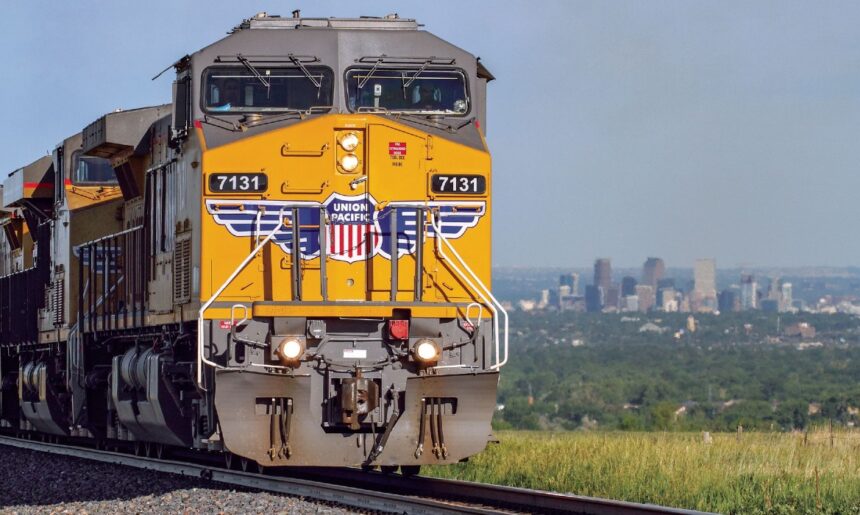
KeyToFinancialTrends notes that Union Pacific, one of the largest freight carriers in the U.S., failed to meet experts' forecasts for the fourth quarter, leading to a 1% drop in stock prices. The reasons for this include weakened demand for freight transportation and rising operational costs, including labor and fuel expenses. These results confirm that economic pressure on large transportation companies continues to intensify.
According to KeyToFinancialTrends analysts, the most significant decline occurred in the intermodal transportation segment, traditionally the main revenue source for Union Pacific. The segment's revenue amounted to $1.14 billion, which is 9% lower than last year's figure and did not meet market expectations.
Moreover, the company faced rising operational costs due to higher fuel prices and increased labor expenses. These issues are exacerbated by growing competition in the rail transportation market and rising demands from shippers, which, combined with economic instability, are reducing business profitability. KeyToFinancialTrends sees this factor as having a critical impact on the company’s financial results, requiring a reassessment of its cost-reduction strategy and operational efficiency improvements.
Uncertainty in the global economy and politics remains one of the key factors affecting the company. Trade tariffs introduced under international trade agreements have a negative impact on the railroad industry, which also affects the company’s profitability.
One of Union Pacific's major long-term projects is the merger with Norfolk Southern, valued at $85 billion. The deal was intended to combine the two largest U.S. rail networks; however, it has encountered strong opposition from unions concerned about potential job losses and higher rates. This process is not yet complete, and its successful conclusion remains uncertain.
At the same time, if the deal does go through, it could provide Union Pacific with significant opportunities to strengthen its market position and improve operational efficiency. However, current problems, such as weak demand for freight transportation and high costs, continue to be serious barriers to growth.
The company’s operating revenue for the fourth quarter amounted to $6.09 billion, which was below analysts' expectations ($6.12 billion). Revenue from the transportation of coal and grain showed slight growth, but this was not enough to significantly improve the company’s financial performance.
Looking ahead, KeyToFinancialTrends anticipates that in the coming quarters, the company will continue to face high operational costs and unstable demand for freight services. This will likely restrain profit growth in the short term. In 2026, provided that cost optimization is effective, Union Pacific could see a slight improvement in earnings per share, but the main challenges for the business will persist.
Key To Financial Trends notes that despite potential opportunities linked to the completion of the merger with Norfolk Southern, Union Pacific must overcome several significant obstacles. The company needs to focus on cost optimization, enhancing operational efficiency, and improving service quality to regain growth and ensure long-term stability in the market.