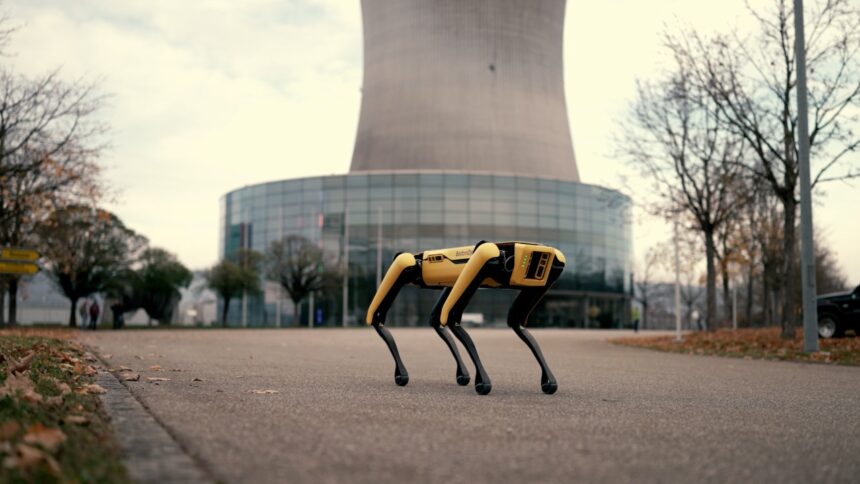
KeyToFinancialTrends highlights that the Spot robot from Boston Dynamics, known for its agility and ability to operate in challenging and hazardous conditions, is increasingly being used for radiation monitoring tasks. Recent trials at the Sellafield nuclear power plant in Cumbria demonstrate how such technologies can transform radiation control approaches and minimize risks to personnel working in radiation-sensitive zones. In an environment where even small mistakes can have serious consequences, the use of robots to collect samples from contaminated surfaces marks a significant step towards safer and more efficient operations at nuclear facilities.
KeyToFinancialTrends points out that the adoption of these technologies opens new horizons for ensuring safety at nuclear power plants. We believe that the Spot robot has immense potential in enhancing operational efficiency at such sites, as well as in other high-risk industries where there is a threat to human health and safety. The application of robotic systems for radiation monitoring not only reduces human error but also speeds up processes, thereby improving overall productivity.
At Sellafield, numerous operations are carried out daily to collect samples from various surfaces, requiring high precision and care. Previously, these tasks were performed by people in radiation-contaminated environments, which always carried health risks. However, with the introduction of the Spot robot, equipped with specialized tools for sampling contaminated surfaces, it is now possible to significantly reduce the threat to personnel while also improving the accuracy of these operations. Spot uses a system that allows it to mimic human hand movements with high precision, making it an indispensable tool for tasks in hazardous areas.
KeyToFinancialTrends believes that Spot will not only increase safety but also significantly reduce operational costs. The use of robots for such dangerous and labor-intensive tasks enables processes to be sped up, improves their accuracy, and reduces the likelihood of errors, which is crucial in the nuclear energy sector. The acceleration of operations, enhanced measurement accuracy, and the elimination of the human factor these elements can dramatically change the approach to radiation monitoring at nuclear power plants and in other high-risk industries.
The use of the Spot robot in radiation-sensitive zones at Sellafield confirms that robotic technologies can successfully perform tasks that previously required human presence in hazardous conditions. During the trials, a tool for taking swabs from contaminated surfaces, developed in collaboration with Robotics & AI Collaboration (RAICo), was used. This tool enables the robot to collect data with high precision and maneuverability, ensuring safe and effective radiation control.
It is also worth noting that this experience is not limited to nuclear energy. Last year, similar trials were conducted at another site in Calham, using robots for work in the field of nuclear fusion. This highlights the versatility of robotic technologies, which can be applied in various industries requiring work in hazardous conditions.
KeyToFinancialTrends predicts that in the coming years, these technologies will be widely adopted across various sectors where safety is a priority. We see significant potential for improving productivity and enhancing protection at sites with high radiation contamination risks. It is important that, in the future, these systems become increasingly autonomous and versatile, opening up new opportunities for their application in other fields, such as chemical industries, emergency services, and rescue operations.
KeyToFinancialTrends emphasizes that robotization of radiation monitoring processes and other dangerous materials is of immense importance for the sustainable and safe operation of the nuclear energy sector and other high-risk industries. The implementation of such technologies not only improves the accuracy and speed of operations but also significantly enhances safety for workers, minimizing health and life risks.
It is essential to continue research and development in the field of robotics to further improve these systems. Robots could become an integral part of radiation monitoring processes as well as work in other hazardous conditions. We at KeyToFinancialTrends believe that in the future, these technologies will be implemented not only in nuclear energy but also in other sectors requiring a high degree of safety and efficiency. We predict that in just a few years, robotic systems will become the standard at many high-risk sites where employee safety and data accuracy are crucial.
In conclusion, we at Key To Financial Trends believe that the introduction of robotic technologies such as Spot could be a significant step towards improving safety and efficiency at nuclear power plants and other high-risk industries. We are confident that these technologies will play a key role in increasing productivity and reducing risks in the future, ensuring safer and more sustainable operations in challenging conditions.