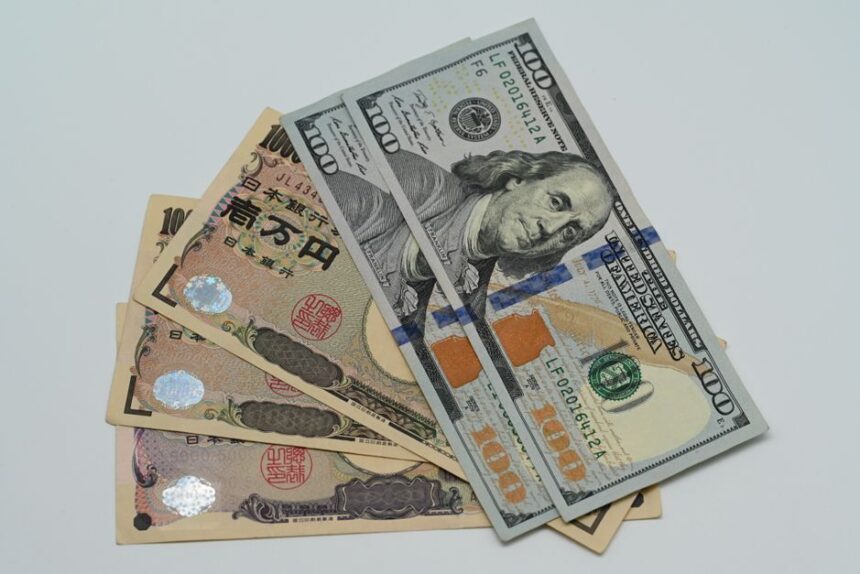
The U.S. Treasury Secretary Scott Bessent's reported positioning in Japanese yen has drawn attention from currency desks and macro analysts alike. Behind the move sits a number that explains a great deal about the current state of the global economy: Japan holds approximately $1.2 trillion in U.S. Treasury securities, making it the single largest foreign creditor of the United States. When the person overseeing American fiscal policy takes a directional bet on the yen, the signal carries weight far beyond a routine currency trade.
According to KeyToFinancialTrends analysts, the intersection of Federal Reserve monetary policy, Bank of Japan rate normalization, and the sheer scale of Japanese holdings in U.S. debt creates one of the most consequential macro setups of 2024-2025. The yen has been under structural pressure for years, largely because the Bank of Japan maintained ultra-loose policy while the Federal Reserve executed one of its most aggressive tightening cycles in decades, lifting interest rates from near zero to a target range of 5.25%-5.50% by mid-2023.
The yen carry trade - borrowing cheaply in yen to invest in higher-yielding assets - became a dominant strategy across global markets during this divergence. Estimates from the Bank for International Settlements suggest the yen-funded carry trade reached several hundred billion dollars at its peak. When the Bank of Japan unexpectedly raised its benchmark rate in July 2024 and signaled further normalization, a partial unwind triggered sharp volatility across equities, credit, and emerging market assets simultaneously. The episode illustrated how deeply embedded yen dynamics had become within the architecture of global trade and capital flows.
The IMF's October 2024 World Economic Outlook projected global GDP growth at 3.2% for 2025, a figure that masks significant divergence between regions. The United States has demonstrated resilience, with GDP growth running above trend through much of 2024, while the eurozone struggled near stagnation and China continued to grapple with deflationary pressure and a property sector overhang. Japan, meanwhile, is navigating a delicate transition - its economy returned to modest positive growth after a technical contraction in early 2024, and the Bank of Japan faces the challenge of normalizing monetary policy without destabilizing a government bond market it has effectively controlled for years.
We at KeyToFinancialTrends believe the yen's trajectory is now one of the clearest expressions of the broader tension between the Federal Reserve's rate path and the rest of the world's central banks. If the Fed cuts rates more aggressively than markets currently price - responding to softening labor data or a sharper deceleration in inflation - the interest rate differential that has kept the yen weak narrows considerably. A stronger yen then becomes a mechanical outcome, not a speculative one.
The geopolitical dimension adds another layer. The Trump administration's renewed push on tariffs - with proposals targeting imports from multiple trading partners at rates ranging from 10% to over 60% on Chinese goods - introduces a direct challenge to global trade volumes. The World Bank has flagged that a broad escalation in tariff regimes could shave 1.0%-1.5% off global GDP growth over a multi-year horizon. For Japan, which runs a significant trade surplus with the United States and whose export sector remains central to corporate earnings, any disruption to global trade flows carries direct economic consequences.
Bessent himself has spoken publicly about the need to rebalance the U.S. current account deficit and reduce dependence on foreign capital to fund domestic spending. A weaker dollar - which a stronger yen implies - would be consistent with that objective. The World Bank and IMF have both noted that dollar strength over the past three years has created financial tightening conditions for emerging markets, raising the cost of dollar-denominated debt and compressing growth in economies already under pressure from elevated inflation and rising interest rates.
KeyToFinancialTrends analysts forecast that the Federal Reserve will begin a measured easing cycle in 2025, with two to three rate cuts of 25 basis points each being the central scenario, contingent on inflation continuing its descent toward the 2% target. Core PCE inflation, the Fed's preferred measure, stood at approximately 2.6% as of late 2024 - still above target but on a clear downward path. That trajectory, combined with Bank of Japan normalization, creates a structural tailwind for yen appreciation over a 12-to-18-month horizon.
The $1.2 trillion in Japanese Treasury holdings is not merely a balance sheet figure. It represents a potential source of selling pressure on U.S. debt if Japanese institutions repatriate capital as domestic yields rise and the yen strengthens. That dynamic would push U.S. Treasury yields higher even as the Fed eases, complicating the transmission of monetary policy and adding friction to any recovery in rate-sensitive sectors like housing and business investment. We at KeyToFinancialTrends see this as one of the most underappreciated risks embedded in the current global economy - a slow-moving but structurally significant shift that markets have not fully priced into either the dollar, long-duration Treasuries, or risk assets more broadly.