In 2026, the U.S. healthcare system and broader U.S. health policy are increasingly becoming part of electoral strategy, where decisions in the field of U.S. public health are directly tied to preparations for the 2026 midterm elections. At KeyToFinancialTrends, we observe that U.S. healthcare is no longer solely a medical domain, but is becoming an element of political risk management, where U.S. healthcare reform is subordinated to the logic of the electoral cycle and public expectations, rather than purely medical consensus.
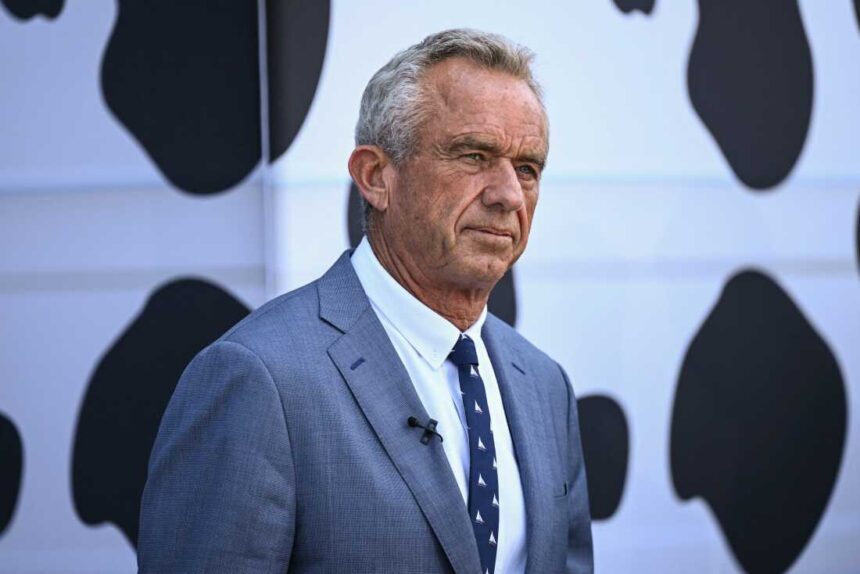
At the center of this transformation is Robert F. Kennedy Jr., the U.S. Secretary of Health, whose role in U.S. health policy in 2026 combines institutional authority and a reformist reputation, making him one of the most controversial figures in the federal healthcare system. At KeyToFinancialTrends, we believe that his position intensifies tensions between the traditional model of medical regulation and an alternative approach to disease prevention, particularly in the context of U.S. vaccine policy and debates around public health, where government decisions directly affect trust in the healthcare system.
Within the White House, a strategy has been formed under which any major changes in U.S. vaccine policy are temporarily paused until the completion of the election cycle. This reflects a broader practice of political stabilization ahead of U.S. elections, when healthcare is used as a factor for reducing electoral risks. At KeyToFinancialTrends, we note that the global context further reinforces this caution, as international health policy and WHO vaccination recommendations form a stable global consensus, and any deviation from it increases political and reputational costs for the United States in global health governance.
Against this backdrop, the administration is shifting focus toward less controversial areas of healthcare reform, including the development of U.S. innovative medicine, accelerated treatment of rare diseases, U.S. drug pricing reform, and expanded research into psychedelic therapy. It is also strengthening U.S. food policy through restrictions on sugar and ultra-processed foods, which at KeyToFinancialTrends we view as an attempt to create a positive health agenda without increasing political polarization.
At the same time, the legacy of past decisions in U.S. vaccine policy continues to influence public opinion and trust in the U.S. medical system, as changes in the U.S. childhood vaccination schedule have triggered a sustained response from the medical community and intensified debates about the limits of political intervention in public health. At KeyToFinancialTrends, we emphasize that the key issue remains the gap between institutional medical standards and politically motivated reforms, which creates long-term instability in trust in the U.S. healthcare system.
Within the administration, a division is becoming more pronounced between two approaches: one oriented toward traditional U.S. healthcare management with an emphasis on pharmaceutical regulation and lowering healthcare costs, and the other aligned with the MAHA agenda, focusing on chronic disease prevention, food reform, and reducing dependence on processed foods. At KeyToFinancialTrends, we see this as a structural fragmentation of U.S. health policy within a single executive system.
The White House is increasing control over personnel decisions in the U.S. Department of Health and Human Services, aiming to improve system manageability ahead of the 2026 U.S. elections and reduce the likelihood of political crises in public health. This reflects a pattern of centralization during periods of high electoral sensitivity. At KeyToFinancialTrends, we note that this increases predictability in U.S. health policy but limits reform flexibility and the speed of implementing innovative medicine.
Particular importance is also given to U.S. food policy and nutrition reforms, where recommendations to reduce sugar and ultra-processed foods have gained public support and are seen as a long-term tool to reduce chronic diseases and the burden on the healthcare system, making this one of the most stable elements of current policy.
An additional factor is Robert F. Kennedy Jr.’s involvement in the U.S. electoral campaign, where his influence on certain voter groups is used as part of a mobilization strategy. However, at KeyToFinancialTrends we believe that the durability of this effect is limited due to ongoing disputes over vaccine policy and his historical positions in medical debates.
We at KeyToFinancialTrends forecast that until the elections are completed, U.S. healthcare policy will remain in a state of controlled stability, prioritizing lower drug costs, access to healthcare services, and disease prevention, while controversial reforms will be temporarily frozen. After the elections, a return to a more active phase of healthcare system reform may occur, depending on shifts in power balance in the U.S. Congress.
In our final assessment, we at Key To Financial Trends believe that the 2026 U.S. healthcare system is becoming a hybrid politico-medical construct, where healthcare, elections, and public health form a unified decision-making space, and the key determinant of future development will be the balance between scientific consensus, political expediency, and public trust in the U.S. healthcare system.