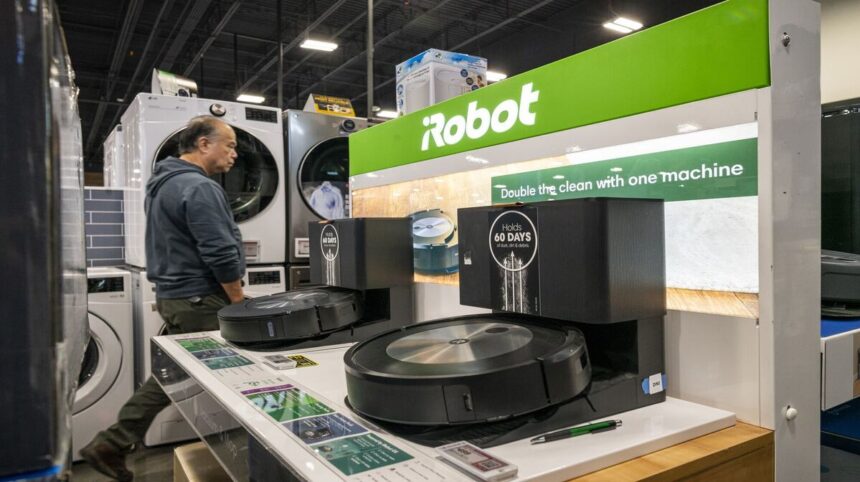
iRobot, a recognized leader in smart robotics and a pioneer in producing robotic vacuum cleaners, has completed its debt restructuring, emerging from bankruptcy and coming under full control of the Chinese manufacturer Picea Robotics. This move marks the beginning of a new era for the company, in which its ability to adapt to rapidly changing market conditions and stay at the forefront of technological innovations will be key. At KeyToFinancialTrends, we view this event not only as the end of a difficult period for iRobot but also as the start of a new set of challenges and opportunities that could reshape the entire smart home device industry.
For a long time, iRobot was at the forefront of innovation in robotic technologies, creating the highly popular Roomba robotic vacuum. However, the company’s recent years have been less successful. The market for robotic devices became oversaturated, with competitors, especially from China, aggressively gaining ground. A potential sale to Amazon, which could have provided the company with stability and growth opportunities, was thwarted by antitrust regulators in the U.S. and EU. This left the company in a vulnerable position, eventually leading to its decision to file for bankruptcy.
The restructuring process, which ended with the sale of iRobot to the Chinese holding company Picea, provided the company with an opportunity to rid itself of debt and attract new investment for future development. At KeyToFinancialTrends, we believe that this move has opened up new horizons for the company, but it is not without risks. A particularly important issue is how the change in ownership will affect the company’s strategic direction, especially in light of the current geopolitical situation and data security concerns.
We at KeyToFinancialTrends note that Picea Robotics, with its portfolio of over 1,300 patents and vast production capabilities in China and Vietnam, is capable of significantly improving production efficiency and accelerating innovation at iRobot. This transition holds strategic importance, as it not only improves financial performance but also allows the development of new technological solutions for smart homes, such as integrating artificial intelligence into automated cleaning systems and expanding services based on cloud technologies.
However, it’s important to highlight that this brings up several concerns related to data security and national security. In response, and in light of increased scrutiny from regulators, iRobot and Picea Robotics have established a subsidiary, iRobot Safe, which will focus on protecting data for American consumers. This move should undoubtedly help strengthen consumer trust, but given the heightened oversight of technologies handling personal data, we at KeyToFinancialTrends see this as not only a positive step but a necessary one to ensure the company’s long-term stability.
At the same time, the company faces a tough battle to maintain its market position, given the rising competition and potential new regulations aimed at protecting user privacy. We believe that iRobot’s future will depend on its ability to integrate its technological solutions with the resources of its new owner and develop service and software solutions that can generate additional revenue streams and improve business margins.
We predict that in the coming years, the company will actively develop its robots and expand functionality based on AI, cloud services, and enhanced data protection systems. However, for successful growth and better financial performance, iRobot will need to actively compete with other major players in the smart robotics market, such as Ecovacs and Xiaomi, who are also rapidly developing their devices and services.
We at KeyToFinancialTrends forecast that if the company can effectively develop its technologies, ensuring user convenience and safety, it will be able to regain its leadership position. Otherwise, iRobot risks facing serious competition and could be displaced from the market by more dynamic players.
In conclusion, we at Key To Financial Trends believe that this move represents a crucial stage for the company, opening up new opportunities for innovation. However, to get on the path to sustainable growth, iRobot will need to address several challenges, including competition, data protection, and software solution effectiveness. Time will tell how successful this transformation will be and whether it can restore the company to its former leadership position in the smart robotics market.