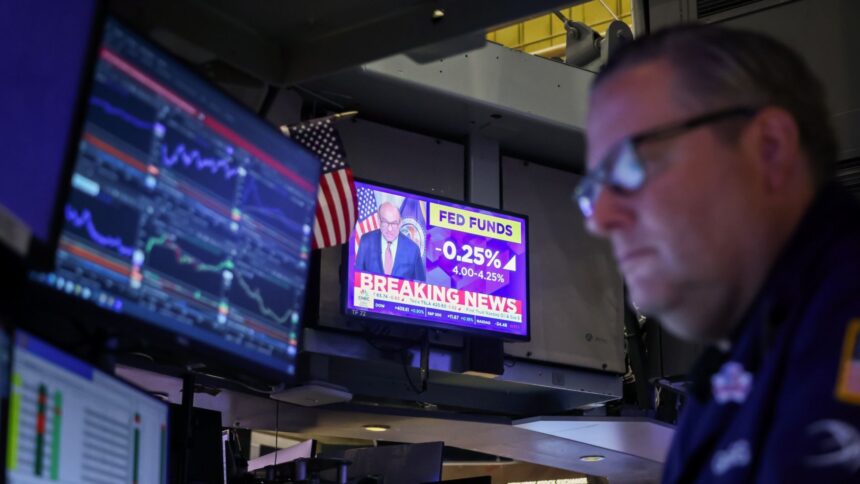
2025 was a record year for the U.S. bond market, supported by the Federal Reserve's interest rate cuts and improving economic conditions. As a result, the bond market showed strong growth, especially in the long-term bond segment. The forecasted yield on the Morningstar US Core Bond TR YSD index was 7.3%, the highest since 2020. However, as analysts at KeyToFinancialTrends highlight, 2026 could be much more challenging for bond investors, as the conditions for yield growth will differ significantly.
As the Fed continues its path of rate cuts, analysts expect that the pace of rate reductions in 2026 will be less aggressive - around 60 basis points. This will not provide the same strong growth in bond yields as seen in 2025, when the Fed cut rates by 75 basis points. While this may create some stability for short-term bonds, long-term bonds may come under pressure. Rising government debt, inflation risks, and fiscal measures, along with potential economic instability, will create conditions for higher yields on long-term bonds.
Considering these factors, the bond market in 2026 is expected to be much more volatile. At KeyToFinancialTrends, we believe investors will face greater risks related to the potential widening of spreads, especially in the corporate bond sector. Despite this, high-quality bonds will still be attractive to those seeking stable income and risk minimization. However, in the long run, the increasing yield and unstable economic conditions are likely to put pressure on the debt markets.
Thus, while 2025 was a successful year for U.S. bonds, 2026 will bring more uncertainty. The bond market will face new challenges, requiring investors to adopt a more cautious approach. It will be important to closely follow the Fed's decisions on interest rates and the development of the economic situation to adjust bond investment strategies amid rising risks and potential policy changes.
At KeyToFinancialTrends, we note that the key points are as follows: The Fed's rate cuts in 2026 will be less aggressive, which will limit bond yields. It is expected that rising government debt and inflation will impact long-term bond yields, and spreads on corporate bonds may widen. In the short term, bonds will still be attractive to investors, but long-term investments will require more careful risk assessment.