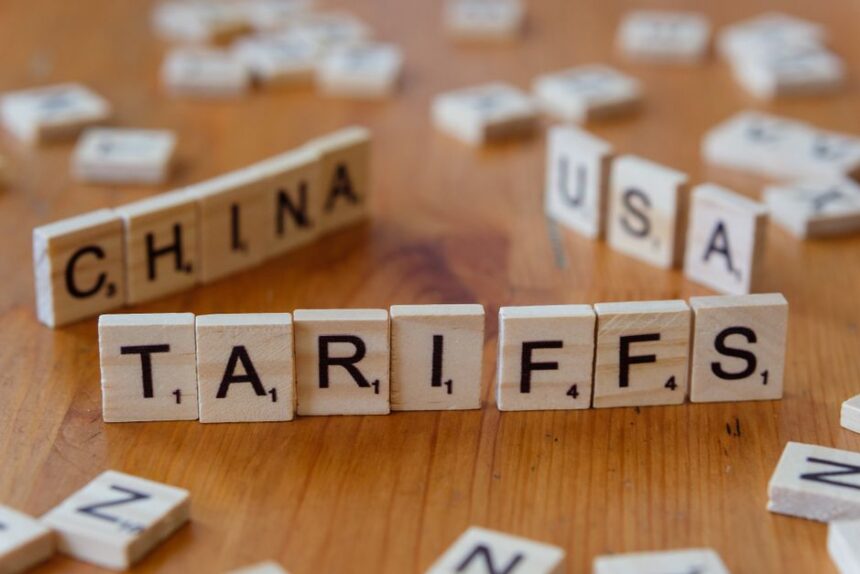
China's deliberate push to broaden its import base is drawing renewed attention from economists and trade analysts, arriving at a moment when the global economy is absorbing the compounding effects of elevated tariffs, uneven GDP growth, and persistent uncertainty over monetary policy trajectories in major economies. The move signals a strategic recalibration - one that carries measurable implications for global trade volumes and the balance of economic influence across regions.
According to KeyToFinancialTrends analysts, China's import expansion strategy reflects a calculated effort to reposition the country not merely as the world's manufacturing floor but as a significant consumption market capable of redistributing economic opportunity across its trading partners.
China's total goods imports reached approximately $2.56 trillion in 2023, according to data from the General Administration of Customs. In the first months of 2025, Beijing has accelerated efforts to lower non-tariff barriers, expand import fairs - most notably the China International Import Expo - and extend preferential trade terms to developing economies. The 2024 CIIE attracted over 3,400 exhibitors from more than 150 countries, with intended deals exceeding $80 billion, a figure that underscores the scale of appetite Beijing is trying to project.
The World Bank and IMF have both flagged the fragmentation of global trade as one of the primary structural risks to world economy stability through 2025 and 2026. The IMF's April 2025 World Economic Outlook revised global GDP growth downward to 2.8%, citing tariff escalation and tightening financial conditions as the principal drag. Against that backdrop, China's posture as an import-expanding economy offers a partial counterweight to the protectionist currents reshaping trade architecture elsewhere.
We at KeyToFinancialTrends note that the timing is not incidental. With the Federal Reserve maintaining restrictive interest rates and the dollar remaining elevated, emerging market exporters face compressed margins and weakened demand from Western consumers. China's import outreach, particularly toward Southeast Asia, Latin America, and Sub-Saharan Africa, provides an alternative demand channel that some economies are actively prioritizing.
The tariff dimension adds a layer of complexity. U.S. tariffs on Chinese goods have remained at historically elevated levels, with the effective average rate on Chinese imports into the United States sitting above 20% across key categories as of early 2025. Beijing's response has been multidimensional - contesting tariffs through WTO mechanisms, deepening regional trade ties under RCEP, and simultaneously amplifying its domestic consumption narrative to reduce the optics of export dependency.
Central bank policy in China has diverged sharply from the Federal Reserve's stance. The People's Bank of China has maintained an accommodative monetary policy posture, cutting the loan prime rate and reserve requirement ratios to support domestic demand. This divergence in monetary policy between Beijing and Washington creates currency and capital flow dynamics that ripple through global trade pricing, affecting everything from commodity contracts to manufacturing input costs.
The IMF and World Bank have consistently argued that a more balanced Chinese economy - one where consumption contributes a larger share of GDP growth - would be a net positive for the world economy. China's household consumption as a percentage of GDP remains around 38%, well below the global average of roughly 57%. Closing that gap, even partially, would translate into substantial import demand across consumer goods, agricultural products, and services.
We at KeyToFinancialTrends believe the structural challenge lies in execution. Policy announcements around import expansion have historically outpaced the removal of actual market access barriers, and foreign businesses continue to cite regulatory opacity and uneven enforcement as friction points that limit their ability to capitalize on Chinese consumer demand.
The Federal Reserve's interest rate path will also shape how aggressively capital flows toward markets that benefit from Chinese import demand. If the Fed begins easing in the second half of 2025, as futures markets currently price with moderate probability, the resulting dollar softening could amplify the purchasing power of Chinese buyers and accelerate trade rebalancing.
KeyToFinancialTrends analysts forecast that China's import expansion, if sustained through credible policy implementation, could add between $150 billion and $200 billion in incremental import demand by 2027, with agricultural exporters in South America and technology suppliers in Southeast Asia positioned to capture a disproportionate share.
The broader lesson for the global economy is that trade architecture is being rewritten in real time, driven by tariff walls, central bank divergence, and shifting consumption geographies. China's import strategy is one piece of that reconfiguration - consequential enough to move trade balances and GDP growth trajectories for dozens of economies, but contingent on political will and structural reform that remains, for now, a work in progress.