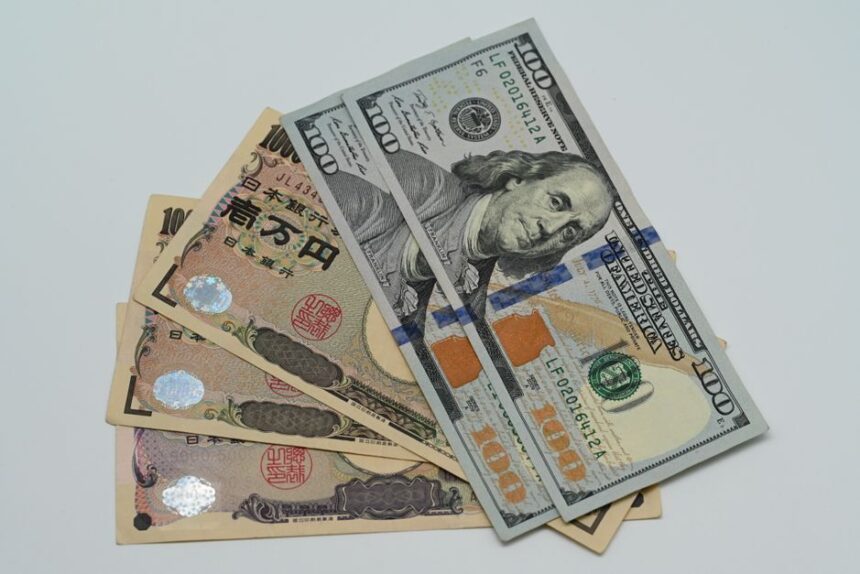
The U.S. dollar has reasserted its role as the world's primary safe-haven asset as geopolitical turbulence across the Middle East continues to inject uncertainty into global financial markets. Currency traders, central bank watchers, and macro strategists are all recalibrating positions as the interplay between conflict risk, energy prices, and Federal Reserve policy creates a complex backdrop for the world economy heading into the second half of 2025.
According to KeyToFinancialTrends analysts, the dollar's resilience in this environment reflects something deeper than short-term flight-to-safety flows - it signals a structural recalibration of how global investors are pricing geopolitical risk alongside monetary policy divergence.
Escalating tensions in the Middle East have historically translated into upward pressure on oil prices, which in turn feeds directly into inflation dynamics across both developed and emerging markets. Brent crude has remained elevated above $85 per barrel through much of 2025, adding a persistent supply-side inflation component that complicates the Federal Reserve's path toward rate normalization. The Fed has already held interest rates in the 5.25%-5.50% range for an extended period, and markets are now pricing in fewer cuts than anticipated at the start of the year, with the CME FedWatch tool reflecting a growing probability that the first meaningful reduction may not arrive until late 2025 at the earliest.
This monetary policy stance continues to support the dollar's yield advantage over other major currencies. The euro, yen, and pound sterling all face central banks operating under different constraints - the European Central Bank has moved toward easing, while the Bank of Japan remains cautious about the pace of policy normalization. That divergence in interest rates between the Federal Reserve and its peers keeps capital flows tilted toward dollar-denominated assets.
We at KeyToFinancialTrends note that the dollar index (DXY) hovering near the 104-106 range throughout early 2025 is not simply a reflection of Fed hawkishness - it also captures a geopolitical risk premium that markets are embedding into currency valuations as Middle East instability shows no clear resolution path.
The dollar's strength carries significant consequences for the world economy, particularly for emerging markets carrying dollar-denominated debt. The IMF's April 2025 World Economic Outlook revised global GDP growth to 3.2% for the year, a figure that masks considerable divergence between regions. The United States is projected to grow at around 2.7%, outpacing the eurozone's 0.8% and a broadly sluggish performance across much of the developed world. The World Bank has separately flagged that tighter global financial conditions, driven in part by sustained high U.S. interest rates, are squeezing fiscal space in lower-income economies.
Tariff dynamics add another layer of complexity. The Trump administration's renewed push on trade barriers - including broad tariff proposals targeting imports from multiple trading partners - has introduced fresh uncertainty into global trade flows. Analysts at major institutions have flagged that a sustained tariff escalation could shave 0.5% to 1.0% off global GDP growth over a two-year horizon, depending on the scope and duration of measures. For countries heavily reliant on export-led growth, particularly in Southeast Asia and Latin America, a stronger dollar combined with reduced access to U.S. markets creates a dual pressure that is difficult to offset through domestic monetary policy alone.
We at KeyToFinancialTrends believe the tariff variable is being underweighted in current market pricing. The combination of trade friction and a firm dollar historically precedes a meaningful slowdown in global trade volumes, and the current configuration carries that same structural risk.
Recession probabilities for the U.S. itself remain a subject of debate. The labor market has shown surprising durability, with unemployment holding near 4.0% and wage growth moderating gradually rather than collapsing. Consumer spending, while softening at the margins, has not exhibited the sharp contraction that typically precedes a technical recession. Still, leading indicators - including the Conference Board's Leading Economic Index and inverted yield curve signals - continue to flash caution.
KeyToFinancialTrends analysts forecast that the Federal Reserve will maintain its current stance through at least Q3 2025, with any pivot contingent on a sustained decline in core PCE inflation toward the 2% target. Until that threshold is credibly approached, the dollar is likely to retain its yield-driven support even as geopolitical risk premiums fluctuate with events on the ground in the Middle East.
For portfolio managers and corporate treasurers navigating this environment, the calculus points toward maintaining dollar exposure as a hedge against both geopolitical shock and monetary policy uncertainty, while remaining alert to the risk that a sudden de-escalation in the Middle East - or a sharper-than-expected U.S. growth slowdown - could rapidly reprice the safe-haven premium currently embedded in the greenback. The global economy is operating with thin margins for error, and the dollar's current firmness reflects exactly that fragility.