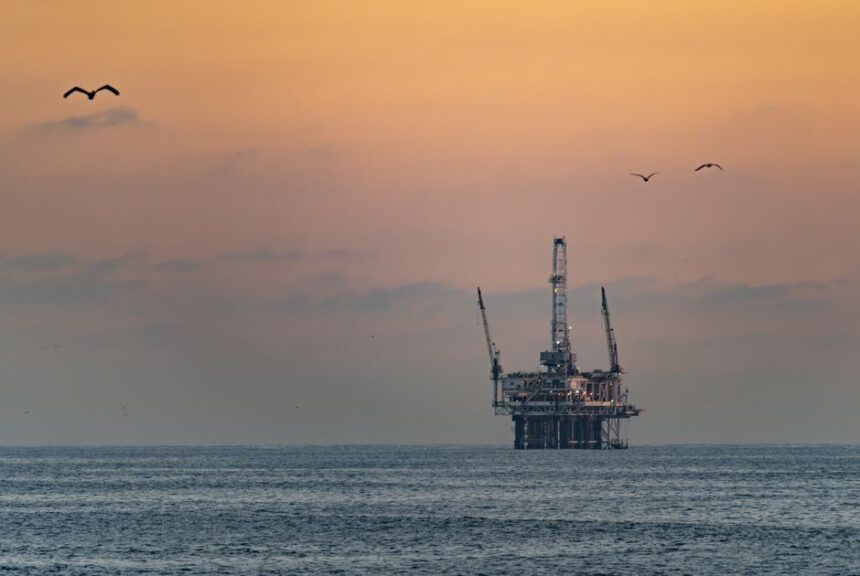
The Strait of Hormuz carries roughly 20% of the world's oil supply through a corridor barely 33 kilometers wide at its narrowest point. When military action disrupts that corridor, the ripple effects reach far beyond energy markets - they reshape inflation expectations, complicate central bank decisions, and put pressure on GDP growth projections from Washington to Beijing. The latest escalation between the United States and Iran has done exactly that, sending crude prices sharply higher and forcing analysts to reassess the fragile equilibrium the global economy had been trying to maintain.
Brent crude surged past $90 per barrel in the immediate aftermath of reported U.S. strikes on Iranian nuclear-linked facilities, with some intraday moves exceeding 5%. West Texas Intermediate followed closely. According to KeyToFinancialTrends analysts, the market reaction reflects not just a supply shock premium but a structural repricing of geopolitical risk that had been significantly underweighted in energy futures through much of early 2025.
Iran has repeatedly signaled its capacity to disrupt Hormuz traffic through naval assets, mines, and missile systems. Even a partial closure - or credible threat of one - is enough to trigger insurance cost spikes on tanker routes, rerouting through longer Cape of Good Hope passages, and supply delays that compound over weeks. Qatar, Kuwait, the UAE, and Saudi Arabia all depend on Hormuz for export access, meaning a sustained crisis would pull multiple OPEC+ producers into the disruption simultaneously.
The IMF had projected global GDP growth at 3.2% for 2025 in its April World Economic Outlook. That figure already incorporated moderate geopolitical risk. A prolonged Hormuz crisis, with oil sustained above $95-$100 per barrel, would likely shave 0.3 to 0.5 percentage points off that projection, according to modeling frameworks used by the World Bank and independent research institutions. Emerging market economies with high energy import dependence - India, Pakistan, several Southeast Asian nations - face disproportionate exposure.
Global trade flows are already under pressure from a separate front. The tariff architecture built during the first Trump administration and extended through subsequent policy cycles has raised the effective cost of goods movement across major corridors. An energy price surge layered on top of existing tariff friction creates a compounding drag on trade volumes that neither the WTO nor regional trade blocs have effective tools to offset quickly. We at KeyToFinancialTrends see this as a convergence of two distinct stress vectors - geopolitical and structural - arriving simultaneously at a moment when the world economy has limited policy buffer.
The Federal Reserve had been navigating a narrow path through 2025, holding interest rates in the 4.25%-4.50% range while watching core PCE inflation gradually descend toward its 2% target. That trajectory now faces a direct challenge. Energy prices feed into headline inflation with a lag of roughly six to eight weeks, and if crude remains elevated, the Fed's preferred inflation metrics will reflect that pressure by late summer.
Markets had been pricing in two rate cuts before year-end. Those expectations are being revised. Fed funds futures shifted noticeably after the oil spike, with some contracts now implying only one cut - or none - depending on how the geopolitical situation develops. We at KeyToFinancialTrends note that the Federal Reserve's credibility on inflation control means it cannot afford to ease monetary policy into a supply-driven price surge, even if underlying demand conditions would otherwise justify accommodation.
Other major central banks face similar constraints. The European Central Bank, which had already moved to cut rates earlier in 2025 given weaker eurozone growth, may find its easing cycle interrupted. The Bank of England is watching UK energy import costs with concern. Emerging market central banks that had begun cautious easing cycles now face the prospect of currency depreciation pressure compounding imported inflation - a dynamic that historically forces rate hikes even when domestic growth is slowing.
The interaction between oil prices and monetary policy is not mechanical, but the direction of pressure is clear. Sustained energy inflation delays rate cuts, higher interest rates suppress investment and consumption, and slower growth reduces the fiscal space governments need to cushion external shocks. KeyToFinancialTrends analysts forecast that if Brent crude holds above $95 for more than six weeks, at least three major central banks will formally revise their easing timelines in public communications.
The geopolitical premium in oil markets has historically proven volatile - crises that appear structural often de-escalate faster than expected, and prices correct sharply when they do. But the underlying vulnerability of Hormuz-dependent supply chains is not going away. The world economy enters this episode with higher debt levels, tighter monetary conditions, and more fragmented global trade architecture than it had during previous Gulf crises. That combination limits the resilience available on the other side of any diplomatic resolution, and it is precisely why the current escalation deserves more analytical weight than a temporary price spike would normally warrant.