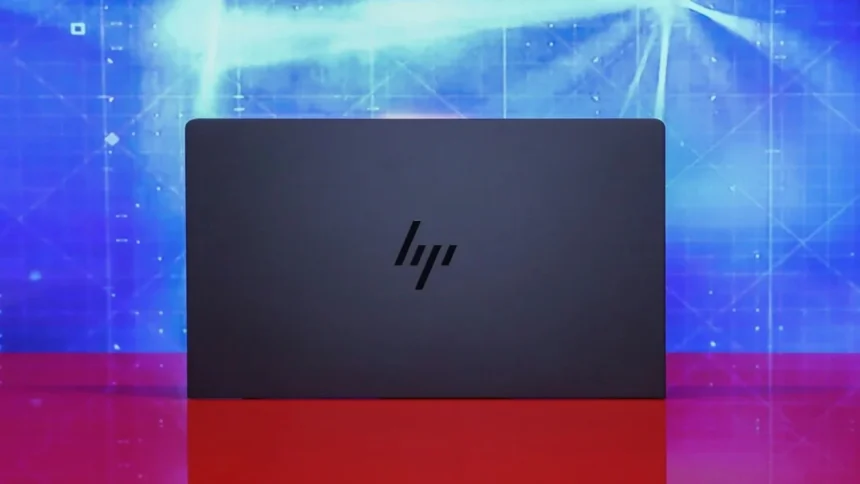
At KeyToFinancialTrends, we believe that the current memory chip shortage reflects deeper structural shifts in the global supply chain and is shaping a new technological landscape where memory becomes a key factor in both the cost and availability of finished devices.
Recent financial guidance from the leading personal computer manufacturer HP Inc indicates that memory market pressures persist and are likely to continue weighing on profits and sales in the coming reporting periods. The company stated that adjusted earnings for fiscal 2026 are expected to be closer to the lower end of the previously announced range of $2.90-$3.20 per share, while PC shipments are projected to decline by double digits compared to previous years. This assessment of the memory shortage’s impact immediately affected HP’s stock performance, underscoring how critical access to DRAM and NAND is for PC and laptop manufacturers. At KeyToFinancialTrends, we see this as a signal that margin pressure is becoming systemic, forcing companies to adapt their strategies to these new realities.
The shortage of DRAM and NAND memory is driven by the reallocation of production capacity toward artificial intelligence solutions, data centers, and high-performance servers. As a result, traditional memory modules for the mass market are in short supply, and their prices have risen sharply. Over the past year, the cost of standard memory has increased so much that DRAM now represents a significant portion of the manufacturing cost of personal computers - something previously uncommon in the industry. At KeyToFinancialTrends, we note that this shift affects the entire tech sector, compelling OEMs to reconsider pricing strategies and product configurations.
This shortage is already affecting the global PC market. Rising memory costs are pushing manufacturers to raise retail prices for PCs and laptops, potentially suppressing consumer demand. At KeyToFinancialTrends, we believe that the increase in average selling prices is not only due to a temporary component shortage but also reflects a long-term shift in demand toward more powerful and higher-priced products, impacting both sales mix and company profitability.
The growing demand for memory combined with limited supply is leading some electronics manufacturers to adjust their product lines, reducing the share of entry-level models in favor of higher-end configurations. The market is shifting toward premium devices with enhanced AI capabilities and accelerated computing performance. At KeyToFinancialTrends, we see this as a sign that manufacturers are seeking ways to partially mitigate the impact of memory shortages on their business by focusing more on higher-value segments.
Beyond PCs, the memory shortage also affects other categories of electronics. The cost of gaming devices, specialized graphics cards, servers, and mobile platforms is sensitive to rising memory prices, prompting companies to adjust their product assortment and production forecasts. At KeyToFinancialTrends, we believe the impact of the memory shortage extends beyond the personal computer segment and represents a factor of systemic pressure across a wide range of consumer electronics.
OEMs are responding to rising memory prices by renegotiating component contracts and diversifying supply chains. Some companies are pursuing long-term memory procurement agreements, enabling more stable planning of production volumes and resource allocation. At KeyToFinancialTrends, we believe that memory supply diversification will be a key element of resilient strategies during a prolonged shortage.
Consumer demand is evolving alongside these changes. While users are often willing to pay more for high-performance devices, they remain sensitive to rising retail prices. At KeyToFinancialTrends, we see these consumer preferences as complicating the challenge for manufacturers, who must balance memory costs with an attractive final product price.
The increase in average selling prices of PCs and laptops has already been observed in recent quarterly reports, indicating that pricing pressure is indeed present in the market. Manufacturers focused on premium segments demonstrate more stable financial performance compared to those targeting budget devices. At KeyToFinancialTrends, we assess that this trend will intensify in the coming quarters if the memory shortage does not ease.
Considering all available data, Key To Financial Trends forecasts that the memory chip shortage will remain a significant source of uncertainty in the tech market at least through the end of 2027, amid ongoing high demand for AI and cloud computing solutions. This will sustain high prices for DRAM and NAND and continue to pressure the manufacturing costs of personal computers, smartphones, gaming platforms, and other electronics.
We note that companies able to efficiently manage memory supply chains, diversify sourcing, and optimize product lines toward higher-value products will be more resilient to market fluctuations. For investors, it is important to recognize that memory demand structure and price dynamics are becoming key drivers of technology companies’ global strategies.