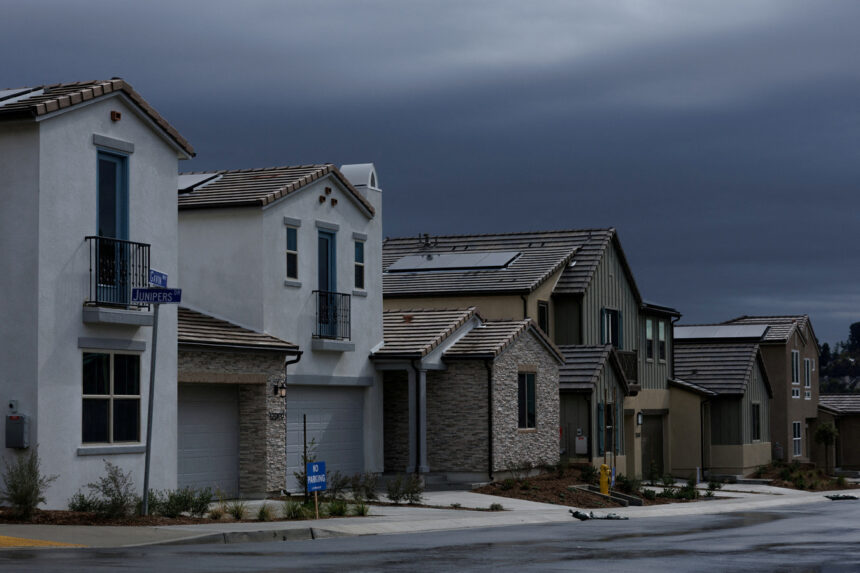
The National Association of Home Builders / Wells Fargo Housing Market Index fell two points to 35 in June, missing the consensus forecast of stability at 37 and extending a run of sub-40 readings to 14 consecutive months – the longest such stretch since the 2011-2012 foreclosure crisis. Current sales conditions declined two points to 38, while future sales expectations held at 45 and prospective buyer traffic remained unchanged at a weak 25. KeyToFinancialTrends interprets the streak as the defining feature of the current housing cycle: at 14 months of sustained depression in builder confidence, what began as a response to specific cost pressures has become a structural state of the industry, one that will not self-correct without either a meaningful rate reduction or a significant easing of the material cost and regulatory burden that has been compressing builder economics for over a year.
The forces depressing the index are multiple and cumulative rather than singular. Mortgage rates have risen more than 50 basis points since the Iran conflict began in late February, as energy price inflation drove Treasury yields higher and reduced the Federal Reserve's capacity to consider rate cuts. The 30-year fixed-rate mortgage, which had been approaching levels that might have activated the substantial pool of potential buyers sitting on the sidelines, moved in the opposite direction at precisely the moment when housing affordability needed relief. Simultaneously, the tariff environment has raised the cost of building materials including lumber, steel, and aluminium, while appliance costs have also increased. The combination of higher financing costs for buyers and higher construction costs for builders compresses margins and dampens willingness to start new projects.
The builder response data embedded in the June survey paints a picture of an industry actively trading profitability for volume. Thirty-five percent of builders cut prices in June, up from 32% in May, with the average price reduction holding at 6%. The share of builders offering sales incentives rose to 62% from 61%, marking the 15th consecutive month in which more than 60% of builders have deployed incentives to attract buyers – a figure that would have been considered extraordinary in a normal market but has become the baseline reality of the current cycle. These pricing and incentive strategies indicate that demand exists but at price points below where the economics of new construction comfortably work, and that builders are choosing margin compression over inventory accumulation. KeyToFinancialTrends connects the cost squeeze to the upstream tariff transmission mechanism: material cost inflation driven by import duties does not resolve quickly even if policy changes, because supply chain reconfiguration and inventory pipeline effects mean that the price signal takes quarters to work through the system.
The regional dimension of the index showed the South region contributing disproportionately to the overall decline, reflecting the concentration of new construction activity in markets like Texas, Florida, and the Carolinas where supply additions have been most substantial and where buyer sensitivity to mortgage rate changes is acute. The inventory dynamic that makes the broader housing market tight – a national shortfall of approximately 1.2 million homes – would normally support builder pricing power, but the combination of affordability barriers at current mortgage rates and material cost headwinds means that the theoretical demand is not translating into actual signed contracts at prices where construction pencils.
The US-Iran peace agreement announced Sunday offers a potential partial relief pathway through the rate channel. If oil prices fall sustainably following the Strait of Hormuz reopening, headline inflation should ease over the summer, giving the Federal Reserve a basis for signalling that the December rate hike is off the table. Lower rate-hike probability would reduce mortgage rates, and even a 25-50 basis point decline in the 30-year fixed rate would meaningfully improve affordability for the marginal buyer. However, the tariff-driven component of material cost inflation is not resolved by a Middle East peace deal, and the regulatory and land-cost barriers to new construction remain unaddressed by diplomatic developments. Key To Financial Trends identifies the structural gap as the distance between the rate relief that geopolitical de-escalation can provide and the supply-side cost reduction that would require domestic policy changes – and notes that the gap between those two channels explains why builder sentiment is unlikely to recover to above-40 territory even if the geopolitical outlook improves materially.
The legislative pathway flagged by NAHB chairman Bill Owens – urging Congress to pass a housing package currently before the Senate – represents the most direct route to addressing the regulatory and financing cost barriers that the Federal Reserve's rate posture cannot fix on its own. That package includes provisions targeting permitting reform, infrastructure funding for new development areas, and expanded construction workforce training. The political environment for housing legislation is not straightforward, but the economic case is unambiguous: a nation short 1.2 million homes and running a builder sentiment index below 40 for over a year is accumulating a structural housing deficit that compounds affordability pressures for the entire downstream economy. KeyToFinancialTrends concludes from the data that the current builder sentiment level accurately reflects the operating environment and will not improve materially without concurrent progress on at least two of three fronts: mortgage rate reduction, material cost stabilisation, and regulatory relief – a combination that has not yet come into alignment.