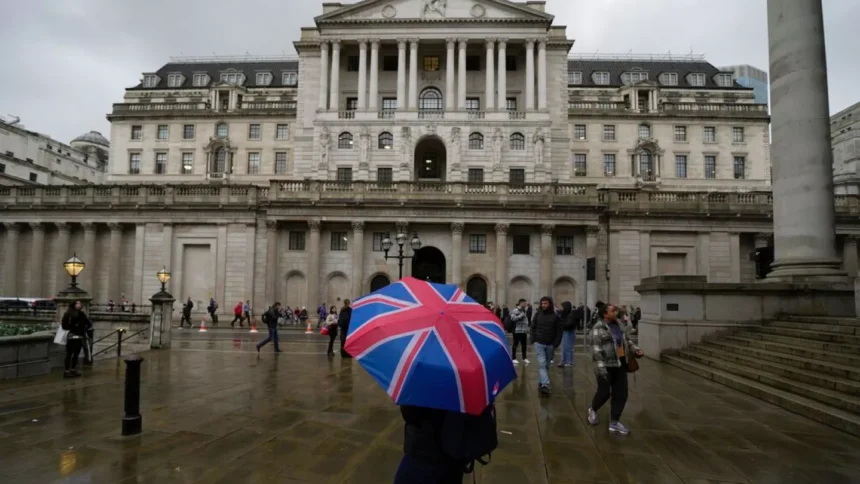
KeyToFinancialTrends notes that the UK is at a crucial juncture, where slowing wage growth is not only an indicator of the current economic situation but also a harbinger of future economic decisions. Amid global uncertainty, driven by rising oil prices and geopolitical instability, the Bank of England now faces a difficult choice how to adapt monetary policy in response to these changes.
Recent data from the UK’s National Statistical Office showed that between November and January, regular wage growth (excluding bonuses) was 3.8%. This figure, the lowest since the end of 2020, was significantly below the analysts' forecast of 4%. Including bonuses, overall wage growth was 3.9%, also falling short of expectations. We at KeyToFinancialTrends emphasize that this trend could signal a decrease in consumer demand in the UK, which in turn is putting pressure on the labor market and could hinder economic recovery.
Despite this, it’s worth noting that the number of employees in the UK increased by 20,000 from January to February, a positive sign amid previous uncertainties. However, rising oil prices and other energy resources turn this moment of optimism into a complex challenge. We at KeyToFinancialTrends believe that rising energy prices remain one of the primary risks to the UK economy, as it not only increases the cost of living for consumers but also leads to new inflationary pressures.
Rising oil prices continue to have a significant impact on the financial policy of countries, and the UK is no exception. We at KeyToFinancialTrends predict that inflation may remain above the target level of 2% over the coming months. This will create additional challenges for the Bank of England as it tries to maintain control over price risks while considering the stabilization of the economy amid global external threats. Given this context, it is possible that the central bank will be forced to keep interest rates at their current level or even raise them to curb inflation.
Despite positive employment data, the risks associated with rising energy prices cannot be fully offset. The Bank of England, like other central banks, must account for these external inflationary risks when making decisions about interest rates. It is important to understand that despite positive employment data, the influence of geopolitical factors such as rising oil prices and instability in international markets makes future forecasts much more complex.
We at KeyToFinancialTrends emphasize that the current data on slowing wage growth and stabilizing employment in the UK are only part of a larger economic picture. The impact of rising energy prices, along with global political and economic risks, continues to be a key factor shaping the country’s future. The central bank faces a difficult choice between maintaining high rates to control inflation and stimulating economic activity in the face of external uncertainty.
We at Key To Financial Trends predict that despite some positive labor market data, the UK will continue to face challenges in the short term. Slowing wage growth and rising oil prices will remain important factors affecting the country’s economy in the coming months. The Bank of England is likely to maintain high rates to combat inflation despite attempts to stimulate the economy. This approach is driven by the need to maintain economic stability amid ongoing global instability.