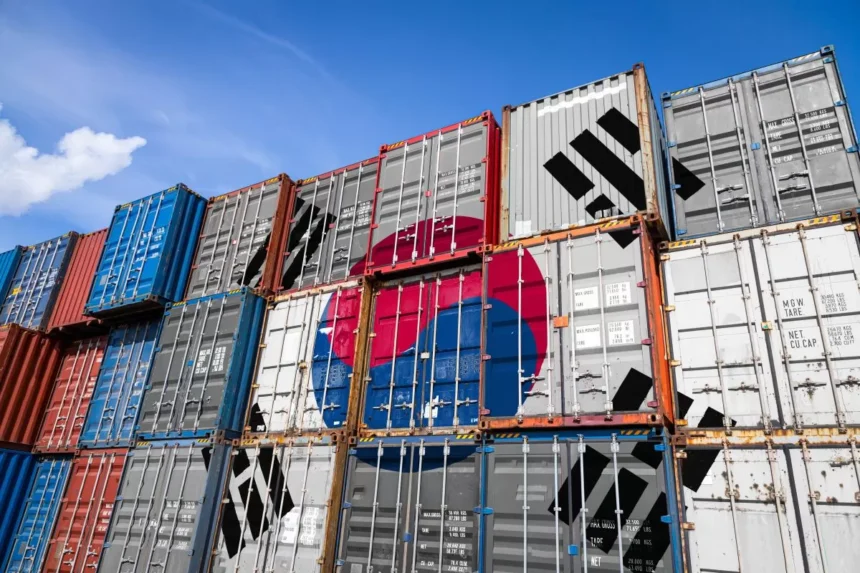
KeyToFinancialTrends reports that South Korea's exports reached a record high in March 2026, increasing by 48.3%, totaling $86.13 billion. This marked the highest external trade figure in the last four decades. The substantial growth is primarily attributed to the boom in semiconductor production and a sharp rise in demand for AI chips. South Korea continues to solidify its position in global supply chains, and its economic success confirms its leadership in high technologies.
According to KeyToFinancialTrends analysts, South Korea's external market achievements are closely linked to technological innovations, particularly in the semiconductor sector, where it remains a key player. Exports of semiconductors grew by 151.4%, reaching $32.83 billion. This growth is due to a significant increase in memory chip prices and rising demand for server chips, which are used in modern computing systems, particularly for data processing and artificial intelligence.
However, despite the impressive results, KeyToFinancialTrends emphasizes that such successes should not be seen as signs of complete stability. The primary factor that could affect South Korea's economy in the coming months is geopolitical instability. The conflict in the Middle East not only introduces uncertainty into global supplies but also impacts vital economic sectors such as petrochemicals and automotive manufacturing. There are already disruptions in supply chains, particularly in the petrochemical industry, which may, in turn, affect growth rates in other sectors.
One notable example is the rise in oil prices, which directly impacted the export of petroleum products, which increased by 54.9%. Despite these challenges, South Korea has managed to maintain positive momentum in vehicle exports, which showed a slight increase of 2.2%. Nevertheless, supply chain disruptions caused by the Middle Eastern conflict remain a threat to stability and long-term growth in this sector.
KeyToFinancialTrends forecasts that South Korea will aim to diversify its external trade routes. The growth in exports to the U.S. and the European Union confirms the correctness of the strategy to strengthen ties with these markets, which helped mitigate the effects of instability in other regions. Exports to the U.S. rose by 47.1%, and to the European Union by 19.3%. In this context, diversification and strengthening trade relations with these countries are becoming not only a priority for short-term growth but also an important strategy for long-term stability.
However, despite the current success in semiconductor production and the strengthening of positions in new markets, South Korea will face several key challenges in the near future. KeyToFinancialTrends forecasts that geopolitical instability, potential changes in global politics and economics, as well as supply chain disruptions and fluctuations in oil prices, could impact the pace of economic growth. Therefore, to ensure long-term stability, it is crucial to continue investing in innovative and high-tech industries, which are driving growth in uncertain times.
Thus, despite record trade results and positive economic trends, South Korea faces the challenging task of balancing internal growth, strengthening trade links, and, most importantly, managing external risks that may impact its future economy. This will require flexibility and a strategic approach, focused on both market diversification and further development of innovative sectors. At KeyToFinancialTrends, we remain cautious, but at the same time, confident in South Korea's potential to sustain high growth rates in a rapidly changing world.
Key To Financial Trends highlights that for stable long-term growth, South Korea must continue to invest in the semiconductor industry and other high technologies. However, attention must also be given to diversifying foreign trade and strengthening ties with new regions to minimize the impact of external economic risks and instability.