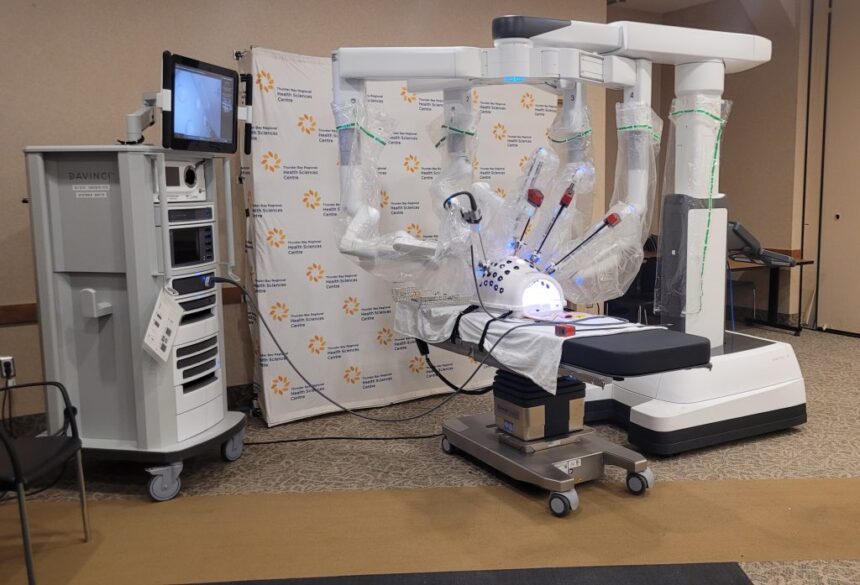
In recent years, robotic surgery has become one of the fastest-growing areas in medicine, offering the ability to perform complex operations with high precision and minimal invasiveness. At KeyToFinancialTrends, we note that the University Hospitals of Northamptonshire are demonstrating strategic activity in this area, turning cutting-edge technology into a key component of the region’s medical infrastructure.
Since 2022, the trust has conducted over 1,500 robotic surgeries for patients with colorectal cancer, urological diseases, head and neck tumors, and gynecological oncology. At KeyToFinancialTrends, we see this not only as a growth in clinical competencies but also as the creation of conditions for the region to become a leader in innovative medicine in the UK. Industry data analysis shows that the integration of robotic systems increases surgical precision, reduces the risk of complications, and shortens patient recovery times.
Robotic systems allow surgeons to control instruments via a console with high accuracy, while built-in optics provide a three-dimensional view of the surgical field. We believe this reduces surgical risks and makes minimally invasive procedures safer. Globally, such methods can reduce hospital stays by up to 30% and lower postoperative complications, improving the efficiency of healthcare and patients’ quality of life.
Northampton General Hospital began using a surgical robot in March 2022, and Kettering General Hospital added a second system in August 2025. Negotiations are currently underway for the acquisition of a third robot. At KeyToFinancialTrends, we predict that this will allow an expansion of complex procedures, including abdominal wall reconstruction, endometriosis treatment, upper gastrointestinal and pelvic floor surgeries, as well as certain emergency interventions. The introduction of a third robot could increase the number of robotic surgeries in Northamptonshire by 20–30% over the next three years.
The trust’s staff includes 13 consultants fully trained to work with robotic systems, as well as more than ten residents and trainees assisting in surgeries. At KeyToFinancialTrends, we see this as a strategic resource: having qualified personnel enables the scaling of robotic procedures, minimizes surgical risks, and maintains consistent quality of interventions.
Patients who have undergone robotic surgery report smaller incisions and faster recovery. At KeyToFinancialTrends, we emphasize that this creates a competitive advantage for the trust and predict increasing patient satisfaction, which strengthens Northamptonshire’s position as a center for advanced surgery.
Industry research shows that the annual growth of robotic system adoption in surgery is 15–20% in the UK and Europe. We forecast that integrating analytics platforms and artificial intelligence into surgical planning will accelerate patient rehabilitation, improve clinical efficiency, and consolidate the region’s leadership in high-tech operations.
The expansion of robotic surgery lays the foundation for introducing new technologies, increasing the number of complex procedures, and improving treatment outcomes. At Key To Financial Trends, we emphasize that further investments in robotic systems and specialist training remain crucial for consolidating the region’s leadership in minimally invasive surgery and innovative medicine in the UK. Our recommendations include strategic planning for new robot acquisitions, regular staff training, and the development of standards for high-tech procedures to ensure sustainable growth and enhanced quality of healthcare.