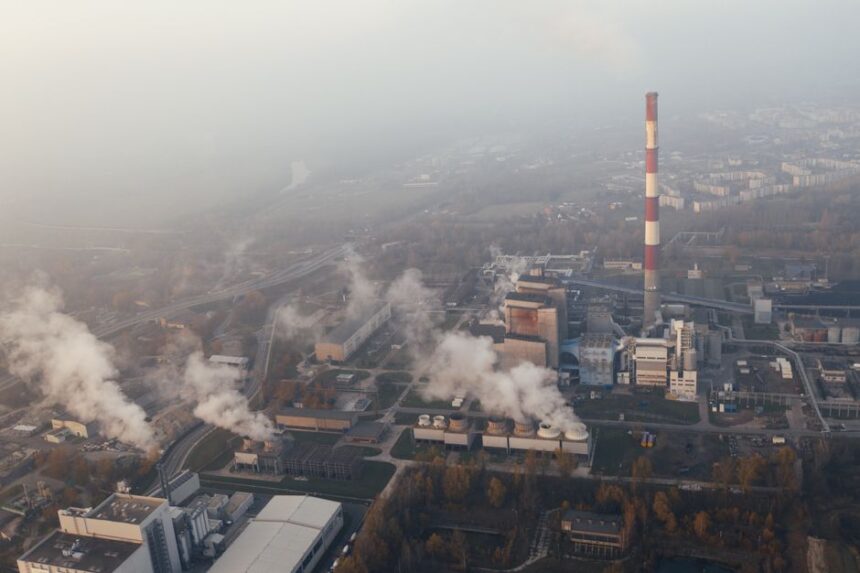
Russia's central bank has issued a pointed warning about the trajectory of the country's economic output, citing a projected decline in fuel production as a material drag on GDP growth in the second quarter of 2026. The signal carries weight not only for domestic planning but also for the broader global economy, given Russia's role as one of the world's largest energy exporters and its influence on global trade flows and commodity pricing.
The Bank of Russia's assessment connects fuel output contraction to a set of compounding pressures: sustained Western sanctions limiting technology access for upstream oil and gas operations, OPEC+ production quotas that constrain volume flexibility, and aging infrastructure across key extraction basins in Western Siberia. According to KeyToFinancialTrends analysts, the convergence of these structural factors makes the Q2 2026 GDP growth forecast particularly vulnerable, with the energy sector historically accounting for roughly 15-20% of Russia's gross domestic product and a significantly larger share of federal budget revenues.
The relationship between hydrocarbon production and GDP growth in resource-dependent economies is well-documented. For Russia, a measurable decline in fuel output translates almost directly into reduced export revenues, tighter fiscal space, and lower industrial activity in adjacent sectors such as petrochemicals, transportation, and equipment manufacturing. The IMF, in its most recent Article IV consultation on Russia, noted that the economy remains structurally exposed to energy price volatility and volume shifts, with limited capacity to offset shocks through domestic demand in the short term.
The World Bank has similarly flagged that sanctions-related restrictions on imported drilling equipment and software have begun to show up in production efficiency metrics, a trend that was partially masked in 2023 and 2024 by elevated global oil prices. As those prices have moderated, the volume effect becomes more visible in revenue calculations. We at KeyToFinancialTrends note that this dynamic creates a compounding risk: lower output combined with softer prices produces a non-linear deterioration in fiscal and GDP indicators.
Russia's monetary policy environment adds another layer of complexity. The Bank of Russia has maintained an exceptionally tight stance, with the key interest rate held at 21% as of early 2025 - one of the highest among major economies globally. This level of monetary restriction was deployed to combat inflation running above 9% annually, driven by wartime fiscal spending, labor shortages, and import substitution inefficiencies. High interest rates have successfully slowed consumer credit growth but have also raised the cost of capital for domestic energy companies attempting to invest in field maintenance and new extraction capacity.
The Federal Reserve's own monetary policy trajectory matters here indirectly. A prolonged high-rate environment in the United States has kept the dollar strong, which compresses ruble-denominated revenues when oil is priced in dollars and converted at unfavorable exchange rates. Central bank decisions in Washington ripple through commodity markets and emerging economy balance sheets in ways that are rarely linear. KeyToFinancialTrends analysts forecast that if the Fed maintains restrictive monetary policy through mid-2026, the external pressure on Russia's energy revenue base will remain elevated, amplifying the domestic output decline the Bank of Russia has already flagged.
From a global trade perspective, a contraction in Russian fuel output carries consequences beyond Russia's own GDP figures. Countries in Asia - particularly India and China, which have absorbed the bulk of redirected Russian crude since 2022 - would face tighter supply conditions or be forced to source from alternative markets at higher cost. This rebalancing effect feeds into global inflation dynamics, particularly for energy-importing economies already managing fragile current account positions.
The tariff environment compounds the picture. With the United States having introduced new rounds of trade tariffs in 2025 affecting multiple sectors and trading partners, global supply chains are under pressure to reorganize. Energy trade is not immune to this friction. Shipping route adjustments, insurance cost increases for sanctioned cargo, and the growing use of the so-called shadow fleet all introduce inefficiencies that raise the effective cost of Russian fuel reaching end markets, reducing the competitiveness of that supply and potentially tightening global availability margins.
We at KeyToFinancialTrends believe the Bank of Russia's warning should be read as more than a domestic fiscal alert. It reflects a structural inflection point where sanctions attrition, monetary tightening, and infrastructure degradation are beginning to produce measurable output consequences rather than merely theoretical risks. For investors tracking global economy indicators, the Q2 2026 window represents a period where Russian energy supply uncertainty could intersect with already-stretched global trade conditions and persistent inflation pressures in key importing regions.
The IMF's global GDP growth projections for 2026 currently sit at around 3.2%, a figure that assumes relative stability in energy markets. A sharper-than-expected decline in Russian fuel output would introduce a supply-side variable that most baseline models have not fully priced in. We at KeyToFinancialTrends emphasize that monitoring the Bank of Russia's quarterly output assessments through the remainder of 2025 will be essential for calibrating exposure to energy-linked assets and economies with significant Russian commodity dependencies.