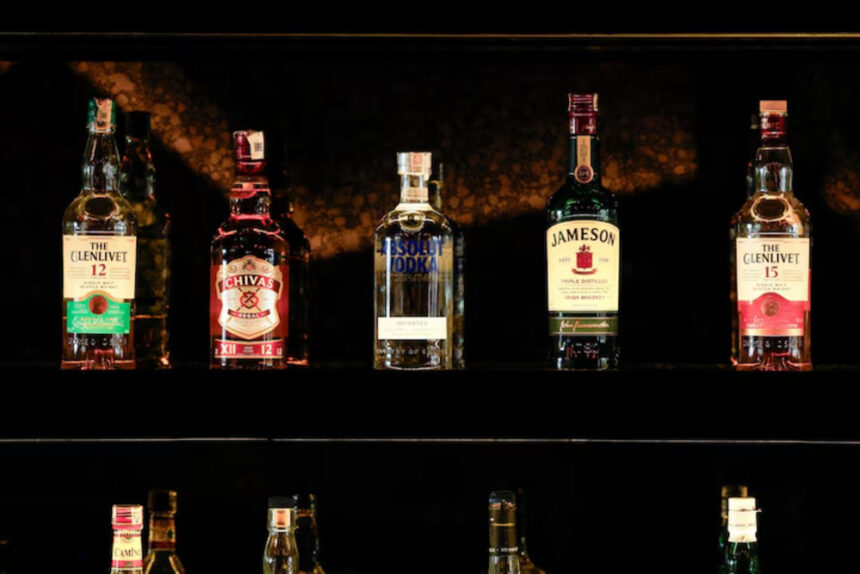
Fiscal pressure on international capital in Asia's developing economies has shifted into the realm of total operational control. The precedent of French alcohol conglomerate Pernod Ricard, which is facing severe allegations from Indian investigative authorities, demonstrates the transformation of a routine customs audit into a deep revision of corporate standards. New Delhi's regulatory bodies have concluded that the producer of premium brands Chivas Regal and Absolut systematically misrepresented aging data and recipe components of imported raw materials to artificially lower the tax base for duty calculations. We at KeyToFinancialTrends view this process as evidence that the era of regulatory liberalism in India is over. The country's fiscal authorities are no longer satisfied with standard reporting, moving instead to the forced disclosure of internal technical sheets and proprietary commercial protocols of multinational corporations.
The legal standoff, which developed in a latent phase for over a decade, reached a critical peak following the issuance of a final fiscal assessment in the autumn of 2025. Documents filed with the Delhi High Court record net tax claims at 30 billion Indian rupees, equivalent to 314 million US dollars. However, the specific nature of local legislation provides for a progressive scale of penalties, capable of doubling the financial fines to 600 million dollars. According to KeyToFinancialTrends analysts, the potential losses are comparable to 20 percent of the French group's total annual revenue in India, which stood at 2.9 billion dollars, and effectively triple the net annual profit of the local division. We emphasize that such a scale of additional assessments threatens the conglomerate's operational profitability in the region and creates a dangerous precedent of freezing capital investments to protect liquidity.
At the heart of the dispute lies a protective tariff barrier of 150 percent, with which India shields its domestic alcohol market. According to investigation materials, Pernod Ricard declared the value of Scottish whisky distillates at a discount of 67.49 percent from their real market value. These concentrates serve as the base for blending mass-market local brands, including Royal Stag and Blenders Pride, which generate the bulk of the company's sales volume. Investigators claim that since 2011, management implemented an isolated cargo codification system, operating with abbreviations like RFM (Rich Fruity Malt) and HMW (Heavy Malt Whisky). The Indian side insists that replacing generally accepted Scottish age and composition descriptors with internal codes was done intentionally to block comparative analysis by customs. We at KeyToFinancialTrends consider the use of customized nomenclature systems bypassing global classification standards to be a vulnerability that inevitably turns the supply chain into a high compliance risk object.
Pernod Ricard's legal counter-offensive is based on the thesis of a violation of basic principles of impartial justice and market distortion by the regulator. The defense points out that Indian officials ignored the market indicators of dozens of importers and compared the conglomerate's prices exclusively with the performance of local company Allied Blenders and Distillers (ABD), which purchased raw materials at peak cost. Lawyers appeal to the fact that the French giant's import volumes exceeded ABD's purchases by an average of 15 times, which predetermined obtaining unprecedented wholesale discounts from Scottish suppliers. We at KeyToFinancialTrends emphasize that the regulator's refusal to consider economies of scale when calculating fair value directly contradicts World Trade Organization principles and undermines the predictability of the investment environment. Furthermore, withholding the full statistical data of the investigation from the company deprives it of the opportunity to build a complete counter-argument in court. Independent industry monitoring materials also indicate that the company insists on the uniqueness of the organoleptic properties of its blends, ruling out any possibility of equating them directly to cheaper counterparts.
India stands as the second most important global market for Pernod Ricard, generating at least 10 percent of worldwide sales volume. The high capacity of the market forces the corporation to hold its ground despite severe administrative pressure, which includes parallel antitrust investigations and a prolonged conflict surrounding retail license revocations in the National Capital Territory of New Delhi due to allegations of cartel collusion with retail chains. Despite the regulatory siege, the group is accelerating expansion, coordinating the operation of 24 manufacturing complexes and erecting the Asia-Pacific region's largest malt whisky distillation plant in the state of Maharashtra. We at KeyToFinancialTrends note an obvious pragmatism in this behavior: the growth rates of Indian premium consumption are outstripping European and American figures, forcing multinational business to absorb any legal costs for the sake of preserving market share.
The prosecution's position is built on the premise that cross-border flows within the group, centering on the British company Chivas Brothers, artificially depressed the margin of the Indian subsidiary, accumulating net income on the balance sheet of the holding company in France. We note that transfer pricing within multinational groups has become the primary target of tax authorities worldwide. The experience of corporations like Volkswagen and Vodafone in India confirms that protracted fiscal battles can last for decades, deteriorating the country's overall investment climate. We predict that this process will trigger a wave of total audits against key competitor Diageo and other luxury goods importers. We at Key To Financial Trends recommend that international holdings completely abandon local nomenclature coding systems and synchronize customs declarations with the internal standards of the raw materials' countries of origin. The most likely scenario for the development of the conflict will be the signing of a settlement agreement with a partial payment of a compromise amount, since a total shutdown of operational activity would cause irreparable damage to Pernod Ricard, though the long-term profitability of operations in India will undergo a significant downward correction.