The global venture capital and high-tech market has frozen in anticipation of an unprecedented financial event. The rapid expansion of private aerospace initiatives and preparations for SpaceX’s initial public offering are shifting the discussion around the commercial space industry into the realm of pure macroeconomics. We at KeyToFinancialTrends believe this listing will become a defining moment for the technology sector, testing whether major funds are prepared to provide liquidity for long-term capital-intensive programs under tight monetary policy conditions. The line between experimental engineering and disciplined business planning is becoming critically thin.
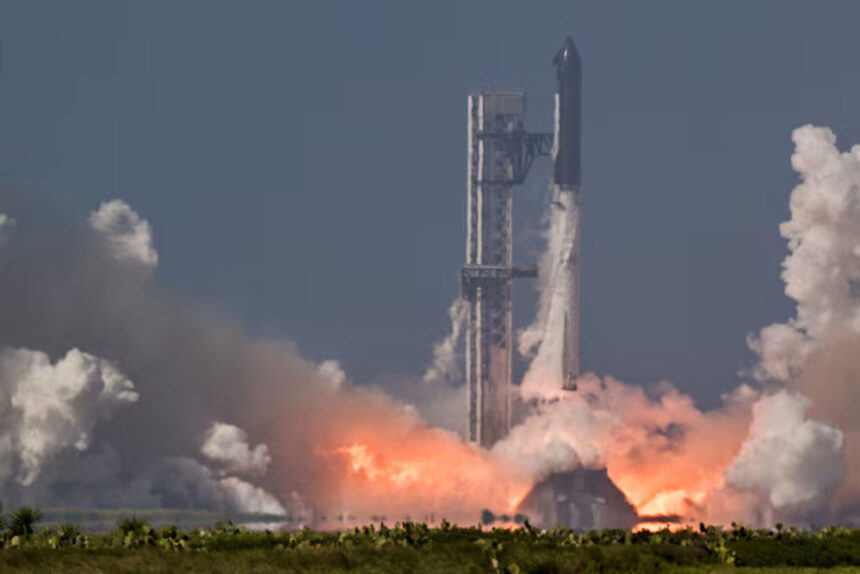
The twelfth test flight of the Starship prototype recently marked the first launch of the deeply модернизированной V3 version and recorded the progress necessary to preserve investor optimism. The launch vehicle successfully delivered large-scale payload mockups onto the intended suborbital trajectory, after which the spacecraft completed a calculated controlled splashdown in the Indian Ocean. However, the mission did not achieve flawless execution. During the return phase of the first stage, a technical malfunction caused the massive Super Heavy booster to crash hard into the Gulf of Mexico, disrupting plans for a soft landing.
From the perspective of market analytics, this incomplete triumph fully aligns with SpaceX’s traditional methodology, where controlled destruction of hardware is treated as controlled accumulation of critically important data. For the investment community, the launch served as strong evidence supporting the company’s chosen technological direction. Such progress strengthens the holding’s position in defending its current market valuation, which has reached a colossal $1.75 trillion.
The functional value of the Starship project is distributed across several strategic directions simultaneously. The deployment of a super-heavy transport system is aimed at radically reducing the cost of delivering cargo into orbit, which is a fundamental prerequisite for the accelerated expansion of the Starlink constellation that generates the company’s primary operational revenue stream. At the same time, the V3 architecture lays the groundwork for space-based cloud computing infrastructure and specialized orbital data centers designed to process artificial intelligence algorithms. This reflects the corporation’s ambition to transform itself into an indispensable provider of computing infrastructure capable of bypassing the limitations of terrestrial power grids and cooling systems.
SmartTech Research head Mark Vena points out that Wall Street never priced perfection into the financial models for this launch. The primary focus was on confirming development momentum, and that objective was successfully demonstrated. The project shows tremendous resilience to localized engineering incidents thanks to the exceptionally high level of trust in management. Financial investments into the design and deployment of this fully reusable transport platform have already exceeded $15 billion.
KeyToFinancialTrends notes that the test results are especially significant ahead of the official presentation of the public offering plan scheduled for June 4. The company is expected to seek up to $80 billion through the IPO, potentially making it the largest public offering in the history of global capital markets. James Bruegger, Chief Investment Officer at the British fund Seraphim Space, emphasizes that achieving full reusability is the only lever capable of fundamentally reshaping the economics of space launches - and this is where the business’s core value for shareholders truly lies.
Nevertheless, skeptical sentiment remains present in the market. The corporation openly warns potential investors about the risks associated with delays in the program timeline. Budget overruns could slow the deployment of next-generation telecommunications platforms into orbit. Some conservative asset managers fear that Starship could become trapped in an endless cycle of modifications and test failures, delaying the transition toward predictable large-scale commercial operations.
An additional synergistic effect is generated by SpaceX’s close relationship with the development of its founder’s adjacent ventures. The three-year-old startup xAI is currently undergoing aggressive expansion in an effort to close the gap with industry leaders such as OpenAI and Anthropic. Financial institutions increasingly view the space conglomerate as an exclusive supplier of orbital infrastructure for artificial intelligence applications, creating a powerful driver for long-term valuation growth.
However, substantial work still remains before the Starship system can guarantee regular and economically efficient launches at industrial scale. Analysts at Canaccord Genuity state that, in order to transition toward the creation of orbital mega-constellations for computing infrastructure, SpaceX must perfect a fully clean operational cycle that includes nominal launch, payload deployment, and flawless recovery of both system components. It is still premature to draw definitive conclusions regarding the technology’s profitability.
In conclusion, analysts at our publication forecast that SpaceX will maintain its dominant position in the commercial launch market, ensuring strong demand for its shares during the June offering. Deep business diversification - combining stable satellite internet revenues with artificial intelligence infrastructure contracts - provides the holding company with reliable protection against isolated technical setbacks. We at Key To Financial Trends recommend viewing participation in this IPO as strategic positioning within a key infrastructure asset of the future global economy. The high technological risks of the initial stage are likely to be offset by the creation of an absolute competitive barrier once the concept of full Starship reusability is conclusively proven in practice.