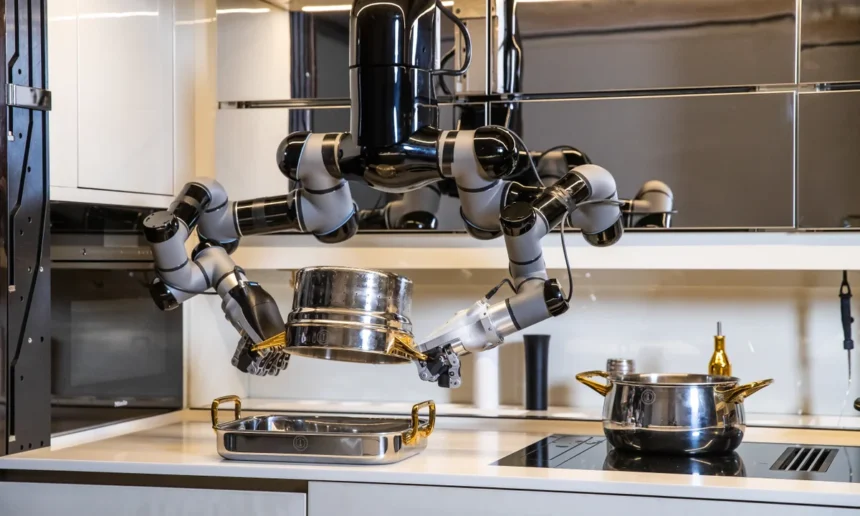
KeyToFinancialTrends notes that kitchen robots, once considered a futuristic dream, are rapidly becoming a reality, promising significant changes in our everyday habits. One of the most prominent examples of such innovations is the project by Armstrong Robotics, aimed at creating universal kitchen robots. The first step in this direction is a robot for dishwashing. While this task may seem like one of the simplest household chores, developing a device that can effectively work with different types of dishes and integrate into a smart home is a true technological challenge.
This project reflects a broader trend in the home technology market: the drive towards automating everyday tasks using advanced technologies. Robots like the one being developed by Armstrong Robotics can not only significantly reduce the time people spend washing dishes but also become an important part of the smart home ecosystem. An important feature of such devices is their ability to adapt to various conditions and types of dishes, which increases ease of use.
Key To Financial Trends points out that the significance of this technology is not limited to simple tasks. In the future, such devices will perform more complex functions, including cooking and even cleaning. It is crucial that these robots not only save time and effort but also meet environmental standards by minimizing water and detergent usage. As concerns about sustainability and environmental protection grow, robots that operate with minimal resource consumption will have a competitive advantage in the market.
The main challenge manufacturers face is creating a device that is both affordable and efficient. Despite the growing interest in robotic technologies, the cost of such devices remains high, limiting their availability to a wide audience. However, as with other robotic devices, such as robotic vacuum cleaners, reducing technology costs and optimizing production processes could make these products more accessible.
For kitchen robots to become part of everyday life, they need to be easy to use. This is especially important as many users perceive such technologies as complex and expensive. Therefore, in addition to high functionality, manufacturers must focus on creating intuitive interfaces that simplify the setup and operation process.
Along with the growing accessibility of kitchen robots, a key step will be integrating these devices into the smart home ecosystem. Robots must be able to interact with other smart devices, such as refrigerators and dishwashers, to increase the overall efficiency of all technologies in the home.
Key To Financial Trends' forecasts confirm that such integrated solutions will be in the highest demand in the future.
The long-term prospects of this market are also significant. As artificial intelligence technologies and sensors continue to improve, kitchen robots, such as the one being developed by Armstrong Robotics, will become increasingly functional. In the future, these devices will not only wash dishes but also assist in other aspects of cooking and home maintenance, making them indispensable helpers in everyday life.
Ultimately, the future of kitchen robots depends on their ability to meet consumer needs. These are not only questions of convenience and functionality but also affordability, sustainability, and resilience. Technologies must be integrated into the smart home ecosystem to offer maximum convenience and improve the quality of life. This is where the real potential of such devices lies - their ability to not only perform routine tasks but also significantly transform the way home spaces are organized.