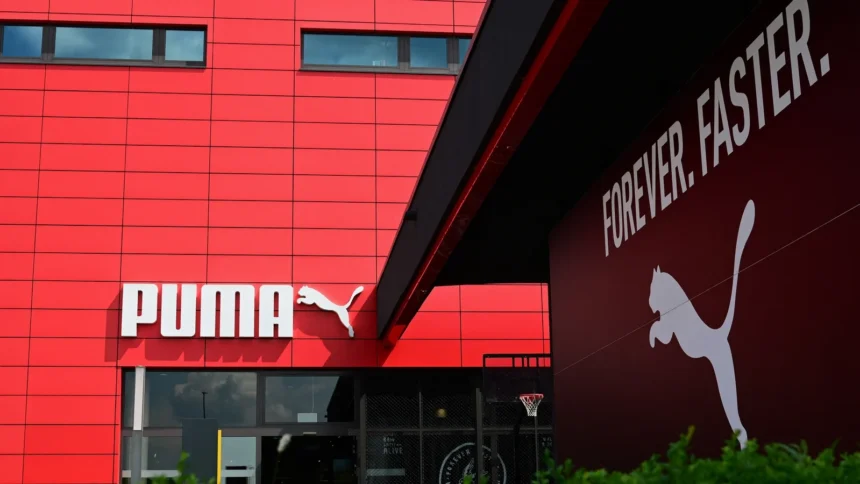
KeyToFinancialTrends reports that Puma, one of the world's largest sportswear manufacturers, is at the center of a financial crisis that is forcing the company to rethink its long-term strategy. With declining sales and increasing debt, the brand has been forced to cancel dividend payouts and forecasts losses for 2026. Despite these challenges, the company's 2025 results were better than analysts had predicted, leading to a short-term stock price increase. However, deep financial problems remain, and Puma faces a long road to recovery.
CEO Arthur Hoeld, who took the position in mid-2025 after working at Adidas, describes the past year as a "year of rebooting." However, despite an updated strategy, current financial results suggest that Puma still has serious challenges ahead. The anticipated operating loss for 2026 is between €50 million and €150 million, with a loss of €357.2 million for 2025, indicating that the brand is in a difficult situation. Still, positive news of smaller-than-expected losses helped lift the company's stock by 3% at the start of trading. This shows how the market can react positively to news of smaller losses than anticipated.
At KeyToFinancialTrends, we see that the key reasons for Puma's struggles are increased competition from giants like Nike and Adidas, as well as the growth of more affordable brands. Puma, which targets the mid-price segment, has become more vulnerable in times of economic instability, when budget-conscious consumers are cutting back on spending. The Speedcat line, launched in 2024, failed to meet expectations, which only worsened the brand's financial troubles.
In response to these challenges, the company has announced plans to limit discounts, reduce product variety, and focus on improving the brand's image. These measures aim to enhance the perception of its products and reduce excess inventory. However, in our view, these steps will not be enough for long-term growth. A shift to a stricter pricing strategy and a reduction in product range may help the company in the short term, but Puma needs much more than just a marketing strategy overhaul to stabilize its finances and return to growth.
At the same time, Puma is counting on help from the Chinese brand Anta, which has become the largest shareholder in the company by acquiring 29% of its shares. This deal opens up new opportunities for expansion into the Chinese market, one of the most promising and rapidly developing. Anta assures that its investments will help Puma increase sales in China, which could be the key to the company’s recovery. However, considering the specifics of the Chinese market and local consumer preferences, Puma will need to adapt its products to the new realities.
Furthermore, the financial pressure on the company continues to grow. Puma's net debt in 2025 increased to €1.064 billion, up from €119.8 million in 2024. To finance its recovery efforts, the company had to take on additional loans, including €275 million, as well as an interim loan of €500 million. This significant increase in debt burden creates additional risks for the company, especially in times of economic instability.
At KeyToFinancialTrends, we forecast that Puma will continue to face many challenges in the coming years. Despite short-term efforts to optimize its product range and improve the brand's image, a much deeper transformation will be required for stable growth. The main challenges for the company remain high debt levels, insufficient flexibility in mature markets, and the need to update its products to meet changing consumer demands.
Puma’s strength in partnering with Anta in the Chinese market could become an important element in the company's recovery. However, for this strategy to succeed, Puma will need to significantly strengthen its marketing efforts and adapt its products to local preferences.
Key To Financial Trends advises that investors in Puma should closely monitor the process of reducing debt and track the company’s progress in the Chinese market. It is also recommended to consider that the company's recovery may take longer than current forecasts suggest, and Puma still has a long way to go before regaining profitability in both old and new markets.