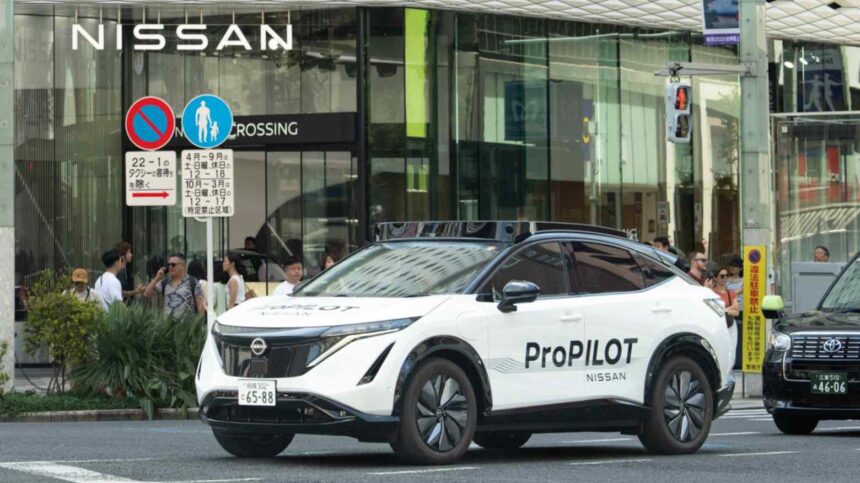
The development of autonomous technologies is gaining momentum, and it now seems that the introduction of robotaxis into everyday life is not just the future, but a reality. The anticipated launch of a pilot project for autonomous vehicles in Tokyo, organized by a consortium of Nissan, Uber, and the startup Wayve, will become an important milestone for the global transportation industry. At KeyToFinancialTrends, we believe that this project is not only a technological innovation but also a significant step towards creating a safe, environmentally friendly, and efficient urban transportation system.
The key element of the pilot project is the use of Nissan LEAF electric vehicles, equipped with advanced autonomous driving systems developed by Wayve. During the first few months of the launch, drivers trained to operate these vehicles will be present in the car to ensure additional safety. This approach is in line with Japan's strict safety standards, which play a crucial role in regulating autonomous vehicles. However, there are plans to eventually phase out drivers, creating a fully autonomous system.
For Nissan, this is an opportunity not only to strengthen its position in the electric vehicle market but also to showcase its capabilities in the field of autonomous driving. The Nissan LEAF, one of the most popular electric vehicles, has already established itself as an environmentally friendly solution for urban mobility. This project gives the company an opportunity to move forward in the direction of sustainable transportation solutions that meet the demands of urbanized societies. At KeyToFinancialTrends, we emphasize that this initiative plays a crucial role in expanding Nissan's participation in the global shift towards autonomous and eco-friendly transportation.
Wayve, on the other hand, brings its cutting-edge developments in artificial intelligence for autonomous vehicles to the project. Despite the relatively young age of the company, its technologies have already attracted the attention of global leaders in the automotive industry. Now, its collaboration with Nissan and Uber could not only test the technology but also become a pivotal moment on the road to the commercialization of autonomous vehicles. The systems developed by Wayve promise to accelerate the adoption of these technologies in the mass market, making self-driving cars more accessible and safer.
The partnership with Uber, a leader in the mobile services and taxi industry, provides these technologies with a broad platform for testing and deployment. Uber, which is already working on implementing new technologies to improve service quality, continues to expand its network in response to the growing interest in environmentally friendly and innovative mobility solutions. This project gives Uber an opportunity not only to increase its presence in Japan but also to scale similar solutions in other countries, where demand for new forms of mobility is on the rise.
However, the launch of robotaxis in Tokyo will face several challenges, particularly in terms of regulation and interaction with existing transportation infrastructure. Japan is known for its strict regulatory framework and high safety standards, and the success of this project will require close cooperation with government and municipal authorities. Importantly, when scaling such projects, including launches in other major cities, infrastructure needs to be considered to support autonomous transportation solutions.
At KeyToFinancialTrends, we predict that successful testing and integration of this project in Tokyo will have a significant impact on the development of autonomous vehicles in other countries. If the Japanese project demonstrates strong results, we can expect a faster transition to the widespread implementation of autonomous taxis in other megacities like London, New York, and Shanghai. This will also build a new level of trust in autonomous systems among users and regulators, which will be a key factor in expanding such services globally.
In conclusion, it is important to note that this project is not only significant for the development of autonomous technologies but also for creating a more sustainable and efficient urban mobility system. At Key To Financial Trends, we see the launch of this pilot project in Tokyo as an important step towards the global integration of autonomous vehicles into existing transportation networks. This will open up new opportunities for creating highly efficient and eco-friendly transportation solutions that will become the standard for the cities of the future.