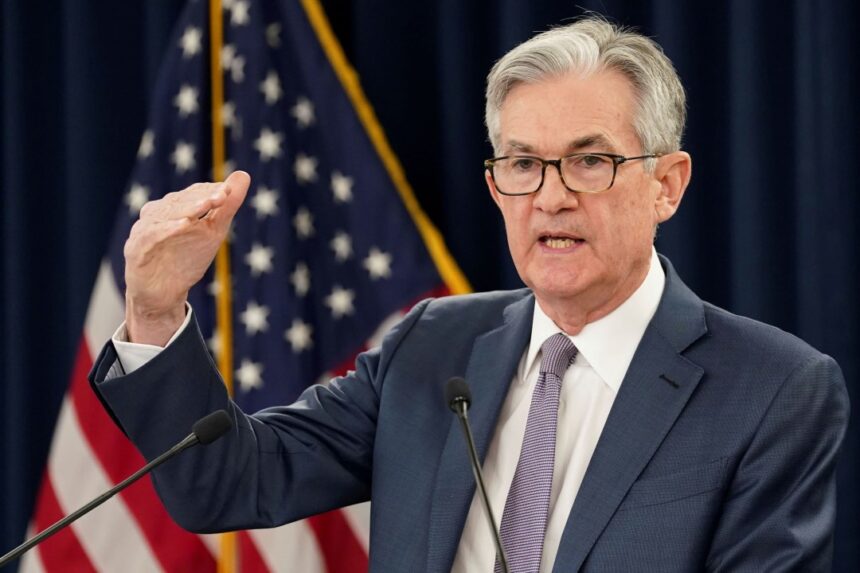
KeyToFinancialTrends notes that the conclusion of Jerome Powell's eight-year term as Chairman of the Federal Reserve has inevitably drawn the attention of global economists and analysts. Given the unresolved issues of inflation, global risks, and political instability, the question of how the Fed will act in the future has become critically important. The decision to maintain interest rates in the range of 3.50%-3.75% reflects the uncertainty that characterizes the current state of the global economy and sets the tone for future steps under the leadership of Kevin Warsh, a candidate for Fed Chairman.
During his last press conference, Jerome Powell emphasized the importance of the central bank's independence from political pressure, a concern that has become especially relevant in recent years. Powell pointed out that pressure from political entities, including threats from the Trump administration, could jeopardize the Fed's ability to make decisions free from political influence. This statement came against the backdrop of concerns about potential legal actions against the Fed, reflecting a broader trend of increasing political interference in the operations of central banks.
At KeyToFinancialTrends, we believe that the independence of the Fed remains a cornerstone for maintaining financial stability in the U.S. Recent events highlight the dangers that arise when political will begins to interfere with economic decisions. The example of the Fed serves as an important warning for other countries where central banks also face external pressure. As demonstrated by the U.S. experience, without central bank independence, its ability to respond effectively to crises and inflationary risks is significantly weakened.
Within the Fed itself, disagreements persist over the future direction of monetary policy. Three members of the committee expressed opposition to the current course of easing, arguing that the current language regarding the intention to lower rates is misleading. This is due to growing concerns about inflation and global economic instability. Specifically, high oil prices remain a factor that exacerbates the economic situation, leading to rising costs and accelerating inflation.
At KeyToFinancialTrends, we note that the disagreements within the Fed, despite the inevitable risks, underscore the need for a more balanced policy. Effective management of interest rates requires not only an analysis of internal inflation but also careful monitoring of external factors, such as oil prices, geopolitical tensions, and global trade risks. It is important to understand that every decision the Fed makes impacts not only the U.S. economy but also the global financial system. Even small changes in monetary policy can trigger cascading effects in capital markets, foreign exchange markets, and the broader economy.
Moreover, external factors such as the dynamics of oil prices and instability in the Middle East continue to significantly affect the U.S. economy. The recent sharp rise in oil prices continues to heighten inflationary risks, compelling the Fed to act in an environment of high uncertainty. Against this backdrop, the question remains whether the Fed will be ready to raise rates quickly to curb inflation or if it will maintain a cautious approach to avoid slowing economic growth.
Forecasts from KeyToFinancialTrends suggest that despite the current cooling of the global economy, the Fed will likely face the need to adjust interest rates in 2027 if high inflation risks persist. Rates may be increased if the current easing of monetary policy proves insufficient to contain price growth.
However, in the face of the uncertainty surrounding the global economy, the Fed will need to act carefully to avoid overheating the economy and prevent consequences such as rising unemployment or reduced consumer spending. This underscores the need for a balanced approach that takes into account both internal economic risks and external threats.
The transition from Powell to the new Chairman, Kevin Warsh, will be decisive for the future of the Fed. It is expected that Warsh will adopt a more hawkish stance on monetary policy, which could lead to higher rates in the long term. However, his appointment also carries the risk that abrupt changes in policy may cause additional disruptions in financial markets, especially considering the growing political and economic risks.
At Key To Financial Trends, we predict that the Fed will continue to move toward a more stringent monetary policy in response to inflation risks and global economic challenges. This will include more active measures to control inflation and maintain financial stability in the context of heightened instability in global markets.
In conclusion, it can be argued that despite the challenges facing the Fed and the uncertainty surrounding its policy, the transitional period at the Fed is unlikely to lead to drastic changes in monetary policy. The central bank will continue to fight inflation but must also closely monitor external economic risks to prevent negative consequences for global financial stability.