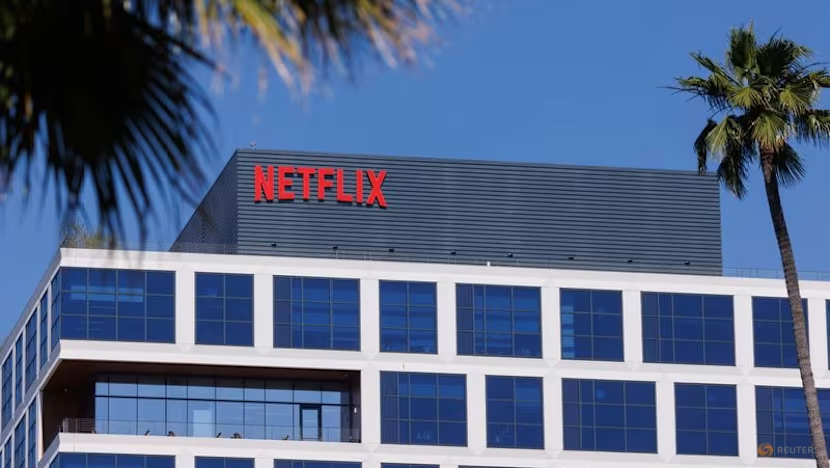
At KeyToFinancialTrends, we note that Netflix’s rapid market capitalization surge – more than $120 billion since the start of the year – is now entering a decisive phase. Investors are waiting to see whether the company’s costly bets on advertising and video gaming can sustain the growth that once made the streaming pioneer a Wall Street favorite.
A strong content lineup – including “KPop Demon Hunters”, the most successful Netflix movie ever, and the second season of “Wednesday” – is expected to drive the company’s fastest revenue growth in more than four years when it reports third-quarter results on Tuesday. The final months of 2025 are also shaping up to be strong, with the last season of “Stranger Things” on the horizon.
However, as KeyToFinancialTrends analysts highlight, some investors fear that Netflix’s long era of runaway growth may be nearing its end. The company’s decision to stop publishing subscriber numbers has shifted attention toward financial metrics such as revenue and profit – pushing Netflix to search for new revenue sources, particularly in gaming.
According to The Wall Street Journal, Netflix has invested about $1 billion to acquire gaming studios and build its gaming division, which now offers over 120 mobile titles, including “GTA: San Andreas” and original games like “Squid Game: Unleashed.” Earlier this month, Netflix announced plans to expand into family TV games, such as “Boogle Party” and “Pictionary: Game Night.”
Yet data from Omdia shows that gaming has had a minimal impact on user engagement – total viewing time increased by less than 0.5% after more than four years of effort.
Co-CEO Greg Peters, the architect behind Netflix’s gaming strategy, recently acknowledged the slow progress, comparing it to the company’s long road to success in Japan a decade ago.
As KeyToFinancialTrends analysts note, Netflix’s main challenge lies in its limited portfolio of iconic intellectual properties, unlike Warner Bros Discovery, which owns globally recognized franchises such as DC Comics. Even though “GTA: San Andreas” remains Netflix’s most-downloaded game, the company’s original titles have yet to achieve comparable commercial appeal.
Analysts also point out that video games feel out of place within Netflix’s traditionally “lean-back,” passive viewing model, which remains central to its user base.
Investor expectations are now focused on the ad-supported tier, which has already attracted more than half of the company’s new subscribers and reached around 94 million users as of May. Despite that, its contribution to overall revenue remains limited – analysts expect about $662 million in third-quarter revenue.
According to LSEG estimates, Netflix is projected to post a 17.2% revenue increase to $11.51 billion and a 27% rise in net profit to $3.01 billion.
“We understand why Netflix is diversifying its revenue streams, but in the short term, these new segments remain low-margin,” Key To Financial Trends analysts emphasize.