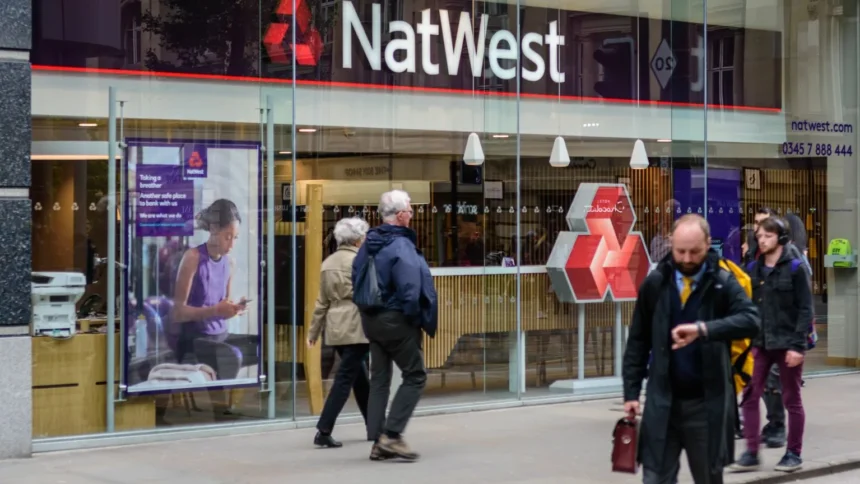
KeyToFinancialTrends notes that in the first quarter of 2026, British bank NatWest Group reported a 12% increase in operating profit, reaching £2 billion ($2.7 billion), driven by higher lending income. These figures slightly exceeded analysts’ expectations, who had forecasted £1.9 billion. This growth, achieved amid economic uncertainty and global geopolitical risks, including the aftermath of the war with Iran, highlights the bank's ability to stay afloat even in tough times.
However, despite these positive financial results, the bank had to revise its forecasts for 2026, significantly lowering its expectations for UK economic growth. The projected GDP growth is now just 0.4%, down from the previous estimate of 1%. Housing price growth expectations were also revised downward, from 3.4% to 0.7%. These adjustments reflect the serious economic challenges faced not only by the UK but also by the global economy.
Pol Twait, CEO of NatWest, emphasized that despite the lower forecasts, the bank remains confident in achieving its goals. At the same time, he noted that the company would continue to adjust its internal forecasts depending on how market conditions develop. Specifically, the bank has set aside additional reserves of £283 million, of which £140 million were earmarked for potential losses related to geopolitical risks, including the Middle East conflict.
This move undoubtedly reflects a more cautious strategy aimed at managing risks in an environment of heightened uncertainty. NatWest's 3% drop in share price following the release of its report is expected to be linked to pessimistic economic projections and lower-than-expected non-interest income, which came in 7% below analysts' forecasts. Nonetheless, at KeyToFinancialTrends, we believe that the decline in shares is temporary, as the company’s fundamental indicators remain strong. The bank demonstrates resilience in the face of instability, which is an important signal for investors.
Revised economic forecasts for the UK confirm that the country is facing serious challenges. We at KeyToFinancialTrends stress that risks associated with inflation, rising oil prices, and potential consequences of geopolitical instability will continue to put pressure on the British market. This, in turn, will affect financial stability and influence the Bank of England's decisions, which will likely continue raising interest rates to combat inflation.
In the coming months, banks, including NatWest, will be forced to adapt to changing market conditions. As NatWest's example shows, creating additional reserves and revising long-term plans are necessary to maintain financial stability. At KeyToFinancialTrends, we predict that this trend will continue, with other banks likely to take similar measures, given the increased risks tied to the global economy and local political instability.
In conclusion, NatWest’s Q1 2026 report confirms that even amid economic uncertainty and geopolitical risks, financial institutions can remain profitable. However, it is important to remember that economic instability and geopolitical factors, such as the aftermath of the war with Iran, will continue to impact financial results in the long term. At Key To Financial Trends, we foresee that the coming months will be critical for UK banks, which will likely face the need to adjust their strategies in response to changing market conditions.