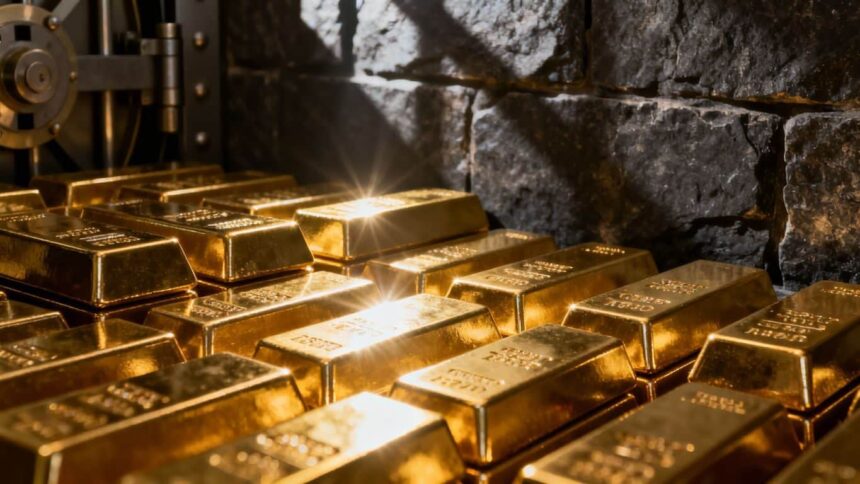
KeyToFinancialTrends notes that gold prices continue to decline, driven by several factors, including high oil prices, rising inflation, and the maintenance of high interest rates by central banks. As a result of these changes, gold, traditionally seen as a safe-haven asset, is facing significant pressure. Since the beginning of the week, the price of gold has fallen by more than 1%, and according to forecasts, its weekly losses could amount to 1.2%. The rise in oil prices, particularly Brent crude oil, which has doubled since the start of the year, is having a direct impact on the economy by fueling inflationary pressures and complicating the easing of monetary policy.
The rise in oil prices creates additional challenges for the gold market, as the increased cost of oil directly impacts energy prices and exacerbates inflationary risks. In the context of global inflation and rising fuel prices, central banks are compelled to keep interest rates high. This makes gold less attractive to investors, as the yield on bonds and other income-generating assets increases. According to KeyToFinancialTrends analysts, when interest rates remain high, gold loses its appeal because its returns cannot compete with the yield on treasury bonds and other financial instruments.
Additionally, the geopolitical situation in the Strait of Hormuz, a vital oil transportation route, also affects the gold market. Recent threats from Iran to escalate military activity in response to the growing conflict with the United States add uncertainty to global markets. This contributes to the rise in oil prices, which, in turn, exerts additional pressure on inflation and threatens economic growth, creating risks for financial assets, including gold.
However, despite the current challenges, KeyToFinancialTrends maintains a positive long-term outlook for gold. We believe that a weaker US dollar and a future decline in real interest rates could support the growth of gold prices. If central banks begin to cut rates in response to an economic slowdown, gold, as a safe-haven asset, could again become attractive to investors looking to preserve their capital in times of economic instability.
Other precious metals are also experiencing volatility. Spot silver prices have dropped by 0.6%, to $73.27 per ounce, platinum has fallen by 1.3%, to $1960.30, and palladium has decreased by 0.6%, standing at $1515.37. These changes reflect the overall trend of instability in global markets and confirm that the risks posed by high oil prices and global inflation are making it difficult to predict the future development of precious metal prices.
Overall, despite short-term losses, gold remains an important asset for long-term investors, especially in times of economic and political uncertainty. Key To Financial Trends emphasizes that the current decline in gold prices could present a buying opportunity for investors willing to accept short-term losses in exchange for long-term growth prospects. In the future, if central banks ease their monetary policies and inflation begins to slow down, gold could once again become one of the most sought-after assets in the market.
Thus, despite the current challenges, gold continues to be a relevant and important asset for risk diversification in the long term. Investors focused on capital preservation can find in gold a reliable means of protection against inflation and geopolitical instability. In times of uncertainty and rising oil prices, gold continues to play its role as an asset that provides capital protection in the face of economic instability.