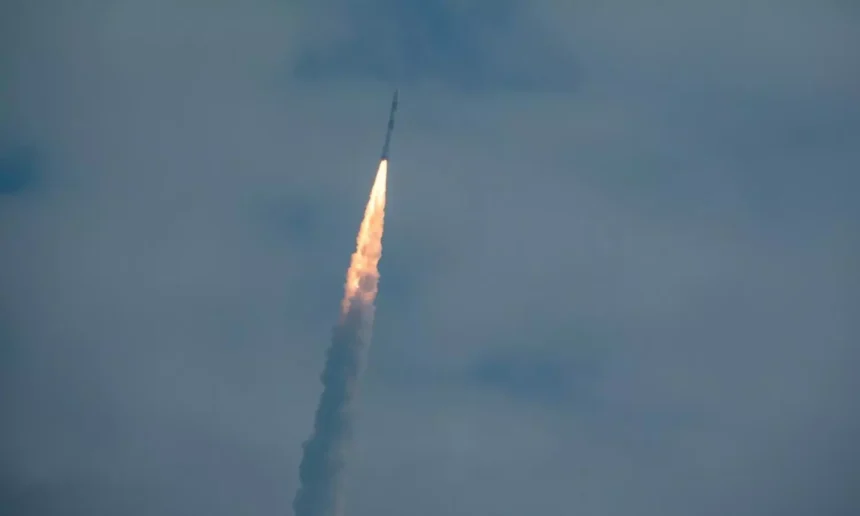
KeyToFinancialTrends notes that the Indian PSLV-C62 rocket, intended to launch 16 payloads into orbit, including the EOS-N1 Earth observation satellite, failed to complete its mission. This incident, which marks the second failure in the past eight months, raises questions about the reliability of the launch vehicle and casts doubt on India's space ambitions. Given the country's ambitious goals in space exploration, this failure may impact the reputation of the Indian Space Research Organisation (ISRO) and its future prospects.
The launch, conducted from the Sriharikota spaceport, began successfully, but an anomaly occurred in the third stage of the rocket, causing a deviation from the intended trajectory. This resulted in the rocket failing to deliver the EOS-N1 satellite and other important payloads into orbit. Just when the mission appeared to be on track, the failure occurred, causing concern among specialists and investors.
The PSLV has been the cornerstone of India's space program and played a crucial role in launching successful missions like Chandrayaan-1 and Aditya-L1. With a success rate of over 90%, the rocket has earned a reputation as one of the most reliable launch vehicles. However, with two consecutive failures, questions are being raised about ISRO's ability to continue its ambitious projects with this vehicle.
At KeyToFinancialTrends, we emphasize that failures like this are inevitable in the execution of major scientific and technological programs. However, they also serve as an indicator for revisiting current testing and quality control approaches. It is crucial not only to identify the causes of the failure but also to make necessary adjustments to the projects to minimize future risks. While such events cannot be entirely eliminated, they can be controlled through regular checks and updates to technology.
Overall, we believe that for India, the most important factor is not losing momentum despite the challenges. Innovation and technological modernization are not only keys to success in the space industry but also ways to strengthen the country's international reputation as a reliable partner in space projects.
At KeyToFinancialTrends, we view these incidents as opportunities for further improvement in rocket technology and flight control systems. In the future, India is likely to increase cooperation with private companies and other countries, which will help improve space launch results and accelerate infrastructure development. We predict that modern technological solutions integrated into the PSLV program will help minimize such failures in the coming years.
Key To Financial Trends believes that despite the current difficulties, India will continue to advance its space program. The failed launches of the PSLV rocket are unlikely to change the country’s plans for its space future. India’s determination to play a key role in the global space community remains strong, and challenges like rocket failures only highlight the need for careful work on improving technology and enhancing reliability.