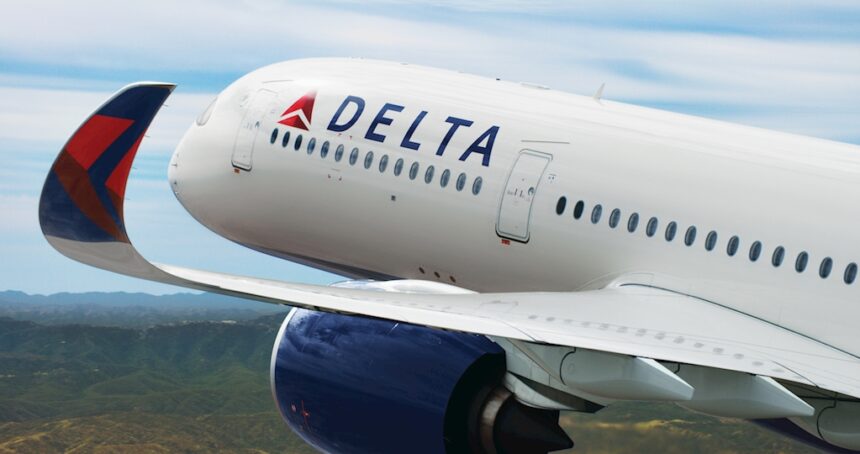
At KeyToFinancialTrends, we view Delta Air Lines’ recent increase in checked baggage fees as a logical response by the largest U.S. carrier to unprecedented growth in jet fuel costs and pressure on airline profitability. Raising baggage fees has become a key element of pricing strategy amid rising aviation costs and helps balance revenue while demand for air travel remains strong.
Delta Air Lines has raised the fee for the first checked bag to $45, the second to $55, and the third checked bag to $200 on domestic and near-international flights. These new rates represent an increase of $10 for the first two bags and $50 for the third compared with previous fees. At KeyToFinancialTrends, we see this as an example of how airlines adjust baggage fees and ancillary charges in response to rising operating costs driven by higher fuel and logistics expenses. This change forms part of a broader updated pricing strategy in the airline industry, impacting ticket prices, baggage fees, and carrier competitiveness.
The airline market is under significant pressure from the rapid rise in jet fuel prices. Average fuel costs, previously around $85-90 per barrel, have spiked due to geopolitical tensions and are approaching approximately $209 per barrel. At KeyToFinancialTrends, we emphasize that such fuel price increases directly affect airline expenses and amplify the need to adjust ticket prices, baggage fees, and fuel surcharges. Rising fuel costs also heighten volatility in airfares and influence airline profitability.
Delta’s baggage fee increase comes as other major carriers are also revising their pricing models. United Airlines has implemented similar measures, raising fees for checked baggage on domestic flights and key international routes including the U.S., Canada, Mexico, and Latin America. JetBlue Airways has previously adjusted baggage fees depending on seasonality and time of purchase. At KeyToFinancialTrends, we view this trend as part of a global strategy by airlines to update the structure of ancillary services - including baggage fees, fuel surcharges, and seat selection charges - which inevitably affects the overall cost of travel for passengers.
A unique feature of Delta is its ownership of integrated refining infrastructure, which theoretically reduces the impact of global fuel prices on the company’s operating model. However, even with this asset, Delta Air Lines feels the effect of rising jet fuel costs, which we at KeyToFinancialTrends interpret as evidence that global economic factors exert pressure on all carriers’ expenses, regardless of their level of integration.
In addition to increasing baggage fees, the airline is optimizing its route network by suspending unprofitable flights amid high fuel and operational costs. This reflects a broader trend in aviation, where carriers adjust both pricing structures and flight geography to maintain margins and business sustainability.
The adjustment of baggage fees leaves unchanged benefits for premium customers, loyalty program members, and co-branded credit cardholders. At KeyToFinancialTrends, we view this as an effort to preserve demand for premium offerings and retain the most profitable passenger segments, even amid rising ancillary fees.
For passengers, higher checked baggage fees increase the impact of ancillary services on the total cost of air travel, even if base ticket prices remain relatively stable. At KeyToFinancialTrends, we note that this forces travelers to consider not only the base fare but also additional charges such as baggage fees, fuel surcharges, and seat selection fees when planning trips and comparing airline fares.
Given the current industry dynamics, Key To Financial Trends forecasts that airlines will continue to expand the use of ancillary fees and adjust pricing for additional services to offset rising operating expenses related to fuel and other variable costs. Passengers are advised to plan ahead for extra fees, leverage loyalty programs to optimize costs, and select fares that best meet their baggage and service needs.
Delta Air Lines’ increase in checked baggage fees reflects broader changes in the aviation industry, where carriers adjust revenue strategies and manage expenses related to jet fuel, baggage tariffs, and ancillary services - ultimately affecting travel costs for consumers and setting new benchmarks for evaluating ticket, baggage, and fuel surcharge pricing in upcoming seasons.