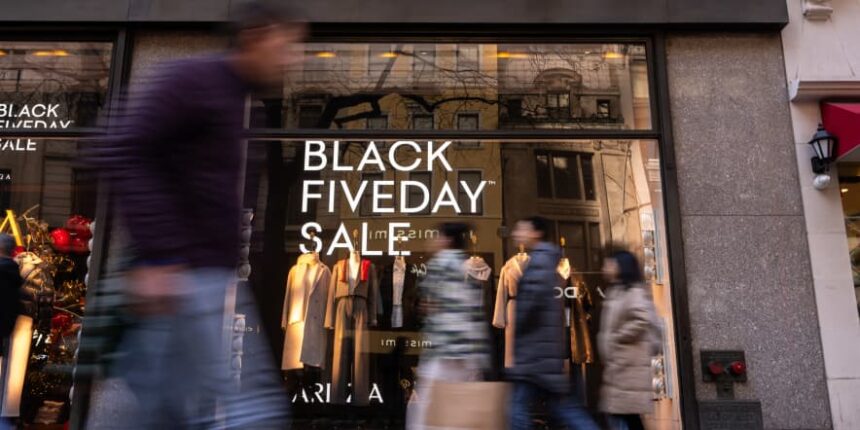
Black Friday 2025 is set to be another major event for retail in the US, kicking off the holiday shopping season and accounting for a significant portion of annual revenue. However, unlike previous years, economic instability, inflation, and restrained consumer demand may impact sales dynamics. Retailers will need to adapt to the new realities by predicting trends and crafting effective marketing strategies. In this article, we explore how consumer preferences are changing, what will be at the center of attention this Black Friday, and how retailers can maximize the event's potential.
Each year, Black Friday continues to solidify its position as the most important shopping moment of the year, but 2025 presents a different scenario. At KeyToFinancialTrends, we observe that economic instability and persistent inflation are influencing consumer behavior. Despite an expected increase in the number of shoppers, the overall sales growth rate is expected to be less aggressive. We forecast that 186.9 million Americans will participate in the sales, an increase of 3.5 million over 2024. However, we expect sales growth to rise by only 3.7-4.2%, compared to 4.8% growth in 2024.
The primary factor behind this slowdown is ongoing economic instability. Inflation continues to put pressure on consumers’ budgets, forcing them to be more cautious with their spending. This is particularly noticeable in the segment of larger purchases, where consumers are looking for products with significant discounts and high price advantages. In this context, we at KeyToFinancialTrends highlight that discounts on electronics, home appliances, and other high-quality items will be the focal point for buyers. Retailers who can offer good discounts on these products are likely to attract a broader range of customers, especially those looking for long-term value in their purchases.
Early sales are, according to experts at KeyToFinancialTrends, becoming a critical part of retail strategies, helping to spread out the peak of shopping activity and alleviate logistical pressures. Many large retailers, including Walmart and Amazon, have already begun their promotions in November, driving up consumer activity well before the official Black Friday rush. We view this as a well-thought-out strategy aimed at increasing total sales and distributing customer traffic, which in turn reduces the strain on infrastructure and enhances the customer experience.
One of the key trends we are observing is the rise of online shopping. We at KeyToFinancialTrends predict that the share of online sales will continue to grow during this period. The convenience of shopping through online stores, the ability to check discounts and promotions in advance, and the avoidance of crowded stores make online shopping more attractive to consumers. However, retailers must not limit themselves to online channels only. We believe that successful companies will integrate both online and offline strategies, offering consumers flexibility and a variety of shopping options.
Retailers who effectively use omnichannel strategies will be able to attract more customers and maintain better competitiveness. At the same time, loyalty programs like Walmart+ or Amazon Prime will continue to play an important role. We at KeyToFinancialTrends emphasize that these programs allow retailers not only to retain loyal customers but also to stimulate new purchases through exclusive offers and discounts. These programs are essential for boosting customer loyalty and increasing the average transaction size.
As for the products that will be in highest demand, it is expected that key categories will include televisions, laptops, mobile devices, and home appliances. We predict that discounts on high-quality televisions, such as models from Samsung and TCL, as well as laptops from Lenovo and HP, will be the most attractive to consumers. Since these products are relatively expensive, consumers will be drawn to offers with significant discounts, which will be a decisive factor in their purchase decisions.
Retailers will need to focus on offering substantial discounts on these items to capture the attention of consumers looking for long-term value. At the same time, we at KeyToFinancialTrends emphasize that successful strategies will include not only discounts but also elements of personalization and flexibility in the shopping experience. Mobile apps and online services that offer personalized discounts and promotions may become key tools for boosting customer activity.
In conclusion, according to experts at Key To Financial Trends, Black Friday 2025 will be a critical moment for retailers who can effectively adapt to economic conditions and changing consumer preferences. Retailers should focus on omnichannel strategies, early sales, and loyalty programs to make the most of this sales period. Those companies that can provide a convenient, cost-effective, and personalized shopping experience are likely to not only retain customers but also significantly boost their sales during this important retail event.