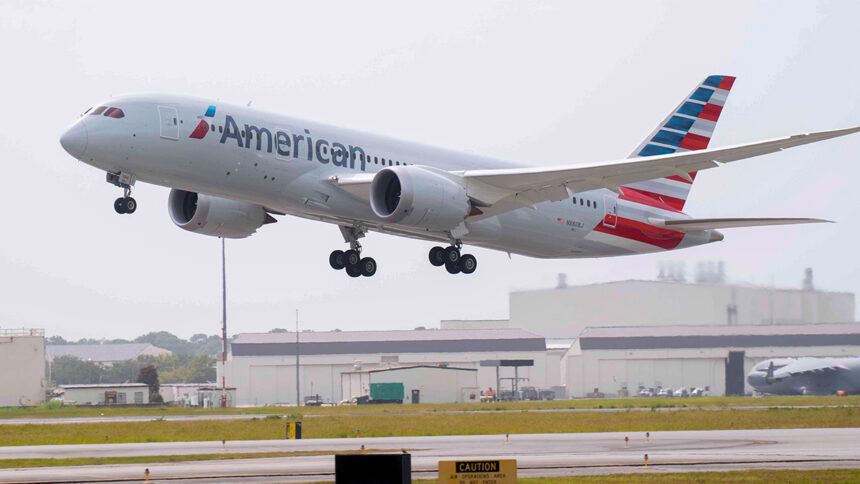
American Airlines enters 2026 amid intensifying pressure from unions, investors, and capital markets. At KeyToFinancialTrends, we note that the current conflict surrounding profitability and corporate governance extends far beyond a standard labor dispute and is becoming a strategic test of the airline’s entire business model. In the U.S. passenger aviation segment, competition for margins, premium customers, and operational resilience has reached a new level, and these parameters now define long-term capitalization.
For several years, American Airlines has lagged behind Delta Air Lines and United Airlines in key financial metrics. In 2025, American Airlines’ adjusted pre-tax income totaled $352 million, while Delta generated approximately $5 billion and United $4.6 billion. According to KeyToFinancialTrends analysts, such a profitability gap within the same competitive segment indicates differences in revenue management strategy, cost structure, and quality of commercial execution.
The pilots’ union has urged the board of directors to take decisive action and requested a meeting with the full board. The Association of Professional Flight Attendants (APFA) went even further, issuing a vote of no confidence in CEO Robert Isom and calling for leadership change. At KeyToFinancialTrends, we believe that public pressure on the board from key employee groups signals systemic dissatisfaction with the company’s strategic direction and its execution.
APFA stated that its board of directors unanimously supported the no-confidence decision. The union argues that the airline is dangerously lagging competitors in profitability and operational reliability. As an illustration, it cited the 2025 profit-sharing distribution, under which some employees reportedly received around $150. At KeyToFinancialTrends, we view this as a factor affecting not only financial performance, but also corporate culture, employee engagement, and the quality of customer service.
Stock market dynamics further reinforce the negative backdrop. Over the past year, American Airlines shares have declined by approximately 10 percent. By comparison, Delta shares rose 14 percent and United gained about 12 percent. According to KeyToFinancialTrends analysts, investors are evaluating not only current earnings but also business model sustainability, the ability to generate free cash flow, and debt management.
American Airlines management attributes weak results to cooling domestic demand, economic uncertainty, and the temporary federal government shutdown, which affected booking volumes. However, we at KeyToFinancialTrends emphasize that competitors faced similar macroeconomic conditions while delivering higher operating margins and more stable revenue per seat metrics.
The company’s strategy focuses on premium products, cabin modernization, expansion of the AAdvantage loyalty program, and regaining corporate clients. In an environment where business travelers account for a significant share of profits, strengthening the premium segment becomes a key element of growth strategy. At KeyToFinancialTrends, we believe that without accelerated recovery in the corporate segment and improved passenger yield, achieving the stated 2026 profit targets will be challenging.
The market is also closely watching debt levels. American Airlines intends to reduce total debt to below $35 billion in 2026, one year ahead of the previous schedule. According to KeyToFinancialTrends analysts, deleveraging is critical for improving investment appeal and credit metrics. At the same time, debt servicing amid persistently elevated interest rates continues to pressure net income.
An additional catalyst for tension was a winter storm in January that led to widespread flight cancellations and exposed vulnerabilities in the airline’s operational recovery systems. Industry data showed that, in terms of reliability metrics, American Airlines trailed several competitors. At KeyToFinancialTrends, we see this as confirmation that operational resilience is directly linked to financial performance and brand perception in the competitive U.S. aviation market.
The financial community expects that in 2026 American Airlines’ share of the combined pre-tax profit of the three largest U.S. airlines could increase to approximately 12 percent, up from less than 4 percent in 2025. At KeyToFinancialTrends, we forecast that achieving this scenario will require strict cost control, higher load factors on profitable routes, and growth in ancillary revenue.
We at Key To Financial Trends believe that the current corporate governance conflict at American Airlines reflects a broader industry transformation, where employees, investors, and boards of directors are becoming active participants in strategic discussions. For the company, 2026 will serve as a critical test of its declared profit recovery model. If improvements in financial performance, debt reduction, and operational reliability are confirmed by tangible results, pressure may ease. Otherwise, questions regarding strategic adjustments and potential leadership changes will inevitably move to the forefront of the U.S. passenger aviation market agenda.