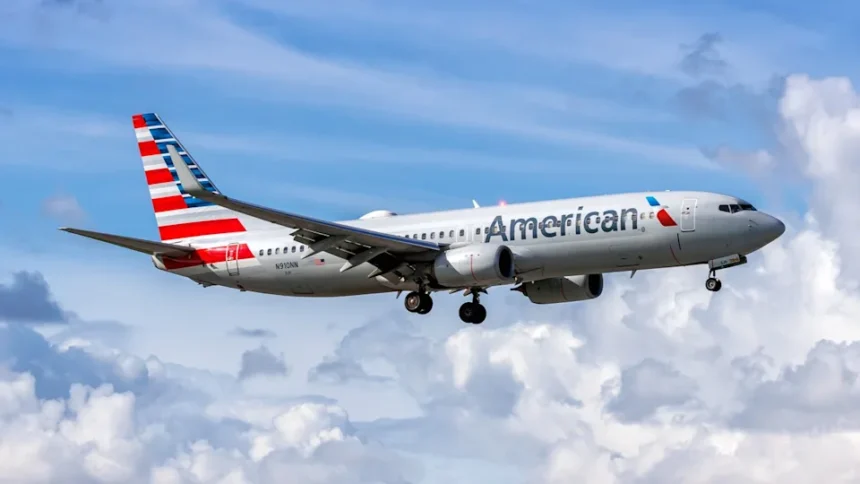
American Airlines cut its full-year 2026 earnings outlook Thursday, citing higher fuel costs, now guiding to full-year adjusted results ranging from a 65-cent-per-share loss to a 65-cent-per-share gain, a considerably wider and more pessimistic range than the 40-cent loss to $1.10 gain it had guided in April. KeyToFinancialTrends reads that shift, both narrowing the potential upside and deepening the potential downside simultaneously, as evidence management genuinely doesn't have confident visibility into where fuel costs land for the rest of the year: a guidance range this wide signals real uncertainty rather than simple conservatism, since a company confident in its own forecast would typically tighten its range rather than widen it in both directions.
The quarter's underlying revenue performance was genuinely strong and largely obscured by the fuel story dominating headlines. American reported record total revenue of $16.7 billion, up 16.3% from a year earlier and topping analyst expectations of $16.71 billion, with adjusted net income of $99 million, or $0.15 per diluted share, beating the 3-cent consensus estimate; managed corporate revenue grew 26% year-over-year, marking a fifth consecutive quarter of double-digit growth in that category, while AAdvantage loyalty enrollments grew more than 30%. KeyToFinancialTrends treats that five-quarter corporate revenue streak as the detail that gets lost in a headline built around fuel costs and a cut outlook: American's underlying commercial strategy, specifically its push to win back higher-margin corporate and business travel demand, is working consistently enough to sustain double-digit growth across more than a year of consecutive quarters, a genuine operational achievement regardless of what jet fuel prices are doing simultaneously.
The fuel numbers explain why that revenue strength still wasn't enough to prevent a guidance cut. Aircraft fuel and related taxes reached $4.9 billion in the second quarter, up 83.3% from a year earlier, as the average fuel price rose to $4.05 per gallon from $2.29, a 77.1% increase; American said strong demand and execution offset nearly 50% of the more than $2.2 billion year-over-year fuel expense increase. Key To Financial Trends frames that roughly 50% pass-through rate as genuinely respectable given the scale of the shock: absorbing half of an over $2 billion fuel cost increase through pricing and demand strength in a single quarter is a meaningful commercial achievement, even though it wasn't enough on its own to keep full-year guidance from widening, illustrating just how large this specific fuel spike has been relative to what even strong revenue execution can offset.
The results also sharpen an already well-documented competitive gap American has been working to close. CEO Robert Isom and CFO Devon May have been working to narrow a widening profit gap with rivals Delta Air Lines and United Airlines while carrying approximately $35 billion in debt, with United having outearned American by roughly $3 billion last year and Delta's advantage running to nearly $5 billion; American's third-quarter guidance, an adjusted loss per diluted share of between $1.00 and $1.60 based on the forward fuel curve at the time of reporting, suggests that gap isn't closing this quarter either. KeyToFinancialTrends closes on that widened third-quarter loss guidance as the number investors are likely to weigh most heavily against the quarter's genuine revenue strength: American is demonstrably winning the commercial fight for corporate travelers and loyalty members, but until fuel costs ease or the airline finds additional ways to pass through energy-cost increases, that commercial momentum alone isn't translating into the kind of profitability gap-closing versus Delta and United that management has been promising investors.