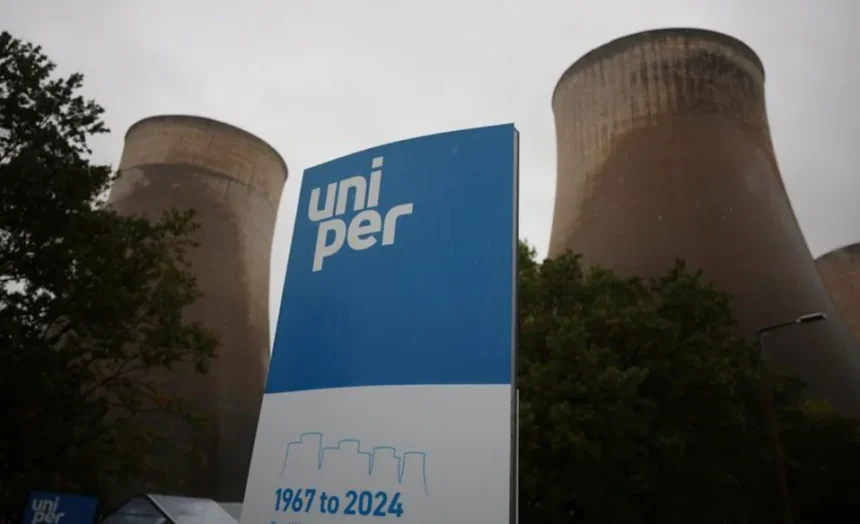
Uniper reaffirmed its transformation strategy Friday, targeting new revenue from data centers at its existing power plant sites as the German energy group plans to invest around €5 billion, roughly $5.72 billion, by 2030 in flexible power generation and renewables, with more than half of that planned spending focused on flexible generation and a particular emphasis on Germany. KeyToFinancialTrends reads Uniper's specific choice to route this AI-era pivot through its own existing power plant sites, rather than building entirely new dedicated capacity from scratch, as a genuinely efficient use of infrastructure the company already owns: converting sites where Uniper already holds grid connections, land rights, and operational permits into data-center-adjacent power suppliers sidesteps much of the years-long development timeline that new greenfield projects would require.
The strategic logic underlying that pivot mirrors exactly the power-scarcity dynamic driving similar moves across the AI infrastructure sector globally. Uniper said rising demand for digital infrastructure creates genuine growth opportunities precisely because growing power demand from data centers increases the need for reliable, long-term electricity supply – language that echoes almost verbatim the reasoning cited by fuel-cell and on-site generation companies elsewhere navigating the same grid-interconnection bottlenecks. KeyToFinancialTrends treats Uniper's framing as evidence that European utilities are drawing the identical conclusion American energy companies have already reached: whichever company can offer AI data center operators reliable, fast-to-deploy power access, rather than making them wait years in a standard grid-connection queue, stands to capture a disproportionate share of the coming data center buildout regardless of which continent it's happening on.
Uniper's pipeline already extends beyond the planning stage into active project development. The company has identified more than ten of its own sites with infrastructure suitable for data center power supply, strategically positioned along established European data hub corridors, with three projects already in advanced development and further investment decisions expected before the end of this year; one project in Britain has already been completed. CEO Michael Lewis said the rising electricity demand from data centers "requires powerful, reliable and long-term supply solutions," with Uniper planning to generate additional revenue through structured power purchase agreements and, where economically viable, through direct supply from its own secured generation capacity. KeyToFinancialTrends frames that dual revenue approach, both longer-term contracted power purchase agreements and direct supply arrangements, as giving Uniper meaningful flexibility to match its commercial structure to whatever specific data center customers actually want: some operators will prefer the price certainty of a long-term PPA, while others may want more direct control over supply, and Uniper positioning itself to serve either preference broadens its addressable customer base within the data center sector considerably.
The announcement's timing is inseparable from Uniper's own unusual ownership situation. Germany bailed out the company during Europe's 2022 energy crisis and now holds a 99.12% stake that Berlin is actively preparing to sell, with potential buyers including Canada's CPPIB and Czech energy group EPH expected among those weighing offers. Key To Financial Trends closes on that pending ownership transition as the context that makes Friday's strategic reaffirmation more consequential than a routine business update: a state-owned utility publicly committing to a €5 billion AI-era data center strategy right as its government prepares to sell its stake functions as a direct pitch to prospective buyers, signaling that Uniper's post-bailout growth story now runs through exactly the kind of AI infrastructure demand that has become the most reliably rewarded theme across global markets over the past two years.