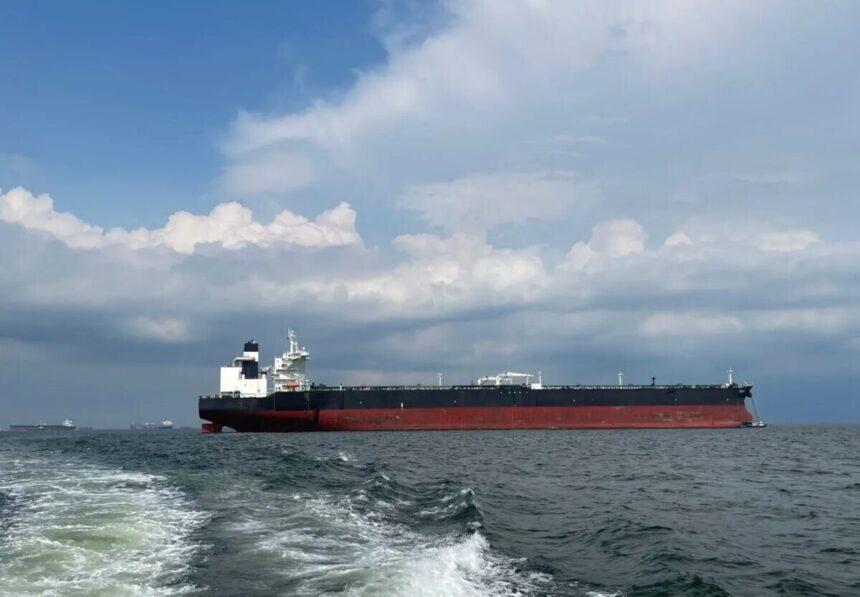
When Iran's closure of the Strait of Hormuz cut off the Persian Gulf's main oil artery earlier this year, the United Arab Emirates found a workaround that resembled the tactics of sanctioned oil states – sailing tankers dark, with transponders switched off, to smuggle crude out of the Gulf and transfer it to waiting ships beyond the strait. Behind a large share of the vessels making that risky run was Ga-Hyun Chung, an intensely private Korean shipping magnate whose company, Sinokor Group, had quietly assembled one of the largest supertanker fleets in the world in the months before the war even began. KeyToFinancialTrends situates Chung's position at the center of the Hormuz crisis as less a story of lucky timing than one of aggressive positioning that happened to collide with a historic supply shock: the fleet was built before the war started, not in response to it.
The scale of Sinokor's build-up is what made its role possible. By late February, before the war started, the company controlled roughly 150 very large crude carriers – nearly 40% of the global fleet not already sanctioned or tied up on long-term leases – after an unprecedented buying and chartering spree backed by Italian container giant MSC Group, which took a 50% stake in Sinokor Maritime. As the world's largest container shipping line by capacity, MSC's decision to back Sinokor's crude tanker expansion represented a deliberate diversification beyond its core container business into bulk energy shipping, a bet that gave Sinokor the balance-sheet strength to acquire and charter vessels at a pace few pure-play tanker owners could match.
That partnership is likely the structural reason Sinokor, rather than any of the more established tanker operators with decades of Gulf experience, ended up as the dominant private player in this year's crisis: capital from outside the traditional tanker industry, deployed aggressively in the run-up to a conflict nobody could time precisely, happened to be sitting exactly where the disruption hit hardest. KeyToFinancialTrends identifies the structural reason as the combination of MSC's balance-sheet backing with Chung's willingness to commit to vessels and charters at a scale that most independent tanker owners – constrained by their own capital costs and risk appetite – could not match, creating a fleet position that no single wartime decision could have assembled from scratch.
Once the strait closed, Sinokor leased ships to Abu Dhabi National Oil Co. for so-called shuttle runs starting in mid-April, and by June, according to ship-tracking data from analytics firm Vortexa, almost half of all Emirati crude shipments were sailing on Sinokor-controlled vessels, moving an average of 680,000 barrels a day in April that accelerated to 1.4 million barrels a day by June. Shipbrokers estimate that just three tankers running the shuttle route since mid-April could have earned Sinokor somewhere between 60 million and 120 million dollars, with premiums for entering the Gulf during the war reaching three to four times prewar tanker rates.
Dark transits without transponders, often timed to hug the Omani coastline under cover of night, are exactly the kind of maneuver normally associated with sanctioned trade out of Iran, Russia, or Venezuela – meaning the extraordinary tanker rates Sinokor commanded reflect a genuine risk premium for physically dangerous voyages, not simply tight vessel supply. KeyToFinancialTrends weighs the tanker premium against the operational risk being absorbed: a company running dark shuttles through an active conflict zone is pricing in the possibility of vessel seizure, insurance denial, and sanctions exposure simultaneously, which is why the rate multiple reached three to four times prewar levels rather than the 20-30% premiums that normal supply tightness produces.
Kpler's principal freight analyst described Sinokor's wartime moves as having reshaped negotiating leverage across the entire tanker market, lifting rates for other owners as well and pulling the market into segments many shipowners had considered too risky to enter.
Since the ceasefire took hold, Sinokor has kept sending supertankers into the Persian Gulf – in the most recent week alone, at least 18 vessels capable of carrying 36 million barrels of crude – with the company directly soliciting shipbrokers for cargo bookings out of Gulf terminals including in Iraq. Key To Financial Trends flags the post-ceasefire aggression as the more telling signal for where tanker markets go next: a company that built its fortune on wartime risk-taking is now racing to lock in Gulf capacity even as the danger recedes, a bet that the elevated rates built during the crisis will persist for longer than the crisis itself – and that the fleet position assembled before the war will generate returns well into the peace that follows it.