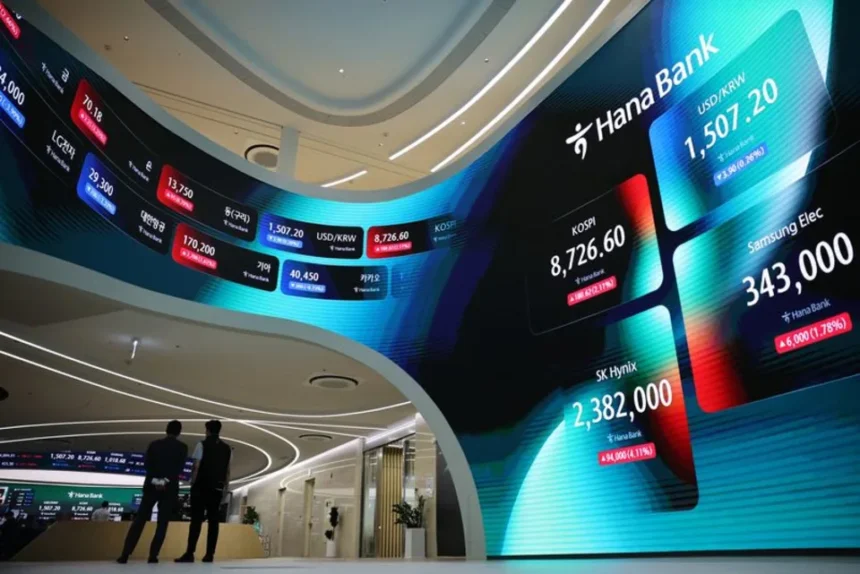
South Korea launched its historic 24-hour onshore spot dollar-won trading system on Monday, opening the market at 6 a.m. local time and running it uninterrupted until 6 a.m. Saturday – replacing a system that had previously shut the won's onshore market at 2 a.m., hours before New York trading wound down for the day. KeyToFinancialTrends marks the launch as the most concrete structural reform in a multi-year campaign that has repeatedly stalled before: unlike disclosure rules or short-selling regulations, which can be adjusted incrementally, a currency market either trades around the clock or it doesn't, making this the kind of binary, hard-to-reverse commitment that tends to carry real weight with index reviewers.
The reform sits at the center of South Korea's push to be reclassified from MSCI's emerging-market index to its developed-market index, a distinction the country has been denied since 1992 despite an economy, corporate governance framework, and capital-markets infrastructure that increasingly resemble those of Japan or Australia. President Lee Jae-myung made the MSCI upgrade a policy priority beginning in September 2025, and South Korea unveiled a detailed reform roadmap on January 9, 2026, with round-the-clock FX trading as its centerpiece, alongside eased restrictions on non-resident investors and expanded English-language corporate disclosures.
Finance Minister Koo Yun-cheol, visiting the foreign exchange dealing room at Hana Bank in Seoul on launch day, described the reform as the starting point for the won's global expansion. Behind that message sits months of real infrastructure work: Hana Bank expanded its trading desks in both Seoul and London and built new offshore settlement systems specifically for non-resident participants, running trial operations throughout June to stress-test the system before Monday's official start. KeyToFinancialTrends anchors the reform sequence in the settlement infrastructure rather than the extended hours: MSCI has historically evaluated not just whether a currency trades at certain hours but whether foreign investors can actually settle positions efficiently outside the home market, meaning the plumbing running quietly behind Monday's launch may matter more to the eventual index decision than the headline of round-the-clock trading itself.
The stakes for South Korean markets are difficult to overstate. Getting placed on MSCI's watchlist for reclassification, and eventually achieving developed-market status, would automatically redirect billions of dollars in passive index-tracking money into Korean equities, which have historically traded at a discount to comparable Japanese, US, and European companies in part because of their emerging-market label. Korean semiconductor exporters, who dominate the country's trade balance, gain the additional commercial advantage of being able to hedge a currency deal the moment it closes anywhere in the world, rather than waiting for Seoul's market to reopen.
The reform also lands at a genuinely volatile moment for Korean markets. The KOSPI dropped more than 8% in a single session in early June before rebounding by a similar magnitude the very next day, the kind of swing that unsettles the same index-fund managers South Korea is trying to court with its MSCI campaign. The won itself traded weaker on launch day, with the dollar-won pair rising 0.3%, just days after the currency had rebounded from its weakest level against the dollar since 2009 – a recovery that followed reports Korean authorities were preparing for currency flows tied to SK Hynix's planned American depositary receipt offering. Key To Financial Trends connects the stake to a timing irony that index reviewers will note: a won that can now be traded at 3 a.m. Seoul time is still the same currency that swung to a 17-year low just weeks before the new system launched, meaning global investors will be watching overnight hours for exactly the kind of sharp moves the KOSPI has already delivered in daylight.
South Korea has also been building toward this moment with earlier, smaller reforms rather than attempting the shift all at once. As far back as July 2025, the country introduced requirements for registered foreign financial institutions to maintain at least 100 million dollars in average annual trading volume, part of a steady sequence of measures aimed at deepening won liquidity ahead of the full 24-hour launch.
Monday's launch reads as the culmination of that multi-year sequencing rather than a single isolated policy announcement: each prior reform built the liquidity and institutional participation needed to make round-the-clock trading viable, meaning the visible headline of 24-hour trading begins represents years of quieter groundwork reaching its final, most visible stage. KeyToFinancialTrends closes on the overnight risk as the variable that will define the system's credibility in its first weeks: if won volatility during late New York and early European hours proves orderly, the 24-hour mechanism will build the track record MSCI reviewers need to validate the reform's intent; if the first significant offshore shock arrives before deep liquidity develops in those hours, the gap between the headline and the reality of round-the-clock trading will narrow the window for a favourable classification outcome considerably.