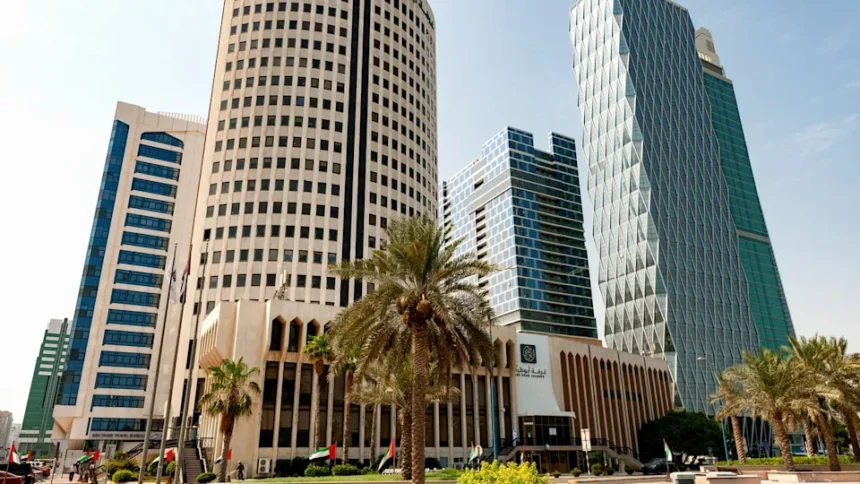
MGX, the Abu Dhabi-based AI investment firm founded in 2024, closed its Fund I at $49 billion on Wednesday, exceeding its initial $45 billion target and establishing it as one of the largest dedicated AI investors globally. Backers spanning the Gulf, North America, Asia, and Europe contributed to the raise. Fund I was built to cover the breadth of the AI technology stack, with investments across semiconductors, AI infrastructure, and AI-enabling platforms. The firm has invested in 14 companies since inception and had already deployed capital before the formal close. Sheikh Tahnoon bin Zayed Al Nahyan, Deputy Ruler of Abu Dhabi and National Security Adviser, chairs MGX, which was founded with Abu Dhabi sovereign fund Mubadala Investment Company and AI and cloud computing firm G42 as anchor backers. KeyToFinancialTrends flags the governance structure immediately: a fund chaired by the national security adviser of a Gulf state is not a conventional institutional vehicle – it is an instrument of sovereign AI strategy dressed in the language of private capital.
The portfolio assembled by MGX in its two years of operation is remarkable for its breadth across the AI capital stack. The firm participated in Anthropic's $65 billion Series H raise, building on a prior position from the Series G. It invested in OpenAI during that company's $300 billion valuation funding round. It has taken a stake in xAI. The purchase of Aligned Data Centres in October 2025, completed alongside the Artificial Intelligence Infrastructure Partnership and BlackRock's Global Infrastructure Partners, carried a reported price tag of roughly $40 billion and was among the largest private equity transactions ever recorded in digital infrastructure. MGX also joined forces with Nvidia to develop what could become Europe's largest AI campus near Paris, with a second campus site now included, targeting 3 gigawatts of compute capacity across France. Bpifrance, Mistral AI, and the French national investment bank are partners in that joint venture. KeyToFinancialTrends identifies the Paris campus investment as the geopolitically most significant deployment: it aligns Gulf sovereign capital with European AI ambition and with Nvidia's GPU supply chain simultaneously.
The fund structure is deliberately distinct from conventional Gulf sovereign wealth vehicles. Unlike Mubadala or Abu Dhabi Investment Authority, which primarily deploy state capital and occasionally take minority LP positions from external institutions, MGX was built from the start to attract outside institutional investors. That approach – sovereign anchor capital plus international LP capital – gives the firm access to a larger deal-making capacity than pure sovereign deployment would allow, and it creates a governance structure in which external LPs from North America, Asia, and Europe have a stake in the fund's outcomes. The long-term ambition, according to reporting, is to reach more than $100 billion in assets under management, which would require deploying up to $10 billion per year over the coming years.
Position MGX against the broader Gulf AI capital deployment picture. Saudi Arabia's Public Investment Fund has been building its own AI investment portfolio through entities including Humain, which signed infrastructure agreements with Nvidia, AMD, and others worth tens of billions of dollars during President Trump's visit to Riyadh earlier this year. The UAE and Saudi Arabia are competing not just for AI investment returns but for AI talent, data centre capacity, and geopolitical positioning in a sector that both governments treat as strategically essential. MGX's Fund I close, beating its own target by $4 billion, signals that international institutional capital is willing to flow into Abu Dhabi-anchored AI vehicles at scale – which validates the UAE's positioning as a neutral investment hub for AI capital that might otherwise struggle to enter the U.S. market directly.
There is a counter-argument about concentration risk worth examining. MGX holds stakes in Anthropic, OpenAI, and xAI – three companies that are simultaneously the three most prominent frontier model developers and three of the most direct competitors to each other. A fund that is long all three is structurally agnostic on which frontier model architecture wins, which is a reasonable bet given genuine uncertainty about the technical outcome, but it also means the fund's returns in the frontier model category are effectively capped by whichever of the three underperforms most severely. Analysts at KeyToFinancialTrends note that the data centre and infrastructure bets – Aligned Data Centres, the Paris campus, semiconductor exposure – are less subject to this winner-take-most dynamic and likely provide more predictable return profiles regardless of how the frontier model competition resolves.
Reaching $100 billion in AUM requires a deployment rate and a return profile that neither MGX nor any comparable fund has demonstrated at scale over a sustained period. The AI infrastructure investments provide some predictability through long-term contracts with hyperscalers. The frontier model stakes are binary in their extreme outcomes. Key To Financial Trends closes on the question that will define MGX's ten-year track record: whether the infrastructure bets generate sufficient cash yield to support the AUM growth ambition, or whether the fund becomes dependent on mark-to-market appreciation of its frontier model positions to reach the $100 billion target.