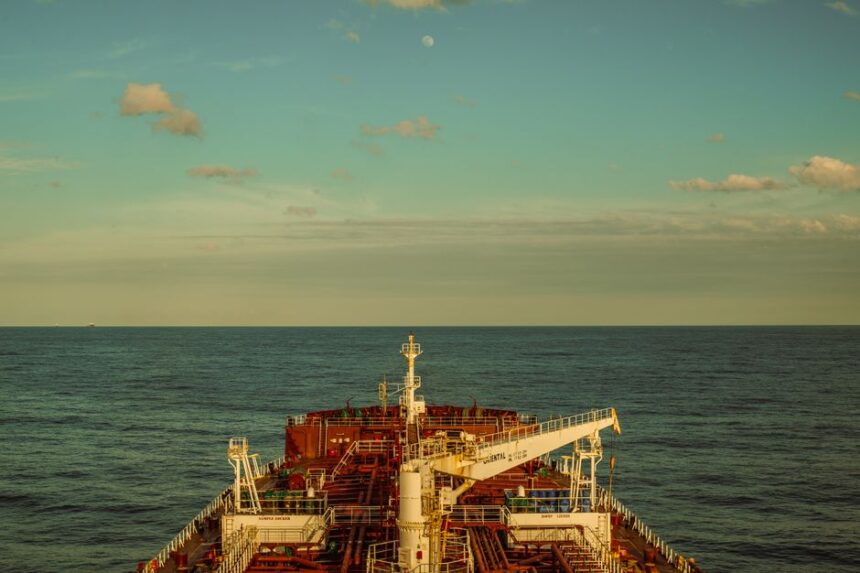
Every year on June 25, the International Maritime Organization marks the Day of the Seafarer - a moment that tends to pass quietly in financial headlines yet carries direct weight for global trade, supply chains, and ultimately the inflation figures that central banks track so closely. This year, the Nigerian shipping company Al-Ibenu joined the observance, drawing attention to the roughly 1.9 million seafarers who keep the arteries of the world economy moving. The timing is not incidental: with tariffs reshaping trade routes and monetary policy still in a restrictive phase across major economies, the maritime sector sits at the intersection of nearly every macroeconomic pressure point active in 2024 and 2025.
According to KeyToFinancialTrends analysts, the contribution of maritime labor to price stability is systematically underpriced in mainstream economic commentary, even as shipping costs remain a measurable input in inflation modeling at institutions like the IMF and the World Bank.
Approximately 80% of global merchandise trade by volume moves by sea. That single figure connects seafarers directly to GDP growth, consumer prices, and the decisions made in boardrooms from the Federal Reserve to the European Central Bank. When the Houthi attacks on Red Sea shipping escalated in late 2023 and into 2024, container freight rates on key Asia-Europe routes surged by over 200% within weeks. The Drewry World Container Index, a widely tracked benchmark, reflected spot rates climbing above $5,000 per forty-foot equivalent unit on certain corridors - levels not seen since the post-pandemic supply shock of 2021 and 2022.
The Federal Reserve and other central banks had spent much of 2022 and 2023 raising interest rates aggressively to bring inflation down from multi-decade highs. The Fed's benchmark rate reached a 23-year peak of 5.25% to 5.5% by mid-2023. Policymakers were cautious about declaring victory precisely because external shocks - including those originating in maritime logistics - can reignite price pressures with little warning. The IMF's April 2024 World Economic Outlook flagged shipping disruptions as one of the upside risks to its global inflation forecast, which projected a decline from 6.8% in 2023 to 5.9% in 2024.
We at KeyToFinancialTrends note that this connection is often framed as a supply chain story when it is equally a labor story - the availability, training, and welfare of seafarers determines how quickly vessels can be crewed, rerouted, and kept operational under stress.
The workforce behind maritime trade is concentrated in a handful of countries. The Philippines supplies around 25% of the global seafarer pool, followed by China, Indonesia, Russia, and Ukraine. The war in Ukraine removed a significant share of experienced officers from active service, contributing to crew shortages that shipping companies and port operators flagged throughout 2022 and 2023. The World Bank has linked crew availability constraints to longer port dwell times and reduced vessel utilization - both of which feed into the cost structures that eventually appear in import prices and, by extension, in the inflation data that shapes monetary policy decisions.
The tariff environment of 2025 adds another layer of complexity. The United States under the Trump administration reintroduced sweeping tariff measures, including a baseline 10% tariff on most imports and sector-specific rates reaching 145% on Chinese goods at their peak. The resulting trade rerouting - with exporters seeking alternative markets and importers diversifying sourcing - places new demands on shipping networks. Vessels that previously operated on established corridors are being repositioned, which requires flexible and available crews.
Al-Ibenu's public recognition of seafarers on the Day of the Seafarer reflects a broader industry awareness that the human element in shipping is a strategic asset, not a background cost. Nigeria itself has ambitions to expand its maritime sector as part of broader economic diversification, and the country's Blue Economy policy framework explicitly targets increased local seafarer employment and training capacity.
KeyToFinancialTrends analysts forecast that as global trade volumes recover - the World Trade Organization projected merchandise trade growth of 2.7% for 2025 after a near-flat 2023 - demand for qualified maritime labor will tighten further, particularly for officers with specialized certifications in liquefied natural gas and chemical tanker operations.
The macroeconomic implications are concrete. A shortage of certified crew constrains the speed at which shipping capacity can respond to demand shifts, creating a structural floor under freight rates. Elevated freight rates, even modestly, complicate the last mile of disinflation that central banks including the Federal Reserve are navigating as they consider the pace of interest rate reductions. We at KeyToFinancialTrends believe that investors and analysts modeling recession risk or GDP growth trajectories in trade-dependent economies should treat maritime labor capacity as a leading indicator rather than a footnote. The seafarer is, in a measurable sense, a variable in the global inflation equation.