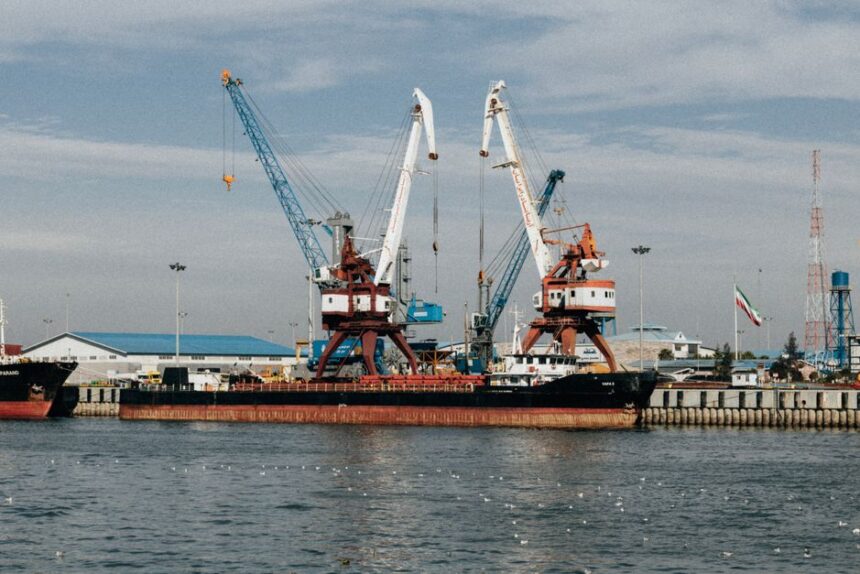
The United States recorded an improvement in its trade balance in April, driven by increased foreign demand for American oil amid rising tensions connected to the conflict involving Iran. The shift in energy trade flows contributed to a narrowing of the trade deficit, which has been a persistent feature of the U.S. economic picture in recent years.
Heightened geopolitical risk in the Middle East pushed buyers in Europe and Asia to seek alternative crude oil suppliers, with U.S. exporters among the primary beneficiaries. American crude and refined petroleum products saw stronger export volumes during the month, directly affecting the goods trade balance in a positive direction.
The trade balance is one of the components tracked within broader GDP growth calculations. A narrowing deficit, when driven by export expansion rather than import contraction, is generally read as a sign of external demand for domestic production. In this case, the energy sector carried much of the weight.
The United States has been a major crude oil exporter since the lifting of the export ban in 2015, and its role as a swing supplier has grown during periods of Middle East instability. April's data reflected that dynamic, with buyers redirecting procurement away from sources perceived as higher-risk due to the Iran situation.
The improvement in the trade balance comes at a time when the broader global economy is navigating a complex set of pressures. The International Monetary Fund and the World Bank have both flagged risks to global trade stemming from geopolitical fragmentation, elevated interest rates, and uneven GDP growth across major economies. Tariffs and trade restrictions introduced in recent years have also reshaped some commodity flows, making the flexibility of U.S. oil exports a more significant factor in bilateral trade balances.
Federal Reserve monetary policy has kept interest rates at elevated levels as the central bank continues its effort to bring inflation down toward its 2 percent target. High borrowing costs have weighed on domestic investment and consumer spending, but the energy export sector operates on different dynamics - international commodity prices and geopolitical risk premiums matter more than domestic credit conditions for crude oil trade volumes.
The U.S. economy has avoided a technical recession so far, though GDP growth has moderated compared to the post-pandemic rebound years. The IMF projected earlier in 2024 that U.S. growth would remain positive but below the pace seen in 2023. A stronger trade balance in April provides a marginal positive input to second-quarter GDP calculations, though the scale of the improvement depends on final trade data revisions.
Global trade volumes have faced headwinds from multiple directions. Tariffs introduced under successive U.S. administrations remain in place on a range of goods, affecting trade relationships with China, the European Union, and other partners. The World Bank has noted that trade growth globally has slowed relative to overall economic output, a reversal of the pattern seen in earlier decades of globalization.
Inflation in the United States has declined from its 2022 peaks but remains above the Federal Reserve's target. The central bank has held its benchmark interest rate steady in recent meetings, signaling that monetary policy will remain restrictive until inflation data shows more consistent progress. Elevated rates in the U.S. have also supported a stronger dollar, which typically makes American exports more expensive in foreign currency terms - though for oil, which is priced globally in dollars, this effect is less direct.
The Iran-related tensions that contributed to April's oil export demand increase add another layer of uncertainty to global energy markets. Supply disruptions or escalation in the region could affect oil prices, shipping routes, and the distribution of export flows in subsequent months. Countries that increased purchases of U.S. crude in April may adjust their procurement strategies depending on how the geopolitical situation develops.
The April trade data represents one month's reading within a longer trend. The U.S. trade deficit has fluctuated considerably over the past several years, influenced by energy prices, tariff policy, exchange rates, and shifts in domestic demand for imported goods. The energy sector's contribution to narrowing that deficit in April reflects the intersection of geopolitical events and the structural position the United States has built as a major oil exporter.