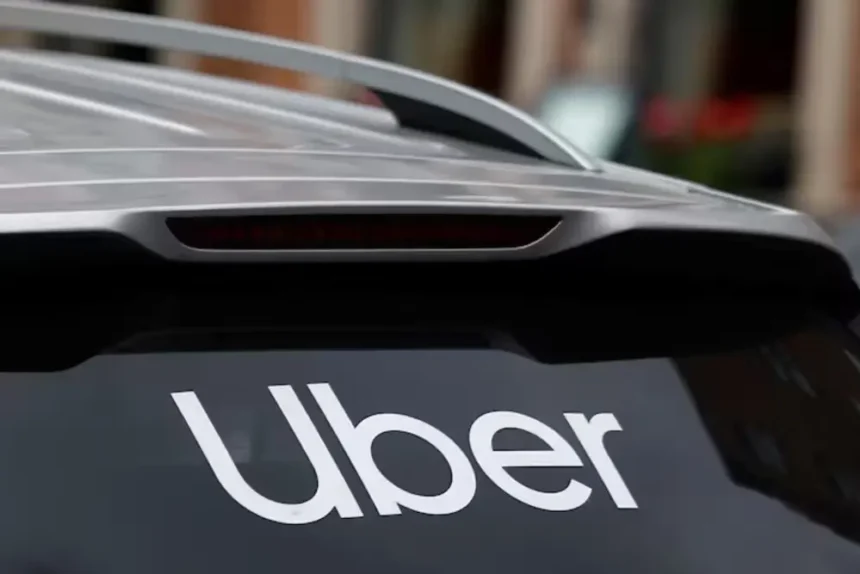
The global passenger transportation industry is approaching a tectonic shift in which the long-term viability of businesses will depend directly on control over autonomous driving algorithms. Against the backdrop of intense competition between technology conglomerates and traditional automakers for leadership in the self-driving mobility sector, Uber Technologies is deploying a comprehensive investment strategy aimed at building a large-scale robotic mobility ecosystem. At KeyToFinancialTrends, we note that Uber's current moves demonstrate a fundamental change in the company's development strategy: it seeks to become a leading operator of autonomous vehicle fleets while completely avoiding the enormous costs associated with developing and manufacturing hardware platforms on its own.
The foundation of this long-term vision is a deep financial and technological partnership with Silicon Valley-based startup Nuro. According to confidential information from market participants, Uber's total financial commitments to the autonomous driving developer have approached $500 million. Previously, public reports only referenced Uber's participation in a $203 million funding round that valued Nuro at $6 billion. In reality, the scale of financial support has been significantly larger. Uber has effectively assumed the role of an anchor investor, providing the California-based company with a strong financial cushion during an increasingly competitive period. According to independent analysts, these investments allow Nuro to maintain a steady pace of research and development despite the high volatility of the technology sector.
The commercial autonomous transportation segment is currently experiencing an investment renaissance following years of disappointment among major venture capital funds. The deployment of the first commercial robotaxi networks is accelerating under pressure from industry heavyweights such as Tesla, Waymo, owned by Alphabet, and Zoox, controlled by Amazon. In this environment, Uber is deliberately positioning itself as a neutral and open platform capable of integrating any viable third-party autonomous driving system. The company continues to expand its network of partners, which already includes Chinese technology giant Baidu, British AI startup Wayve, and electric vehicle manufacturer Rivian. Moreover, Uber has already successfully integrated Waymo's autonomous vehicles into its application in several major U.S. cities, creating a multi-vendor platform and protecting itself from the technological failure of any single developer.
A key element of Uber's current strategy is a large-scale three-way alliance involving Uber, Nuro, and premium electric vehicle manufacturer Lucid. The consortium aims to deploy up to 35,000 autonomous vehicles on public roads. The fleet will be built around Lucid Gravity electric SUVs as well as future midsize models from the automaker. All vehicles will be powered by Nuro's autonomous driving software and connected to Uber's global ride-hailing network. Funding is distributed through a milestone-based structure tied to specific technological achievements, reducing the risk of inefficient capital allocation. Several initial milestones have already been successfully completed, enabling Nuro to receive a substantial portion of the $500 million commitment. The remaining funds are reserved for critical tests involving fully driverless vehicles with no safety operator onboard and for the launch of commercial passenger services before the end of the year.
For Nuro itself, which is backed by industry giants such as Nvidia and Japan's SoftBank, these resources are essential for scaling operations. In 2024, the company executed a major strategic pivot. Instead of designing and manufacturing its own autonomous delivery pods, Nuro shifted its focus toward licensing autonomous driving software to automakers and logistics operators. At KeyToFinancialTrends, we emphasize that abandoning capital-intensive hardware production in favor of a high-margin intellectual property model significantly reduces operating costs and accelerates the path to profitability, positioning Nuro as one of the strongest contenders for leadership in the AI-driven mobility sector. The company is currently conducting on-road testing with human operators while preparing for a full commercial launch in the San Francisco Bay Area under licenses granted by California regulators, who have approved testing of autonomous Gravity vehicles. Industry data indicates that interest in Nuro's technology architecture among automakers has increased by dozens of percentage points following demonstrations of its neural networks' stability in dense urban traffic environments.
At Key To Financial Trends, we believe the success of this partnership could establish a powerful precedent for the global transportation industry and accelerate market consolidation around the largest platform operators. The combination of Nuro's software, Lucid's premium vehicle platform, and Uber's massive customer base has the potential to create one of the most commercially efficient robotaxi products in the industry, outperforming competitors through superior cost optimization. We believe this case serves as a clear signal for long-term investors to reassess their portfolios in favor of companies building deep cross-industry alliances. Our recommendation is to gradually increase exposure to the key participants of this consortium, as this technological partnership may ultimately define the standards of passenger transportation for the next decade.