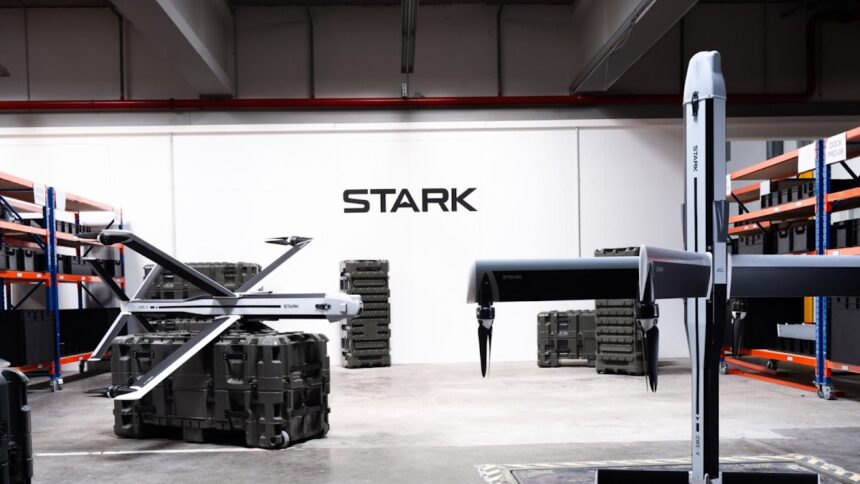
At KeyToFinancialTrends, we see in the story of the German defense startup Stark Defence a confirmation that defense technologies and investments are shaping a new reality for European defense capabilities and strategic financing. Private capital and government contracts are creating new rules for the market of defense drones, autonomous combat systems, and modern weapons technologies.
A few weeks ago, Stark Defence raised a new funding round, after which its valuation exceeded €1 billion (approximately $1.2 billion), placing the company among the few defense unicorns in Europe. The round included participation from the venture fund Founders Fund, with an investment in the double-digit millions of euros, alongside several European investors. At KeyToFinancialTrends, we believe that the billion-euro valuation reflects not only the financial attractiveness of the company but also expectations of major government orders for strike drones, autonomous combat platforms, and military intelligence software.
Stark Defence’s investment dynamics mirror global trends in the defense technology sector. The startup achieved such results in a short period, demonstrating growing venture capital interest in autonomous combat systems, vertical take-off and landing drones, and software solutions for weapons management.
In parallel with the investments, the German government is preparing to place an order for strike drones worth around €536 million, involving Stark Defence and the German company Helsing, as part of a program to modernize the armed forces and strengthen national defense. At KeyToFinancialTrends, we note that such large government contracts provide a strategic boost for defense startups and confirm the demand for their technologies at the national security level.
We also see that government procurement reflects Germany’s long-term strategy to develop domestic defense supply chains to reduce reliance on foreign manufacturers. This trend increases demand for high-tech autonomous platforms and strike drones, while also stimulating the development of software for control and targeting systems.
Stark Defence is actively expanding its technology portfolio, including strike drones and autonomous control software. At KeyToFinancialTrends, we note that these innovations position the company as a leader in autonomous combat platforms, sought after for reconnaissance, targeting, and engagement in changing operational conditions.
At the same time, the defense startup sector faces technological challenges, including testing and refining products to field-ready levels. We at KeyToFinancialTrends believe that such difficulties are typical for high-tech defense projects and require strengthening engineering teams and adopting a flexible approach to testing and certification.
The growing interest in defense technologies makes them attractive not only to governments but also to private investors focused on growth in artificial intelligence, automation, and autonomous systems. At KeyToFinancialTrends, we see that the combination of government orders and private capital creates a platform for sustainable startup development and the formation of a new technological core for Europe’s defense industry.
We forecast that in the coming years, the autonomous weapons sector will maintain high growth rates due to sustained demand for technologically advanced military solutions and the innovation potential of companies like Stark Defence. Companies working in autonomous platforms and intelligence systems will actively attract capital and expand market positions both within Germany and globally.
Market participants should consider the following factors: technological maturity of products, ability to withstand field trials, efficiency of integrating innovations into complex defense systems, and diversification of funding sources through a mix of private capital and government contracts.
At Key To Financial Trends, we see Stark Defence’s story as an indicator of how technological startups in defense drones and autonomous platforms are becoming a focal point for capital and government investment. This trend is shaping the future of defense innovation and strategic investment in autonomous weapons systems, strengthening European defense capabilities, and driving the development of technologies for the army of the future.